

Key takeaways
- First lessons, uncertain commitment: Consider a rental or a modest, shop-checked outfit. It limits the risk of buying the wrong size or discovering that the instrument needs extensive adjustment.
- Regular beginner practice: Look for solid tonewoods, a stable bridge and pegs, and strings that can be replaced individually. A dependable setup is more useful than premium fittings.
- Advancing player: Try instruments in person if possible. Compare how easily they respond at soft dynamics, how evenly they speak across strings, and whether the sound suits your goals. A teacher can help distinguish instrument limitations from technique.
- Frequent travel or school use: Prioritize a sturdy case with secure closures and a suspension-style interior. A hard case protects better from bumps than a soft bag, but no case makes a violin safe from extreme heat or a hard drop.
Best Violins for Beginners and Players: Choose for Fit, Setup, and Long-Term Value
The best violins for most players are properly sized, well-set-up instruments with a solid spruce top and maple back and sides; for a first violin, a reliable outfit from a specialist maker or shop is usually a better buy than the cheapest complete kit. The right choice depends on the player’s size, practice habits, and whether the instrument will need to last beyond the first year.
Quick picks by situation
| Player and situation | Best-fit choice | Why it makes sense | Typical market range |
|---|---|---|---|
| Child starting lessons | Correct fractional-size violin outfit, professionally checked | Fit and setup matter more than decorative fittings; fractional sizes may need replacement as the child grows. | $150–$400 |
| Teen or adult beginner | Full-size student violin with solid spruce top and maple back and sides | A stable setup and repairable construction support steady practice and adjustment as skills improve. | $250–$700 |
| Committed advancing player | Better workshop instrument, ideally selected or adjusted by a violin shop | More responsive sound and reliable fittings can make bow control and shifting easier. | $700–$2,000+ |
| Uncertain about continuing | Rental or rent-to-own instrument from a local string shop | Reduces the cost of outgrowing a size or changing direction; confirm repair, exchange, and purchase terms. | Often $15–$50 per month |
These are broad U.S. market ranges, not fixed prices. Brand, region, included service, and instrument condition can change the total considerably.
Our top picks
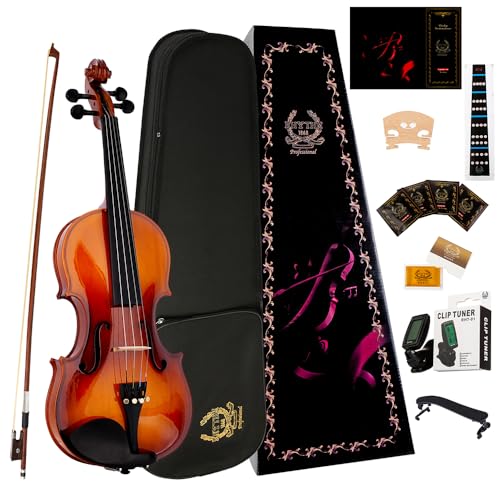

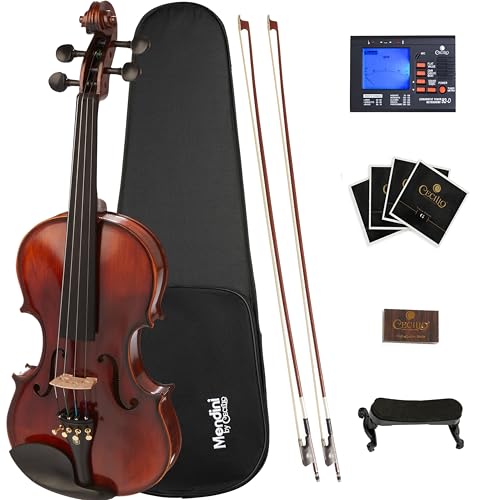

As an Amazon Associate we earn from qualifying purchases at no extra cost to you. Ratings are shown as listed on Amazon.
What separates a good violin from a cheap kit
Wood and construction
A traditional violin typically has a carved spruce top and maple back, ribs, and neck. Solid wood can be repaired and adjusted; laminated or heavily composite construction may cost less but is less likely to offer the same tonal response or repair value. Wood species alone does not guarantee sound quality: arching, thickness, workmanship, and setup all contribute. Avoid paying extra simply for antique-looking varnish or elaborate inlay.
Setup is not an optional extra
A violin can be made from suitable wood and still be frustrating if its bridge is poorly shaped, strings sit too high, or the soundpost is misplaced. A proper setup includes a fitted bridge, correctly positioned soundpost, usable string height, and pegs that turn and hold without slipping. These details affect playability and tuning stability. Ask whether the instrument was inspected and adjusted by a violin technician, and what follow-up service is included.
Budget for a setup if buying an instrument that has not been checked. A basic professional adjustment may cost roughly $75–$200, while repairs or replacement parts can add more. That expense can make an apparently cheaper instrument a poor value.
Compare sizes before comparing brands
Violins are sold in full and fractional sizes. A child should not be moved into a larger instrument just to avoid replacing it soon: an oversized violin can make holding and fingering awkward. A teacher or violin shop can check fit in person. As a rough screening measure, a player holding the violin in playing position should be able to curve the left hand around the scroll with a relaxed arm; this is not a substitute for a fit check.
| Size | Approximate body length | Common use |
|---|---|---|
| 1/8 | About 255 mm | Small children; fit varies considerably |
| 1/4 | About 280 mm | Small children |
| 1/2 | About 310 mm | Growing players |
| 3/4 | About 335 mm | Older children and smaller players |
| 4/4 | About 356 mm | Most teens and adults |
Measurements are approximate and refer to the body, not the total length including the scroll. Players with smaller hands or shorter arms may need a smaller instrument even as adults; comfort and teacher guidance should settle the choice.
Choose by commitment, not just sticker price
- First lessons, uncertain commitment: Consider a rental or a modest, shop-checked outfit. It limits the risk of buying the wrong size or discovering that the instrument needs extensive adjustment.
- Regular beginner practice: Look for solid tonewoods, a stable bridge and pegs, and strings that can be replaced individually. A dependable setup is more useful than premium fittings.
- Advancing player: Try instruments in person if possible. Compare how easily they respond at soft dynamics, how evenly they speak across strings, and whether the sound suits your goals. A teacher can help distinguish instrument limitations from technique.
- Frequent travel or school use: Prioritize a sturdy case with secure closures and a suspension-style interior. A hard case protects better from bumps than a soft bag, but no case makes a violin safe from extreme heat or a hard drop.
Accessories: what an outfit should include
A useful beginner outfit generally includes a bow, case, rosin, and sometimes a shoulder rest. Check the actual contents rather than assuming every bundle is complete. A bow should have a straight stick, functioning frog, and intact hair; very low-cost bows may need replacement sooner. Rosin helps bow hair grip the strings, but excessive application creates dust and a rough, noisy sound. A shoulder rest is a comfort aid, not a universal requirement—ask a teacher to help adjust or select one.
Also budget for consumables. Strings wear, lose brightness, or break; a beginner set commonly costs around $20–$60, with higher-performance sets costing more. Bow rehairing is a periodic service, often roughly $60–$120 depending on location and bow. These are ownership costs, not signs that the violin itself has failed.
Durability and care: the small habits that prevent expensive problems
- Wipe rosin dust off after playing. Use a clean, dry microfiber cloth on the strings and varnish. Built-up rosin can be difficult to remove and may require a professional’s help; household cleaners and alcohol can damage varnish.
- Loosen bow hair after each session. Relax the tension at the screw without removing it completely. Leaving the bow tightened can strain the stick over time.
- Protect the instrument from heat and dryness. Do not leave it in a car, near a radiator, or in direct sun. Rapid temperature or humidity changes can cause seams to open or wood to crack.
- Do not force slipping pegs. Ask a teacher or repairer to show safe tuning. Pegs that bind, strings that fray, or a bridge that leans should be addressed before they cause a break or damage.
The parts most likely to need routine attention are strings, bow hair, bridge alignment, and pegs. A crack, loose seam, or soundpost issue needs a qualified violin repairer, not glue or a do-it-yourself adjustment.
Bottom line
For a beginner, choose a correctly sized violin that has been professionally set up, with a usable bow and protective case. For a developing player, prioritize responsive sound, stable hardware, and access to service over cosmetic upgrades. A shop-checked rental can be the best value for a growing child or uncertain beginner; a solid-wood instrument with sound setup is usually the safer long-term purchase for someone committed to regular playing.



Write Your Review
No reviews yet. Be the first to share your experience!