

Key takeaways
- Check the air filter: Dusty riding can clog it quickly and reduce engine protection. Clean and oil it according to the manual; don’t reinstall a wet or improperly oiled filter.
- Inspect the chain and controls: Check chain slack and lubrication, throttle return, clutch feel, brake operation, and fasteners at the intervals in the owner’s manual.
- Track engine service: Recreational air-cooled bikes generally have less demanding schedules than race bikes, but oil and valve checks still matter. Follow the model-specific manual rather than assuming all four-strokes share the same interval.
- Expect consumables: Tires, tubes, brake pads, chains, sprockets, and air filters wear with use. Mud, sand, aggressive riding, and incorrect tire pressure can shorten their life.
- Protect the bike in storage: Keep it dry and secure, and follow the manual’s fuel or battery storage guidance. Electric models need suitable charging and storage conditions.
The best dirt bikes depend on where you’ll ride, how tall you are, and whether you want a gas engine or electric motor. For most adult trail beginners, a low-seat, air-cooled four-stroke such as the Honda CRF250F is a forgiving starting point; experienced riders seeking speed should look at a competition bike such as the Yamaha YZ250F, while young riders need a bike sized to their height and ability rather than a scaled-down adult race machine.
There isn’t one best dirt bike for every rider. Trail bikes favor predictable power, manageable seat heights, and less frequent maintenance. Motocross bikes are lighter and more powerful, but their firmer suspension and service schedules can make them demanding on trails. Use the comparisons below to narrow your choice by riding style, fit, and upkeep—not engine size alone.
Compare these dirt bikes by fit and purpose
Specifications vary by model year and market. The figures below are approximate U.S.-market reference specifications; confirm the current model’s manual and local configuration before buying. Wet weight includes fluids where the manufacturer publishes it, but measurement methods can differ.
Our top picks

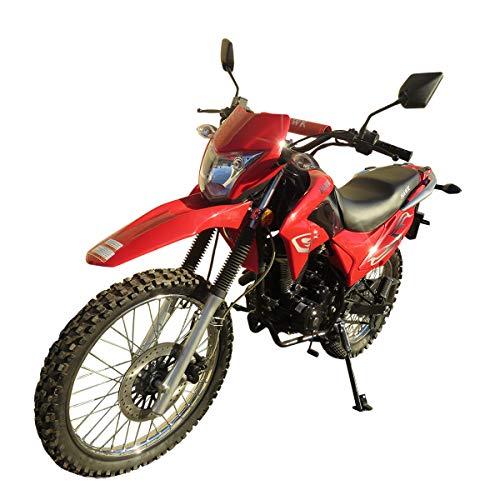


As an Amazon Associate we earn from qualifying purchases at no extra cost to you. Ratings are shown as listed on Amazon.
| Model | Engine or motor | Seat height | Approx. wet weight | Suspension travel, front/rear | Best fit |
|---|---|---|---|---|---|
| Honda CRF250F | 249 cc air-cooled four-stroke | 34.8 in | About 265 lb | About 8.0/8.0 in | Beginner and casual trail riding |
| Yamaha TT-R230 | 223 cc air-cooled four-stroke | 34.3 in | About 251 lb | About 9.4/8.7 in | Newer or shorter adult trail riders |
| Kawasaki KLX300R | 292 cc liquid-cooled four-stroke | 36.4 in | About 282 lb | About 11.2/11.0 in | Trail riders needing more clearance and travel |
| Yamaha YZ250F | 250 cc liquid-cooled four-stroke | About 38.2 in | About 234 lb | About 12.2/12.0 in | Motocross and experienced, fit riders |
| Yamaha PW50 | 49 cc air-cooled two-stroke | 18.7 in | About 90 lb | About 2.4/2.0 in | Small children learning on private land |
| Stark VARG MX | Electric, high-output motor | About 37.0 in | About 260 lb, depending on version | About 12.2/12.0 in | Experienced off-road riders with charging access |
These are off-road motorcycles, not automatically street legal. Registration, equipment, and trail-access rules vary by location. Check the bike’s intended use and your local requirements before riding.
Choose by rider and riding situation
For a first adult trail bike: Honda CRF250F or Yamaha TT-R230
Both use air-cooled four-stroke engines and are aimed at recreational riding rather than racing. Their power delivery is generally easier to manage than that of a competition motocross bike, and their simpler designs avoid some of the upkeep associated with high-performance liquid-cooled machines. The TT-R230 has a slightly lower seat; the CRF250F offers a familiar, approachable trail-bike layout. Neither is featherweight, so consider whether you can pick it up safely after a fall.
Choose between them by fit and control, not the small difference in displacement. With the bike upright, check whether you can balance it comfortably, reach the controls, and operate the clutch and brakes without stretching. You don’t need to plant both feet flat, but a beginner should be able to stop and steady the bike with confidence.
For rougher trails and more suspension: Kawasaki KLX300R
The KLX300R’s longer suspension travel and greater ground clearance suit uneven trails better than a basic play bike. Its taller seat is a real trade-off: shorter riders may find it harder to dab a foot on off-camber ground or maneuver in tight, slow sections. It is a trail-focused machine, not a direct substitute for a race-tuned motocross bike.
For motocross and competition pace: Yamaha YZ250F
A YZ250F is built for closed-course performance: it is comparatively light, has long-travel suspension, and responds more sharply than a recreational trail bike. That makes it rewarding for riders who can use its power and suspension, but less forgiving for a novice navigating rocks, roots, or stop-and-go trails. Competition bikes also need more attentive maintenance. Don’t choose one just because its engine size sounds manageable.
For a young beginner: Yamaha PW50
The PW50’s very low seat and small engine are designed for small children, not growing teenagers. An adult should supervise every ride, use proper protective equipment, and begin in a controlled, legal area. A child’s ability to understand the throttle, brakes, and stopping instructions matters as much as their height. Move up only when the rider can control the current bike reliably.
For riders who want electric: Stark VARG MX
An electric motocross bike eliminates gasoline, engine oil, and exhaust at the bike, but it is not maintenance-free. The battery and charging setup add cost and planning, and actual ride time depends on pace, terrain, temperature, battery configuration, and riding mode. A high-output electric race bike can accelerate very quickly; quiet operation does not make it automatically beginner-friendly. Check current battery and charging specifications, service support, and local sound or vehicle rules before committing.
Budget, experience, and storage: a quick decision matrix
| Your situation | Starting point | Why | Watch out for |
|---|---|---|---|
| New adult, occasional easy trails, limited maintenance time | CRF250F or TT-R230 | Recreational four-stroke design and approachable output | Weight; still requires routine cleaning and checks |
| Regular, rough trail riding; intermediate skills | KLX300R | More suspension travel and ground clearance | Taller seat and added weight |
| Track riding; experienced and willing to maintain a race bike | YZ250F | Competition-oriented suspension and performance | Frequent inspections and a less forgiving setup |
| Small child, supervised beginner riding | PW50 | Low seat and child-sized controls | Rider growth, supervision, and safe riding area |
| Quiet riding is a priority; reliable charging is available | Electric off-road bike, such as Stark VARG MX | No gasoline or exhaust at the bike | Purchase cost, charging access, range, and service support |
For used-bike shoppers, budget for more than the purchase price. A bike that needs tires, chain and sprockets, brake service, or suspension work can cost more to put right than its asking price suggests. Have a qualified mechanic inspect an unfamiliar machine, especially if it has been raced or stored outdoors.
What ownership actually involves
Trail bikes need basic care even when they are designed for casual use. Dust and mud accelerate wear, while neglected chain adjustment can damage both chain and sprockets. After a ride, clean the bike without forcing water into bearings or electrical connectors, then inspect it before the next outing.
- Check the air filter: Dusty riding can clog it quickly and reduce engine protection. Clean and oil it according to the manual; don’t reinstall a wet or improperly oiled filter.
- Inspect the chain and controls: Check chain slack and lubrication, throttle return, clutch feel, brake operation, and fasteners at the intervals in the owner’s manual.
- Track engine service: Recreational air-cooled bikes generally have less demanding schedules than race bikes, but oil and valve checks still matter. Follow the model-specific manual rather than assuming all four-strokes share the same interval.
- Expect consumables: Tires, tubes, brake pads, chains, sprockets, and air filters wear with use. Mud, sand, aggressive riding, and incorrect tire pressure can shorten their life.
- Protect the bike in storage: Keep it dry and secure, and follow the manual’s fuel or battery storage guidance. Electric models need suitable charging and storage conditions.
A common beginner mistake is buying for maximum power or suspension travel before confirming fit. A bike that is too tall or heavy can turn slow technical riding into a series of stressful saves. A manageable, correctly sized machine is usually a better tool for learning than a more powerful bike that spends its time intimidating its rider.
Before you buy
First decide whether your riding will be on gentle trails, rough terrain, or a motocross track. Then narrow the choices by seat height and weight, and sit on or safely test-fit the actual model with your riding boots. Compare the service schedule, parts availability, and total ownership costs—not just the engine size or advertised power. For a new adult trail rider, start with the CRF250F or TT-R230; move toward the KLX300R for more demanding trails, and consider a YZ250F only if you’re prepared for competition-bike handling and upkeep.




Write Your Review
No reviews yet. Be the first to share your experience!