

Key takeaways
- Piezo pickups: Common in electric violins, they detect vibration at the bridge or body. They offer low microphone feedback but can emphasize scratchiness, bow pressure, and harsh upper frequencies.
- Active systems: A battery-powered preamp can provide higher output and useful equalization. It adds batteries and electronics that may eventually need service.
- Passive systems: These are simple and reliable, but the final sound depends heavily on the input impedance and quality of the connected preamp.
- Microphone-based systems: They can sound more acoustic but are more vulnerable to feedback, stage noise, and mic placement changes.
The best electric violins for most buyers are the Yamaha YEV-104 for natural response and stage use, the Yamaha SV-200 for quiet practice, and the NS Design WAV4 for performers who want the most adjustable pickup and tone system.
An electric violin is not automatically a silent violin: the strings and body still produce some acoustic sound, while the pickup, preamp, headphones, and amplifier determine the amplified result. The right choice depends less on the number of effects or unusual body shapes than on pickup behavior, neck comfort, setup quality, and how you plan to monitor your playing.
Our top picks
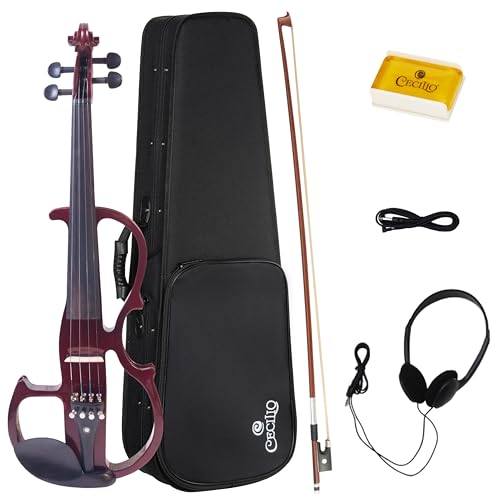
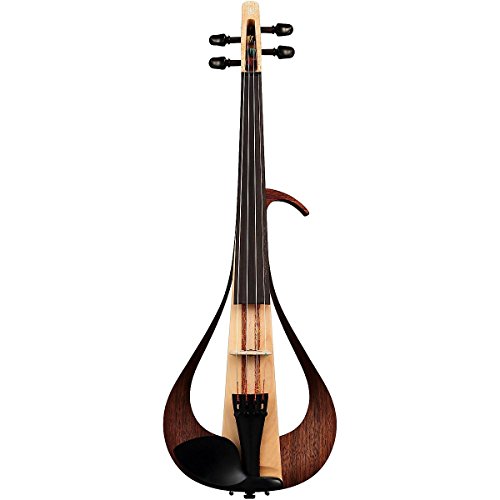
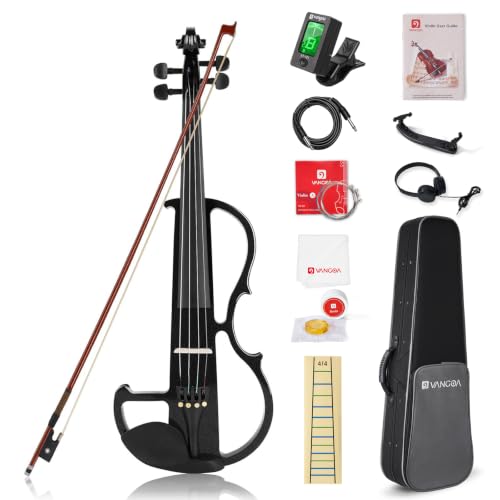
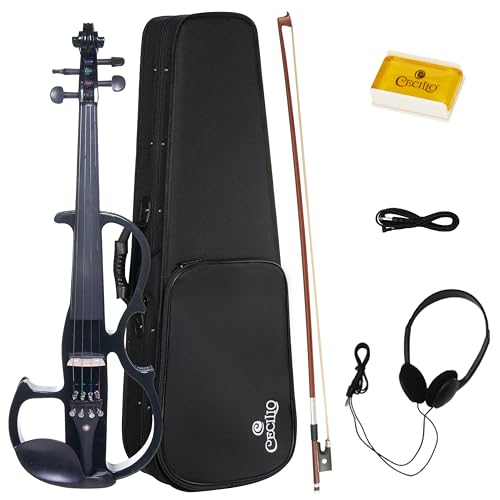
As an Amazon Associate we earn from qualifying purchases at no extra cost to you. Ratings are shown as listed on Amazon.
Best electric violins by situation
| Situation | Best fit | Why | Typical market range |
|---|---|---|---|
| Quiet apartment practice | Yamaha SV-200 | Built-in practice-oriented electronics, headphone connectivity, and a familiar violin layout | $700–$1,000 |
| First serious electric violin | Yamaha YEV-104 | Lightweight solid-body design, passive pickup system, and a responsive acoustic-like playing feel | $800–$1,200 |
| Stage performance and tone control | NS Design WAV4 | Adjustable Polar pickup and active electronics give more control over amplified tone | $1,500–$2,000 |
| Five-string repertoire | Yamaha YEV-105 | Adds a low C string while retaining the YEV family’s compact solid-body format | $1,000–$1,500 |
| Professional touring setup | NS Design NXT4 or WAV4 | Stable performance-oriented hardware and broader adjustment options than basic entry models | $1,500–$3,000 |
Prices are broad 2026 market ranges and vary with case packages, regional taxes, and included electronics. A bow, cable, shoulder rest, and suitable strings can add substantially to the initial cost.
Head-to-head: Yamaha YEV-104 versus Yamaha SV-200
Yamaha YEV-104: the better performance instrument
The YEV-104 uses a distinctive five-layer maple and mahogany body rather than imitating the outline of a traditional violin. Its passive piezo pickup system sends a direct signal to an amplifier, effects pedal, audio interface, or wireless system. The body is slim and visually modern, but the neck and 4/4 string layout remain familiar to violinists.
Its main advantage is immediacy. The response is relatively direct, and the lack of a built-in battery-powered preamp keeps the control layout simple. That also means the YEV-104 does not provide a headphone jack by itself. For silent practice, connect it to a headphone amplifier, audio interface, multi-effects unit, or a dedicated instrument practice amp with a headphone output.
The YEV-104 is a strong choice for rehearsals and performances because it avoids the feedback and microphone-position problems of an acoustic violin played through a microphone. Its limitation is that the passive pickup can sound bright or thin through a poor-quality amplifier. A clean preamp, modest equalization, and a little room reverb usually produce a more convincing result than plugging directly into a random guitar amp.
Yamaha SV-200: the better practice-centered instrument
The SV-200 is designed around controlled practice and amplified playing. It includes a built-in preamp and provides headphone and auxiliary-input facilities, allowing a player to hear the violin alongside recorded material without requiring a separate audio interface. That makes it more convenient for an apartment, dorm room, or late-night practice routine.
Its tone is practical rather than intended to replicate every detail of an acoustic violin. The electronics provide a usable amplified sound, but the instrument’s greatest advantage is the complete practice path: violin, backing audio, headphones, and volume control in one system. Check the exact package before buying, since accessories and regional versions can differ.
For a beginner, the SV-200 also reduces the number of decisions needed on the first day. For a performer who already owns a reliable preamp or pedalboard, the simpler YEV-104 may offer better value and a more open platform for shaping tone.
Where NS Design models fit
NS Design’s WAV4 and NXT4 models are aimed more directly at players who want performance-grade control. Their Polar pickup system is designed to sense string vibration while reducing dependence on body resonance and microphone placement. The active electronics and tonal controls offer more ways to manage brightness, body, and output level than a basic passive electric violin.
The WAV4 generally occupies the higher-priced end of this comparison. Its body and neck feel can be different from a conventional violin, so it is worth trying one in person if possible. The neck is shaped for violin technique, but the solid body does not provide the same contact points as an acoustic instrument. Some players find the balance excellent; others need time to adapt their left-arm and shoulder position.
NS Design instruments normally need an external amplifier, mixer, interface, or headphone amplifier for private monitoring. A dedicated violin or full-range acoustic instrument amplifier is preferable to an aggressively voiced electric-guitar amplifier, especially when preserving bow articulation is important.
Sound quality: pickup type matters more than body appearance
- Piezo pickups: Common in electric violins, they detect vibration at the bridge or body. They offer low microphone feedback but can emphasize scratchiness, bow pressure, and harsh upper frequencies.
- Active systems: A battery-powered preamp can provide higher output and useful equalization. It adds batteries and electronics that may eventually need service.
- Passive systems: These are simple and reliable, but the final sound depends heavily on the input impedance and quality of the connected preamp.
- Microphone-based systems: They can sound more acoustic but are more vulnerable to feedback, stage noise, and mic placement changes.
When comparing instruments, listen for clean low strings, an even response between strings, and a controllable upper register. A violin that sounds impressive through headphones may become harsh through a bright amplifier. Test both monitoring routes if possible.
Neck comfort, string setup, and acoustic feel
Most full-size electric violins use a 4/4 scale close to the traditional violin standard: approximately 328–330 mm from nut to bridge. This helps experienced players transfer familiar finger spacing, although body shape and chin-rest placement can still change the playing position.
Setup quality is more important than decorative design. Ask whether the bridge is properly fitted, the nut slots are smooth, the soundpost or internal components are secure, and the strings are seated correctly. A poorly cut bridge can make one string feel too high, create uneven bow response, or make intonation seem worse than it is.
Many budget instruments arrive with inexpensive strings. Replacing them with a compatible set from a reputable manufacturer can improve response, but do not assume every acoustic violin string set is suitable: electric instruments may have pickup, bridge, or tension requirements. A violin technician can check bridge curvature and action without altering the instrument unnecessarily.
An electric violin will not feel exactly like an acoustic violin. The solid body provides less natural resonance under the jaw and collarbone, and some models have unusual frames that change where the instrument rests. Players transitioning from acoustic violin should adjust gradually rather than forcing the same shoulder pressure they use on a traditional instrument.
Connectivity checklist before buying
- Headphones: Confirm that the violin has a headphone output. If it does not, budget for a practice amp, headphone amplifier, or audio interface.
- Amplifier: Choose an input designed for piezo instruments or an acoustic-instrument amplifier with a high input impedance.
- Recording: An audio interface with an instrument input is usually more flexible than a basic headphone adapter.
- Backing tracks: Look for an auxiliary input or use a small mixer or interface with separate input channels.
- Cables: Most instruments use a standard 1/4-inch output, but verify this before ordering accessories.
- Power: Active violins may use a 9-volt battery or another replaceable battery format. Remove the battery during long storage to reduce leakage risk.
What is usually included—and what is not
Packages commonly include a basic case or gig bag, bow, rosin, cable, and sometimes a shoulder rest. Quality varies considerably. A supplied bow may be adequate for starting but not balanced enough for nuanced performance, while included rosin may not suit every climate or playing style.
Plan separately for a hard case if the violin will travel frequently, spare strings, a tuner, cleaning cloth, replacement batteries for active electronics, and a reliable headphone or amplification solution. The cheapest package is not necessarily the lowest-cost option after these additions.
Ownership realities and a simple practice-cost calculation
The parts most likely to need attention are strings, bow hair, batteries, cables, and input jacks. Wipe rosin dust from the strings and body after playing, keep the instrument dry, and do not leave it in a hot car. Avoid spraying household cleaner onto the violin; use a dry or slightly suitable instrument cloth and follow the manufacturer’s care instructions.
For example, suppose a $900 instrument needs $70 of strings and consumables every six months, plus a $100 headphone practice solution. Over two years, the basic ownership cost is about $1,140 before repairs: $900 + $140 for two sets of consumables + $100 for monitoring. At 200 practice sessions, that works out to approximately $5.70 per session. This is why a violin with a slightly higher purchase price but better setup and included headphone connectivity can be the more economical choice for frequent practice.
Bottom line
Choose the Yamaha SV-200 if private practice and easy headphone use are your priorities. Choose the Yamaha YEV-104 if you want a lightweight, straightforward instrument that can move from practice hardware to a stage rig. Choose an NS Design WAV4 or NXT4 when adjustable electronics, advanced performance control, and a higher budget matter more than plug-and-play simplicity. Whichever model you select, budget for a proper setup: bridge fit, string choice, and a suitable preamp often influence the final playing experience as much as the violin itself.



Write Your Review
No reviews yet. Be the first to share your experience!