

Key takeaways
- Compare the best pizza stones and steels for home ovens, from cordierite and thick FibraMent to carbon steel and cast iron, with honest pros and cons.
As an Amazon Associate we earn from qualifying purchases.
A sheet pan gives you pale, steamed pizza. A preheated stone or steel gives you a crust that actually crisps, puffs at the edges, and browns on the bottom. The difference is stored heat: a thick slab sits in your oven soaking up energy for the better part of an hour, then dumps that energy into the dough the moment the pie lands.
But stones and steels behave very differently, and the wrong pick can mean a cracked slab, a scorched bottom, or a 25-pound plate you dread lifting. This guide compares five well-regarded options across cordierite stone, a thick proprietary stone, two carbon steels, and a cast iron pan, and it is honest about what each material does well and where it lets you down.
Disclosure: This article contains affiliate links. If you buy through these links, we may earn a commission at no extra cost to you.
How to Choose a Pizza Stone or Steel
Stone vs. steel: the honest trade-off
Cordierite stone is the forgiving option. It heats a little more gently, so the bottom of the crust browns at a pace that matches the top, and it is light enough to move without thinking twice. Its weakness is fragility. Cordierite cracks from thermal shock: slide a cold or room-temperature stone into a fully heated oven, spill cold liquid on a hot stone, or wash it while it is still warm and then heat it again, and you may hear the crack that ends its life. Stones are also porous. Never wash one with soap, because the pores absorb it and can pass a soapy taste to later bakes. A dry scrape, a brush, and heat are all the cleaning a stone ever needs.
Steel sits at the other end. A carbon steel plate is nearly indestructible; you can drop it, freeze it, and broil under it for years. Because steel conducts heat far faster than stone, it bakes quicker and can give dramatic oven spring and deep browning. That speed cuts both ways. Delicate, thin, or heavily sugared crusts can scorch on the bottom before the cheese melts, and steel is heavy. A thick plate is a genuine two-handed lift in and out of the oven. Steel also needs seasoning care, much like cast iron, to stay rust-free.
Cast iron lands in the middle: tougher than stone, slower and gentler than steel, and it doubles as a stovetop and serving piece.
Thickness matters more than diameter
Heat storage scales with mass, and mass comes mostly from thickness. A thin stone a half inch thick runs out of stored heat partway through a bake, so the second pizza lands on a cooler surface than the first. A stone or steel at three quarters of an inch or a quarter inch of solid steel, respectively, holds far more energy and recovers faster between pies. Diameter only decides how big a pizza you can launch. When you are choosing between a larger thin slab and a smaller thick one, pick thick.
Know your oven’s ceiling
Here is the limit nobody selling stones likes to state plainly: your home oven probably tops out at 500 or 550°F, and no stone or steel changes that. Pizzeria decks run far hotter. A good slab gets you the best crust your oven’s ceiling allows, with better browning and a crisper base than a pan ever will, but it will not turn a 500°F oven into a wood-fired one. If your oven has a broiler, finishing a steel-baked pizza under it for a minute is the closest honest trick for leoparded tops.
Size, shape, and care
Measure your oven’s interior and leave at least an inch of clearance on all sides so air can circulate. Rectangular slabs use the space better than round ones and double as bread and cookie surfaces. For care: never soap a stone, let stones cool in the oven rather than moving them hot, season steel and cast iron lightly with oil after cleaning, and store heavy steels somewhere you will not resent reaching for them.
The 5 Best Pizza Stones and Steels
1. Old Stone Pizza Kitchen Rectangular Pizza Stone, 14 x 16

The Old Stone rectangular stone is the classic cordierite pick: affordable in spirit, simple, and sized to fit most home ovens while still handling a full 14-inch pie or a pair of smaller ones. Cordierite handles very high heat and releases pizza cleanly once it is properly preheated.
Specs
- Material: Cordierite
- Size: 14 x 16 inches, rectangular
- Thickness: About 0.6 inch
- Heat tolerance: Up to 1450°F per the maker
- Use: Oven and grill
Pros
- Forgiving heat transfer suits beginners and delicate crusts
- Rectangular shape fits bread and flatbreads as well as pizza
- Light enough to move and store easily
- No seasoning or special upkeep beyond keeping it dry
Cons
- Can crack if it meets cold liquid or a sudden temperature swing while hot
- Thinner than premium stones, so back-to-back pizzas need a longer reheat gap
- Stains permanently; purely cosmetic, but some owners dislike the look
- Porous surface means soap is permanently off the table
2. FibraMent-D Premium Pizza Stone Set, 17.5 x 13.875 x 0.75

FibraMent stones are made in the USA from a proprietary fiber-reinforced material originally developed for commercial bakeries, and at three quarters of an inch thick this is the heavyweight among stones. That thickness is the point: it stores serious heat and holds temperature across several bakes. This set bundles the stone with a wooden peel and a rocker cutter.
Specs
- Material: FibraMent-D proprietary baking stone material
- Size: 17.5 x 13.875 inches, rectangular
- Thickness: 0.75 inch
- Includes: Wooden peel and rocker cutter
- Origin: Made in USA
Pros
- Thickest stone here, with the heat storage to match
- Built to live in the oven full time, so it is always ready
- Large surface suits bread loaves and sheet-pan-sized bakes
- Peel and cutter included, so the kit is complete on day one
Cons
- Long footprint will not fit smaller ovens; measure carefully
- Heavy for a stone, and still a stone: thermal shock rules apply
- The bundled extras only add value if you do not already own a peel
- Surface needs the same no-soap care as any porous stone
3. Baking Steel Original, 14 x 16
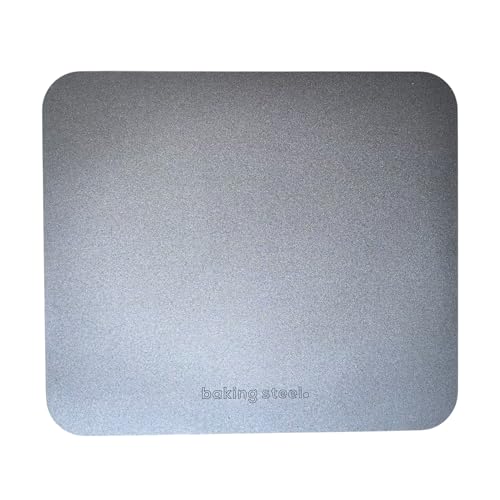
The Baking Steel Original is the plate that started the home steel movement. It is a quarter inch of pre-seasoned carbon steel, made in the USA, and it transfers heat so aggressively that bake times drop noticeably compared with stone. Bottoms come out deeply browned with real char in spots, and the plate doubles as a stovetop griddle and even a cold plate for serving.
Specs
- Material: Carbon steel, pre-seasoned
- Size: 14 x 16 inches, rectangular
- Thickness: 0.25 inch
- Weight: About 16 pounds
- Origin: Made in USA
Pros
- Fastest browning of any pick here; excellent oven spring
- Effectively unbreakable in normal use
- Pre-seasoned, so it is ready to bake out of the box
- Works on the stovetop as a griddle for smash burgers and pancakes
Cons
- Fast heat can scorch thin or sweetened crusts before toppings finish
- Sixteen pounds is a real lift, especially when hot
- Needs occasional re-seasoning and must be kept dry to prevent rust
- A full hour of preheating is recommended to get the best from it
4. NerdChef Steel Stone Pro, 14.5 x 16 x 3/8

The NerdChef Pro takes the steel idea further with three eighths of an inch of low-carbon steel. The extra thickness over a standard quarter-inch plate means more stored heat, faster recovery between pizzas, and better results when you bake several pies in a row for a group. It is made in the USA and finished with slightly beveled edges.
Specs
- Material: Low-carbon steel
- Size: 14.5 x 16 inches, rectangular
- Thickness: 0.375 inch
- Weight: About 23 pounds
- Model: NC-SS38
- Origin: Made in USA
Pros
- Thickest steel here; best heat retention and recovery in the group
- Handles back-to-back pizzas without long reheats
- Virtually indestructible; no cracking risk at all
- Generous surface fits large pies and multiple smaller items
Cons
- At about 23 pounds, moving it in and out of the oven is a chore
- Its aggressive heat transfer is the easiest here to scorch a delicate crust
- Requires seasoning care and dry storage like all carbon steel
- Overkill for the occasional single pizza night
5. Lodge BOLD 14 Inch Seasoned Cast Iron Pizza Pan (P14P3)

Lodge’s 14-inch cast iron pan is the middle path. Cast iron stores less heat than thick steel and delivers it more slowly than stone’s fans might expect, but it is nearly as tough as steel, arrives pre-seasoned, and pulls double duty as a skillet, griddle, and serving piece that goes straight to the table. The sloped sides and dual handles make it easy to manage.
Specs
- Material: Seasoned cast iron
- Size: 14 inches, round
- Model: P14P3
- Handles: Dual assist handles with sloped sidewalls
- Use: Oven, stovetop, grill, and campfire
- Origin: Made in USA
Pros
- Gentler heat than steel, so crusts brown evenly without scorching
- Tougher than stone; no thermal shock worries in normal use
- Pre-seasoned surface improves with every bake
- Doubles as a serving piece and general-purpose griddle
Cons
- Round shape wastes oven space compared with rectangular slabs
- Less stored heat than the thick options; slower recovery between pies
- Needs seasoning upkeep and dry storage to stay rust-free
- Raised rim makes launching with a peel slightly less smooth than a flat slab
Comparison Table
| Product | Material | Size | Thickness | Best for |
|---|---|---|---|---|
| Old Stone Rectangular | Cordierite | 14 x 16 in | About 0.6 in | First-time buyers, gentle even browning |
| FibraMent-D Set | Proprietary stone | 17.5 x 13.875 in | 0.75 in | Bread bakers and frequent pizza nights |
| Baking Steel Original | Carbon steel | 14 x 16 in | 0.25 in | Fast bakes and deep bottom browning |
| NerdChef Steel Stone Pro | Low-carbon steel | 14.5 x 16 in | 0.375 in | Back-to-back pizzas for a crowd |
| Lodge BOLD Pizza Pan | Cast iron | 14 in round | Pan profile | Versatility on stovetop, oven, and table |
FAQ
How long should I preheat a pizza stone or steel?
Give a stone at least 45 minutes at your oven’s highest temperature, and a full hour for steel. The surface thermometer reading on the oven dial only tells you the air temperature; the slab itself lags well behind, and launching onto an underheated slab is the main cause of soggy bottoms.
Can a pizza stone really crack, and how do I prevent it?
Yes. Cracks come from thermal shock, not from heat itself. Always put a stone in a cold oven and let it heat up with the oven, let it cool down in the oven too, never set a hot stone on a cold or wet counter, and never pour cold liquid on it. Follow those rules and a cordierite stone lasts for years.
Why did my pizza scorch on the bottom with a steel?
Steel pushes heat into the dough much faster than stone. If the bottom is dark before the top is done, your steel was likely too hot for that dough style. Bake on a lower rack position, shorten the preheat slightly, or finish with a brief moment under the broiler instead of a longer bake so the top can catch up.
How do I clean a stone without soap?
Scrape off baked-on bits with a metal spatula or bench scraper, brush away loose flour, and let the oven’s heat burn off residue during the next preheat. Stains are normal and harmless. Soap soaks into the pores and can flavor later bakes, so it stays off the stone permanently.
Is steel or stone better for bread?
Both work well. A thick stone like the FibraMent gives a gentler, even bake that suits lean loaves, while steel’s fast heat transfer can produce dramatic oven spring in hearth-style breads. Whichever you choose, thickness matters more than material for bread, because a long bake drains stored heat steadily.
Conclusion
If you want one straightforward upgrade, the Old Stone cordierite slab is the forgiving place to start. Bakers who bake often should look at the thick FibraMent-D set, while anyone chasing the darkest, crispest bottoms should go straight to steel: the Baking Steel Original for most kitchens, or the heavier NerdChef Pro if you regularly bake several pizzas in a row. The Lodge cast iron pan earns its place if you value one piece that cooks, serves, and shrugs off rough handling. Pick by how you actually bake, respect the thermal shock rules for stone, and remember that your oven’s temperature ceiling, not the slab, is the final limit.
More from Amazon
Programs that pair well with the guide above. Offers and eligibility are set by Amazon and may change.
Free shipping on eligible items, Prime Video and more. Eligible new members can start with a free trial.
Start a Prime free trialA Prime membership for ages 18-24 with a trial period. Eligibility is set by Amazon.
See Prime for Young AdultsAudiobooks and podcasts to listen to on the go. Eligible new members can start with a free trial.
Try Audible freeAd-free music streaming. Eligible new subscribers can start with a free trial.
Try Music Unlimited freeAs an Amazon Associate we earn from qualifying purchases.





Write Your Review
No reviews yet. Be the first to share your experience!