

Key takeaways
- Light warmth: approximately 100–200 GSM, suitable for warm rooms and summer.
- Medium warmth: approximately 200–350 GSM, suitable for moderate rooms and most of the year.
- High warmth: approximately 350–500 GSM, suitable for cold rooms or winter.
- Extra-heavy: more than 500 GSM, appropriate only when the bedroom is consistently cold or the sleeper strongly prefers substantial insulation.
The best comforter sets are the ones whose fabric, fill weight, warmth rating, and dimensions match your bed size, local climate, laundry setup, and willingness to maintain them—not simply the thickest or cheapest set.
Our top picks


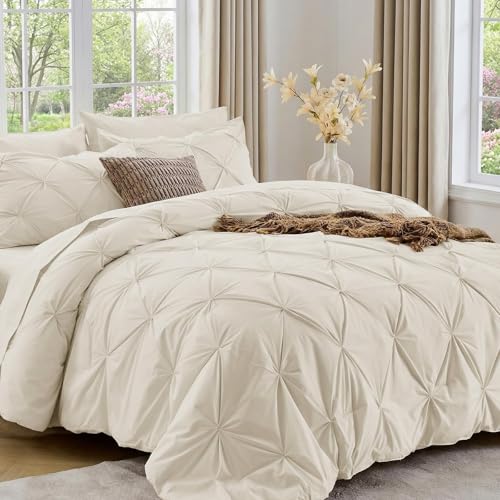
As an Amazon Associate we earn from qualifying purchases at no extra cost to you. Ratings are shown as listed on Amazon.
Quick picks by sleeping situation
| Situation | Best choice | Useful target specifications | Why it fits |
|---|---|---|---|
| Hot, humid climate | Lightweight cotton comforter set | 100% cotton shell, 150–250 GSM fill, low warmth | Breathable fabric and modest insulation reduce trapped heat |
| Cold bedroom or winter use | Medium-to-heavy cotton or microfiber set | 300–500 GSM fill, medium-to-high warmth | More insulating material helps retain body heat |
| One set for changing seasons | Medium-weight washable set | 250–350 GSM fill, medium warmth | Versatile enough for spring, fall, and many centrally heated rooms |
| Frequent washing or children’s room | Microfiber set with synthetic fill | Machine washable, 150–300 GSM fill, quick-drying construction | Usually easier to wash and less demanding to dry fully |
| Lower-impact, long-term purchase | Cotton set with durable construction | Long-staple or tightly woven cotton, reinforced seams, repairable cover | Natural fiber can be comfortable for years when washed carefully |
Microfiber versus cotton: which is better?
Microfiber comforter sets
Microfiber is a finely woven synthetic fabric, usually polyester. It is commonly paired with polyester fill, making it lightweight, affordable, colorfast, and easy to launder. A good microfiber set can be practical for guest rooms, dormitories, children’s bedrooms, and households that need frequent washing.
Its main disadvantages are reduced breathability compared with many cotton weaves and a tendency to retain odors or static in some homes. Synthetic fibers can also shed small plastic fibers during washing. A front-loading machine, a lower-temperature cycle, and a washing bag designed for textiles can reduce abrasion and shedding, although no laundry method eliminates it entirely.
Cotton comforter sets
Cotton generally feels cooler and more breathable, particularly in percale or other plain weaves. It absorbs moisture rather than immediately trapping it against the skin, though a damp cotton comforter takes longer to dry. Cotton may soften with use, but it can wrinkle, shrink, fade, or wear at the edges when washed aggressively.
Look for tightly sewn baffle or box stitching, bound edges, and a shell that feels dense rather than transparent. Organic certification can help verify farming and processing claims, but it does not automatically mean a comforter is more durable or warmer. The fill weight and construction still matter.
| Feature | Microfiber | Cotton |
|---|---|---|
| Typical feel | Smooth, soft, sometimes warmer against the skin | Dry, breathable, and increasingly soft with washing |
| Drying time | Often faster | Often slower, especially at higher fill weights |
| Wrinkling | Low | Moderate to high, depending on weave |
| Heat management | Can feel warm because polyester holds less moisture away from the body | Usually more breathable, especially in lightweight weaves |
| Common price range | About $35–$120 for a complete set | About $60–$220 for a complete set |
| Best match | Budget buying, frequent washing, guest rooms | Warm sleepers, humid climates, long-term comfort |
How fill weight and warmth rating work together
Fill weight is the amount of insulating material in the comforter, usually expressed as grams per square meter, or GSM. It is not the same as total product weight. A larger king comforter naturally weighs more than a twin comforter made with the same GSM.
Warmth ratings are not perfectly standardized across manufacturers, so use them as a comparison aid rather than a guarantee. A practical guide is:
- Light warmth: approximately 100–200 GSM, suitable for warm rooms and summer.
- Medium warmth: approximately 200–350 GSM, suitable for moderate rooms and most of the year.
- High warmth: approximately 350–500 GSM, suitable for cold rooms or winter.
- Extra-heavy: more than 500 GSM, appropriate only when the bedroom is consistently cold or the sleeper strongly prefers substantial insulation.
Construction changes the result. A 300 GSM comforter with closely spaced quilting may feel less lofty than a 250 GSM comforter with air-trapping baffles. Down-alternative fibers can also vary in loft. Compare both GSM and the maker’s warmth category, and avoid choosing by thickness alone.
Choose the right size before choosing the pattern
Comforter dimensions vary more than mattress dimensions, so check the product measurements. The following mattress sizes are useful starting points:
| Bed size | Typical mattress width | Comforter width to consider | Typical comforter length |
|---|---|---|---|
| Twin | 38 inches | 66–68 inches | 86–90 inches |
| Full/Double | 54 inches | 80–84 inches | 86–90 inches |
| Queen | 60 inches | 88–92 inches | 88–96 inches |
| King | 76 inches | 102–108 inches | 88–96 inches |
| California king | 72 inches | 102–108 inches | 96–100 inches |
For an approximate side drop, subtract your mattress width from the comforter width and divide by two. For example, a 90-inch-wide queen comforter on a 60-inch mattress gives a 15-inch drop on each side before accounting for mattress depth. If your mattress is 14 inches deep, a 15-inch drop will not reach far down the sides. Choose a wider comforter if you want generous coverage or share the bed with someone who pulls the bedding.
A decision matrix for practical buying
| Priority | Recommended material | Fill and warmth | Feature worth paying for | Feature to avoid overvaluing |
|---|---|---|---|---|
| Lowest upfront cost | Microfiber | 150–250 GSM, low to medium | Machine washability | Decorative extra pillows that are rarely used |
| Small laundry machine | Lightweight microfiber or cotton | Under 300 GSM | Split laundering or a removable cover | Oversized king dimensions |
| Warm sleeper | Breathable cotton | 100–250 GSM, low warmth | Open quilting and a cotton shell | High loft marketed as luxury |
| Cold sleeper | Cotton shell with down-alternative fill | 350–500 GSM, high warmth | Secure baffle construction | Loose, widely spaced stitching that permits fill migration |
| Long service life | Tightly woven cotton | 200–350 GSM, medium warmth | Reinforced edges and repairable seams | Unverified “premium” fiber claims |
Care, washability, and ownership costs
Before buying a set, measure your washing machine drum and read the care label. A comforter should move freely in the washer; if it is tightly packed, detergent and water cannot circulate properly, and the fill may remain damp. A commercial large-capacity machine may be more economical than repeatedly damaging an oversized comforter in a small washer.
- Wash only when needed. Use a washable duvet cover or top sheet to reduce full-comforter washing. Cleaning the cover regularly usually consumes less water, energy, and drying time.
- Use a gentle cycle and modest detergent. Excess detergent can remain in fibers and make fill clump. Avoid fabric softener because it can coat fibers and reduce absorbency or loft.
- Dry completely. Run low or medium heat according to the label, pause to redistribute the fill, and do not store the comforter until the center is fully dry. Residual moisture is a common cause of musty odors and mildew.
- Inspect stress points. Check corner loops, binding, quilting lines, and zipper areas every few months. Repairing a small opening can prevent a large section of fill from escaping.
- Store loosely. Use a breathable cotton or fabric storage bag rather than compressing the comforter in plastic for long periods.
Consider cost per use rather than purchase price alone. A $90 microfiber set used twice weekly for three years provides about 312 uses, or roughly $0.29 per use before laundry. A $160 cotton set used three times weekly for five years provides about 780 uses, or roughly $0.21 per use. The more expensive option is not automatically better, but frequent use and longer service can justify stronger fabric, replaceable covers, and reinforced construction.
What to check in a comforter set listing
- Exact comforter dimensions, not just the label “queen” or “king.”
- Shell fiber and fill fiber listed separately.
- Fill weight in GSM or total ounces, plus a clearly defined warmth category.
- Care instructions that match your washer, dryer, and available drying space.
- Stitching pattern, edge binding, and whether corner ties are included.
- What the set contains: some include shams but no sheets, pillow inserts, or duvet cover.
- Packaging that avoids unnecessary plastic, and credible information about recycled or certified fibers.
Bottom line
Choose a lightweight cotton set for hot or humid sleeping conditions, a medium-weight set for the broadest seasonal usefulness, and a heavier microfiber or cotton-shell set for cold bedrooms. Prioritize accurate dimensions, appropriate GSM, durable quilting, and realistic washing requirements over decorative extras. A comforter that fits the bed, dries fully, and suits your climate will usually be the best comforter set for both comfort and lower-impact ownership.




Write Your Review
No reviews yet. Be the first to share your experience!