

Key takeaways
- Removable bowl: The most useful feature on an electric set. It allows the dirty insert to be washed without bringing the heating base near water.
- Enamel or nonstick interior: These surfaces release cooled cheese more easily than uncoated metal, although nonstick coatings should not be scraped with metal utensils.
- Wide opening: A broad bowl is easier to stir and wipe than a tall, narrow pot.
- Dishwasher-safe parts: Confirm which parts qualify. The electrical base, burner, wooden handles, and bare cast iron generally should not go in a dishwasher.
- Separate fork rest: A rim or tray that catches drips keeps the table cleaner and reduces the need for disposable napkins or liners.
The best cheese melting fondue sets for parties are usually ceramic for two to four guests, cast iron for repeated entertaining and strong heat retention, or electric for groups of six to eight who want the most convenient temperature control.
The right choice depends less on appearance than on four practical questions: how many people you serve, how long the cheese must stay smooth, whether you have a suitable heat source, and how much cleanup you are willing to do. A durable fondue set can also reduce waste by replacing disposable warming trays and single-use party cookware.
Our top picks
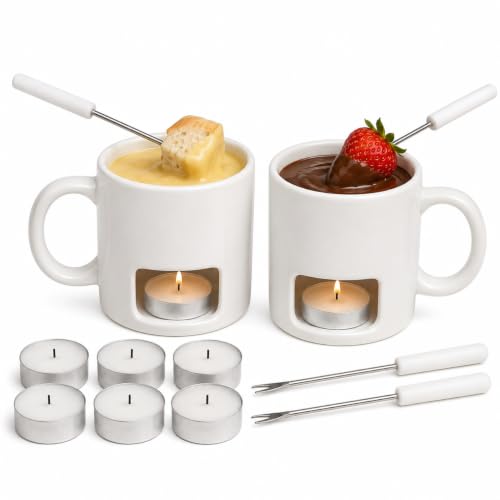
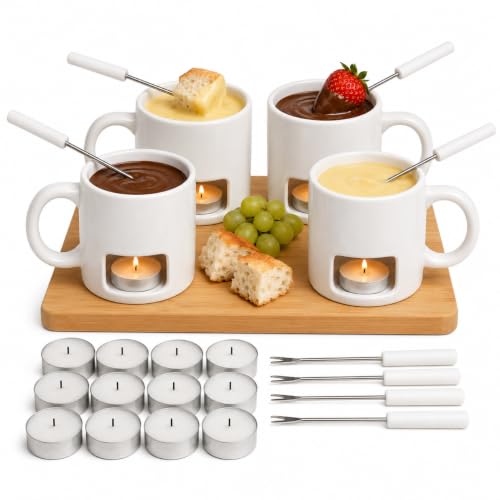
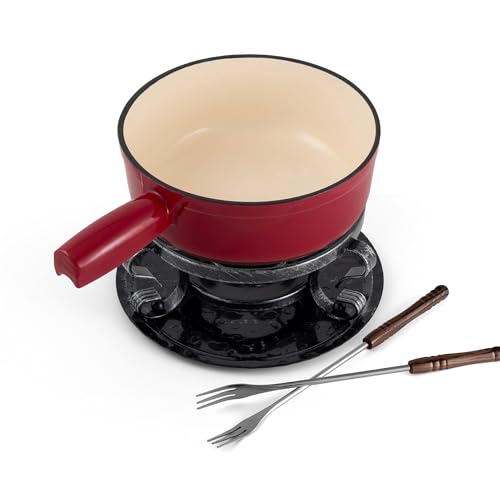

As an Amazon Associate we earn from qualifying purchases at no extra cost to you. Ratings are shown as listed on Amazon.
Quick comparison: ceramic, cast iron, and electric fondue sets
| Fondue type | Typical capacity | Approximate empty weight | Heat retention | Best for | Main drawback |
|---|---|---|---|---|---|
| Ceramic | 1.0-1.5 quarts; 2-4 guests | 2-4 pounds | Moderate; heats gently | Small groups, first-time users, easy serving | Can crack from thermal shock; usually needs a burner |
| Cast iron | 1.5-2.5 quarts; 4-6 guests | 6-12 pounds | Very high | Long meals, frequent use, stable tabletop heating | Heavy, slower to heat, requires careful drying |
| Electric | 1.5-3 quarts; 4-8 guests | 3-8 pounds | Moderate to high, depending on insulation | Larger parties and precise temperature control | Uses electricity and adds a cord to the table |
| Stainless steel insert | 1.5-3 quarts; 4-8 guests | 3-7 pounds | Moderate | Durability and dishwasher-friendly cleanup | May develop hot spots without a thick base |
These are useful buying ranges rather than guarantees. Actual capacity includes the bowl’s usable fill level, which should normally be about two-thirds full to prevent splashing and leave room for stirring.
Choose by party size first
For two to four guests: ceramic is often the best value
A 1- to 1.5-quart ceramic pot is large enough for roughly 1.5 to 2 pounds of finished cheese fondue, depending on how much wine, beer, or other liquid is included in the recipe. That provides approximately 6 to 8 ounces per person for four guests, before counting bread, vegetables, apples, or potatoes.
Ceramic distributes gentle heat well, which helps protect cheese from scorching. It is also relatively light and attractive enough to move from kitchen to table. Look for a thick glazed interior, a stable base, and a bowl that can sit securely over its burner or trivet.
The limitation is heat recovery. If guests add several cold dippers at once, the temperature can fall quickly. Keep extra bread and vegetables at room temperature when possible, and warm dense foods such as potatoes before serving.
For four to six guests: cast iron offers the steadiest heat
Cast iron is the strongest choice when a fondue needs to remain warm through a long meal. Once heated, its thermal mass buffers temperature changes when someone adds cold ingredients. This makes it particularly useful for a crowded table or a host who does not want to adjust the burner repeatedly.
The trade-off is weight. A cast-iron fondue pot weighing 8 pounds before food is not ideal for a small dining table or frequent carrying. It also takes longer to warm, so allow approximately 10 to 20 minutes for gradual preheating, depending on the heat source and pot thickness.
Check whether the interior is enameled. Enameled cast iron is easier to clean and does not require seasoning. Bare cast iron can work well, but acidic ingredients such as wine can challenge a poorly maintained surface, and prolonged soaking can encourage rust.
For six to eight guests: electric sets are the easiest to control
A 2- to 3-quart electric fondue pot is generally the most practical option for a larger gathering. Adjustable heat settings let you melt the cheese in the same vessel and then lower the temperature for serving. Some models include removable bowls, cool-touch handles, and dishwasher-safe components.
Electric heating is not automatically more energy-efficient than a small burner. A typical unit may draw about 500 to 1,000 watts while heating, then cycle on and off to maintain temperature. Its environmental advantage is mainly reduced fuel handling, consistent control, and the possibility of using it for many meals instead of relying on disposable warming equipment.
Before buying, measure the distance from the outlet to the center of the table. A short cord or a crowded extension cable can be more inconvenient than a separate burner. Keep the power connection away from spills, and use only an extension cord rated for the appliance if one is necessary.
Head-to-head: which material keeps cheese smoothest?
| Criterion | Ceramic | Cast iron | Electric |
|---|---|---|---|
| Heating speed | Fast to moderate | Slow | Moderate |
| Temperature precision | Depends on burner adjustment | Less precise but stable | Usually best |
| Resistance to temperature swings | Moderate | Excellent | Good when thermostat is accurate |
| Risk of scorching | Low with gentle heat | Moderate if overheated | Varies; thick inserts perform better |
| Cleaning effort | Moderate; avoid thermal shock | Moderate to high unless enameled | Low if the insert is removable |
| Typical market range in 2026 | $30-$90 | $60-$180 | $50-$160 |
Cheese fondue is more sensitive to overheating than to insufficient heat. Excessive heat can separate fat from the cheese, create a rubbery texture, or form a skin on the surface. A set with excellent heat retention is helpful, but it does not replace gradual heating and frequent stirring.
Decision matrix for different households
| Your situation | Best choice | Why |
|---|---|---|
| Occasional meals for two or three | 1-quart ceramic | Low purchase cost, compact storage, gentle heating |
| First fondue set and uncertain frequency | 1.5-quart ceramic or stainless steel | Forgiving size without committing to heavy cookware |
| Monthly entertaining for four to six | Enameled cast iron | Stable heat and long service life |
| Large group with limited cooking experience | 2- to 3-quart electric | Simple temperature adjustment and fewer burner decisions |
| Small kitchen or limited storage | Compact ceramic with nesting forks | Usually lighter and easier to store |
| Lowest ongoing waste | Durable cast iron or removable-insert electric | Reusable parts and fewer disposable fuel containers |
Features that make cleanup easier
- Removable bowl: The most useful feature on an electric set. It allows the dirty insert to be washed without bringing the heating base near water.
- Enamel or nonstick interior: These surfaces release cooled cheese more easily than uncoated metal, although nonstick coatings should not be scraped with metal utensils.
- Wide opening: A broad bowl is easier to stir and wipe than a tall, narrow pot.
- Dishwasher-safe parts: Confirm which parts qualify. The electrical base, burner, wooden handles, and bare cast iron generally should not go in a dishwasher.
- Separate fork rest: A rim or tray that catches drips keeps the table cleaner and reduces the need for disposable napkins or liners.
How to set up and clean a cheese fondue set
- Check the fill line. Keep the pot no more than two-thirds full. This leaves space for stirring and reduces spill risk.
- Warm the liquid first. Heat wine, beer, or another recipe liquid gently before adding grated cheese. This shortens the time the cheese spends over direct heat.
- Add cheese gradually. Toss shredded cheese with a small amount of starch if the recipe calls for it, then add one handful at a time while stirring.
- Move to serving heat. Once smooth, lower the electric thermostat or reduce the burner. Fondue should be warm and fluid, not bubbling hard.
- Soak only after cooling. Let the pot cool until safe to handle, then add warm water. A 15- to 30-minute soak usually softens the residue without aggressive scrubbing.
- Dry thoroughly. This is essential for cast iron and helpful for every material. Store the pot with its lid or cover slightly ajar so trapped moisture does not create odors.
Do not pour cold water into a hot ceramic pot or place a hot pot on a cold, wet surface. Sudden temperature changes can crack ceramic and enamel. Also avoid leaving cheese residue overnight: the starch and protein can harden into a layer that is much more difficult to remove.
Ownership costs and durability
A low-priced set is not necessarily the greener purchase if its burner, coating, or small plastic parts fail after a few uses. For occasional entertaining, a $40 ceramic set used four times a year over five years costs about $2 per use before fuel. A $120 cast-iron set used twice a month for five years costs about $1 per use, despite the higher initial price.
The components most likely to wear first are fuel burners, temperature controls, nonstick coatings, rubber feet, and wooden fork handles. Replacement burner cups or adjustable burners may be available for some traditional sets, while an integrated electric heating element is usually harder to repair. Before purchasing, check whether the manufacturer lists replacement parts and whether the bowl can be used independently if the base fails.
Final recommendation
Choose ceramic if you want the simplest, most compact set for two to four people. Choose enameled cast iron if you entertain regularly and value exceptional heat retention over portability. Choose electric if your parties reach six to eight guests or you prefer controlled, low-effort temperature management. Whichever style you select, prioritize a usable capacity that matches your group, a stable base, gentle heat adjustment, and parts that can be cleaned without disposable accessories.




Write Your Review
No reviews yet. Be the first to share your experience!