

The best indoor solar charger is not a power bank with a built-in panel but a separate foldable panel, such as the Goal Zero Nomad 20 or Anker 625, placed in a sunny window and paired with a regular battery. Indoor light, even near a window, delivers a small fraction of what direct outdoor sun gives, so any charger marketed for indoor use should be treated as a slow trickle charger. Pick based on how much light your window gets and whether you want a stored-energy bank or a panel.
Quick comparison of indoor-capable solar chargers
| Pick | Best for | Type | Key specs (per maker, approximate) | Price range |
|---|---|---|---|---|
| Goal Zero Nomad 20 | Best window panel | Foldable 20 W panel | 20 W peak; USB output; kickstand to angle toward light | Mid-range |
| Anker 625 Solar Panel | Best value panel | Foldable 24 W panel | 24 W peak; USB-A ports; fold-out pockets | Mid-range |
| BigBlue SolarPowa 28 | Best panel for a charger-plus-bank setup | Foldable 28 W panel | Peak output rated around 28 W; multi-port | Mid-range |
| SlanKIT Roaming Solar | Best indoor-marketed power bank | 6,000 mAh bank with panel | Panel built to collect indoor and outdoor light; trickle charging only | Budget to mid-range |
| Anker PowerCore Solar 20000 | Best large emergency bank | 20,000 mAh bank with panel | Large capacity; panel is a slow top-up, not a main charger | Mid-range |
Ratings are peak laboratory outputs in full direct sun according to the manufacturers. Real indoor output is far lower, as explained below. Models and availability change, so confirm specs before purchasing.
What indoor light really delivers
Solar output tracks light intensity. Direct summer sun is roughly 100,000 lux, a bright overcast day is about 10,000 to 25,000 lux, and a typical lit room is only 300 to 500 lux. Even a sunny windowsill might reach 5,000 to 20,000 lux during the day, and glass filters some of the light. A panel in a window can therefore produce a small share of its rated power, and a power bank’s tiny built-in panel produces very little. As an estimate only, a 20 W panel might yield a few watts in a bright, direct window and less than a watt in an ordinary room.
| Condition | Approximate light | Likely output of a 20 W panel (estimate) |
|---|---|---|
| Direct outdoor sun | About 100,000 lux | Near rated, often 12 to 18 W in practice |
| Sunny window, panel facing glass | 5,000 to 20,000 lux | Perhaps 1 to 5 W |
| Overcast window | 1,000 to 5,000 lux | Under 1 W |
| Normal indoor lighting | 300 to 500 lux | Close to nothing |
For scale, a typical smartphone battery holds about 15 watt-hours. At 3 W of effective window output, a full charge takes roughly five hours of good light, and at 1 W it takes much longer.
Best window panel: Goal Zero Nomad 20
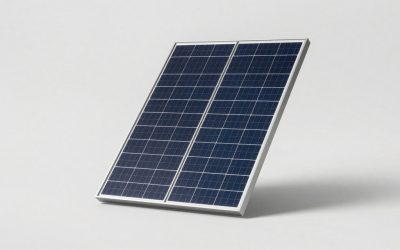
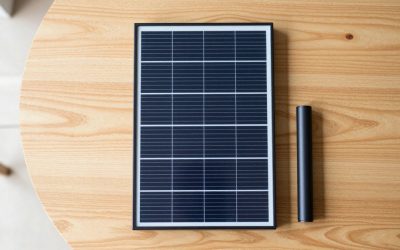
The Nomad 20 is a well-known foldable panel with a 20 W rating, a kickstand, and USB output. The kickstand lets you tilt it directly at a window to catch more light, and it works with a standard power bank or small power station. It is rugged enough to move outdoors when you can.
It is pricier than some competitors, and, like every panel, it depends on direct light. Place it against the glass rather than deeper in the room.
Best value panel: Anker 625 Solar Panel
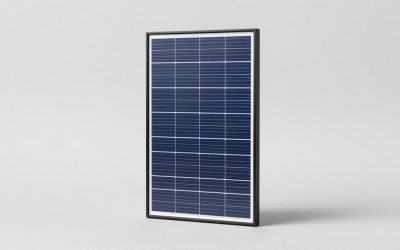
The Anker 625 is a foldable 24 W panel with USB ports and simple setup. It offers more rated power for the price than many alternatives and folds to a size that is easy to store. In a bright window it can partially top up phones and small batteries.
Output depends heavily on the angle and brightness, and USB-A ports limit fast-charge speeds.
Best larger panel: BigBlue SolarPowa 28
This 28 W foldable panel gives a larger collecting area, which is the most useful trait in dim light. Multiple output ports let you charge a phone and a bank at once. Reviewers have described it as a leading choice among portable panels.
It is bulkier than smaller panels, so it needs more window space and storage room.
Best indoor-marketed bank: SlanKIT Roaming Solar
This 6,000 mAh power bank has a double-layered panel that the maker markets for indoor and outdoor light. It suits desk use and light travel where the main need is a reliable battery that gets a small extra trickle from a sunny spot.
Treat the panel as a bonus. You should still plan to charge the bank from a wall outlet or USB port for real use.
Best large emergency bank: Anker PowerCore Solar 20000
With 20,000 mAh of storage, this bank provides several full phone charges before it runs out. The solar panel keeps the bank from fully discharging over weeks and helps in a pinch, but it is not designed as a primary charger.
A bank this size can take days of strong sun to fill from empty, so use a wall charger for the real recharge.
How to choose an indoor solar charger
Panel size matters more than the label
In weak light, area is what counts. A 20 to 28 W foldable panel gathers many times more energy than the small panel on a power bank. If you want solar at all indoors, choose a separate panel.
Pair it with a battery
Trickle currents are too variable to charge a phone directly. Charge a power bank during the day and use that for your devices. Look for a bank with pass-through or low-current charging support.
Mind the window
South-facing windows in the northern hemisphere get the most light. Low-E glass, tint, and screens can cut output substantially. Open the window or place the panel outside on a ledge when conditions allow.
Know when not to buy one
If you only use it indoors in a dim room, a solar charger will not meaningfully charge anything. A wall charger or a power bank is cheaper and more reliable. Solar is worth it mainly as a backup, for a sunny window, a balcony, or outdoor trips.
Frequently Asked Questions
Can solar chargers work indoors?
Yes, but at a small fraction of their rated output. Near a bright window they may deliver a few watts, while in ordinary room lighting the output is close to zero.
Do solar power banks charge through a window?
They can, slowly. Glass reduces light and the small panels on power banks are tiny, so expect days of sun to add even a partial charge.
What is the best way to charge a phone with solar?
Use a foldable panel of at least 20 W in direct sun and charge a power bank, then charge the phone from the bank. This is more efficient and protects your phone from unstable current.
Are there solar chargers designed for indoor light?
Some small devices use amorphous or similar panels tuned for low light, but they produce only milliwatts. They suit low-power electronics such as calculators or sensors, not phones.
How long does a solar charger last?
Panels often last years if kept clean and folded carefully, while built-in batteries wear out after several hundred charge cycles. Store the charger at moderate temperatures and avoid leaving it fully discharged for months.


Write Your Review
No reviews yet. Be the first to share your experience!