

Key takeaways
- Large, mostly carpeted offices: Choose a commercial upright with a powered brush roll, a 40–50 foot cord, and a sealed high-efficiency filter.
- Desks, corridors, theaters, and retail displays: Choose a backpack vacuum with a 10–12 quart bag and a 50–60 foot cord, or a commercial cordless model if noise and cable handling matter most.
- Hard floors, stairs, furniture, and mixed surfaces: Choose a canister with switchable floor tools, a long hose, and a wand that reaches at least 10 feet.
- Large hard-floor areas: Consider a wide-area cylindrical or canister machine rather than a conventional upright; it may cover more floor per pass without relying on aggressive carpet agitation.
- Lowest operating cost: Favor a durable corded machine using widely available paper bags, cloth bags, or washable filters instead of a proprietary battery system.
The best commercial vacuum cleaners are chosen by floor type and cleaning pattern: use an upright for large carpeted areas, a backpack vacuum for crowded offices and frequent detail work, and a canister for hard floors, stairs, edges, and mixed surfaces.
Our top picks


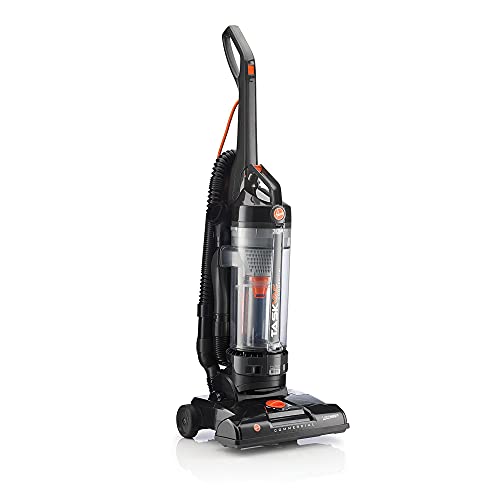
As an Amazon Associate we earn from qualifying purchases at no extra cost to you. Ratings are shown as listed on Amazon.
Quick picks by cleaning situation
- Large, mostly carpeted offices: Choose a commercial upright with a powered brush roll, a 40–50 foot cord, and a sealed high-efficiency filter.
- Desks, corridors, theaters, and retail displays: Choose a backpack vacuum with a 10–12 quart bag and a 50–60 foot cord, or a commercial cordless model if noise and cable handling matter most.
- Hard floors, stairs, furniture, and mixed surfaces: Choose a canister with switchable floor tools, a long hose, and a wand that reaches at least 10 feet.
- Large hard-floor areas: Consider a wide-area cylindrical or canister machine rather than a conventional upright; it may cover more floor per pass without relying on aggressive carpet agitation.
- Lowest operating cost: Favor a durable corded machine using widely available paper bags, cloth bags, or washable filters instead of a proprietary battery system.
Upright vs. backpack vs. canister
| Vacuum type | Typical working width | Typical weight | Typical cord | Best use | Main limitation |
|---|---|---|---|---|---|
| Commercial upright | 12–18 inches | 15–22 lb | 35–50 ft | Open carpet, offices, schools, hotels | Less agile around furniture and stairs |
| Backpack | 10–14 inch floor tool | 10–14 lb before hose and wand | 50–60 ft, or 30–60 minutes cordless | Dense furniture, aisles, stairs, overhead dusting | Requires correct harness adjustment and operator training |
| Canister | 10–15 inch floor head | 10–18 lb, excluding hose assembly | 30–50 ft | Hard floors, stairs, edges, mixed surfaces | Body and hose must be pulled around the room |
| Wide-area vacuum | 24–32 inches | 55–110 lb | 50–75 ft, or battery-powered | Convention centers, warehouses, large corridors | Needs storage space and clear, open paths |
These are useful buying ranges rather than a promise that every model will match them. Brush height, filtration, attachments, and empty-versus-full weight can change the practical result. A lighter machine is not automatically easier to use: a poorly balanced backpack or a narrow upright that needs repeated passes can increase fatigue and labor time.
Commercial uprights: the productivity choice for carpet
An upright is usually the best commercial vacuum cleaner for uninterrupted carpet. Its powered brush roll lifts embedded grit more effectively than a suction-only floor tool, while the operator can work in straight lanes without dragging a separate canister. Look for a height-adjustable brush, a brush-roll shutoff for hard floors, a replaceable belt, and a 12-inch or wider cleaning path.
Uprights such as the SEBO G4, Kärcher CV 66/2, and Hoover Commercial HushTone represent different approaches to professional carpet cleaning. The important comparison is not the badge but the service design: can the brush roll be removed without specialist tools, are belts and bags easy to source, and does the machine have a sealed air path?
For offices with low-pile carpet, excessive brush agitation can damage fibers or scatter loose debris. Set the brush height correctly and avoid running a carpet-only upright over wet spills, thick mats, or unapproved hard flooring.
Backpack vacuums: the maneuverability choice
Backpacks excel where chairs, shelves, partitions, and retail fixtures make an upright slow. The operator carries the motor and collection container, leaving both hands available to guide the wand and floor tool. A long cord reduces outlet changes, which can make a meaningful difference in a hotel corridor or multi-room office.
Models such as the ProTeam Super CoachVac are examples of the established commercial backpack format. When comparing one, check the harness width, hip-belt adjustment, hose swivel, total loaded weight, and whether the floor tool remains stable on the surface. A backpack should sit close to the operator’s back rather than hang from the shoulders.
Training matters. The wand should be moved with short, controlled strokes while the user keeps the hose behind the body and maintains a clear route. A backpack is a poor choice if workers cannot be trained on fit, lifting, stair safety, and cord awareness. For a small team that cleans only occasionally, a canister may be easier to share.
Canisters: the flexible mixed-floor choice
Canisters are often the most versatile option for facilities containing tile, sealed concrete, wood, carpet runners, stairs, upholstery, and narrow edges. Their separate hose and wand can reach under furniture and along baseboards, and the floor head can be changed without moving a heavy upright through every room.
Choose a model with a metal or reinforced polymer wand, a crush-resistant hose, large caster wheels, and a floor tool with soft bristles for delicate hard flooring. A switchable suction control is useful for rugs and lightweight mats. Commercial canisters from brands such as Numatic are commonly configured with large bags and extensive accessory options, but confirm that the selected configuration includes the floor head and filtration level your building requires.
Suction, airflow, and floor-tool design
Published suction figures are difficult to compare because manufacturers may measure sealed suction, airflow, or motor power at different points. A higher wattage number does not guarantee better cleaning. For carpet, the brush roll and nozzle seal are at least as important as motor strength. For hard floors, airflow through the tool, edge pickup, and a gap-free head often matter more than aggressive agitation.
Ask for the machine’s airflow or performance data at the hose or floor head when available, and prioritize a powered brush for carpet. A machine that sounds powerful but leaks air around a damaged hose or loose bag collar will lose cleaning performance quickly.
Filter type: match filtration to maintenance capacity
- Standard cloth or foam filters: Affordable and reusable, but they need regular cleaning and may allow more fine dust through than a sealed high-efficiency system.
- HEPA filters: Useful when fine-particle capture is a priority. They are not a substitute for a sealed body, correctly fitted bags, or safe handling of collected dust.
- Disposable high-filtration bags: Convenient and hygienic, with consistent airflow until the bag fills. Their recurring cost must be included in the budget.
- Washable cartridge filters: Reduce consumable waste, but only if the filter can be fully dried before reuse. A damp filter can restrict airflow and create odor problems.
For a green cleaning program, do not select a washable filter solely to avoid paper bags. Compare the machine’s energy use, expected service life, replacement-part availability, and the amount of discarded material. A durable corded vacuum kept for eight years can have a lower total footprint than a short-lived unit with fewer consumables.
Decision matrix for common facilities
| Situation | Recommended format | Specifications to prioritize | Why |
|---|---|---|---|
| Small office, weekly cleaning, limited budget | Compact commercial canister | 30–40 ft cord, 2–4 gallon bag, washable prefilter | Low purchase and storage burden; handles mixed flooring |
| Daily open-plan office with mostly carpet | Commercial upright | 12–16 inch path, 40–50 ft cord, powered brush, sealed filtration | Fast lane cleaning and strong carpet agitation |
| Busy retail store with fixtures and narrow aisles | Backpack | 10–12 quart capacity, 50–60 ft cord, ergonomic harness | Fewer collisions and less furniture repositioning |
| Stairs and hard floors every day | Canister | Long hose, soft floor head, stair tool, sealed filter | Better reach and surface control |
| Large hall or warehouse with clear paths | Wide-area vacuum | 24–32 inch path, large wheels, 50 ft or longer cord | Fewer passes over expansive floor areas |
Use coverage and cord length to estimate productivity
Suppose an office has 12,000 square feet of carpet. A 14-inch upright has a nominal path of 1.17 feet. At an effective speed of 2 feet per second, its theoretical coverage is about 8,400 square feet per hour. Allowing 30 percent for turns, furniture, outlet changes, and overlaps reduces practical coverage to roughly 5,900 square feet per hour. The first pass would therefore take about two hours, before emptying the bag or dealing with obstacles.
A 50-foot cord can cover a broad room, but the usable radius is limited by walls, furniture, and the outlet location. Use commercial-grade extension cords only when the manufacturer permits them, and choose the correct gauge. Never connect cords in a way that creates a trip hazard. A longer cord is valuable only when it reduces interruptions without compromising safety.
Ownership costs and maintenance realities
The parts that usually wear first are brush-roll bristles, belts, floor-tool wheels, hose cuffs, cord strain reliefs, and filters. Hair and thread can stop a brush roll long before the motor fails. Fine dust can clog a filter, while overfilled bags reduce airflow and increase motor heat.
- Inspect the brush roll and floor head after each shift in heavy-use areas.
- Empty or replace the bag before it is packed solid; leave reserve capacity for airflow.
- Clean washable filters according to the manual and let them dry completely.
- Check the hose for cracks and the cord for cuts, flattened sections, or hot spots.
- Replace worn belts and brush strips rather than compensating with repeated passes.
- Keep a spare hose, belt, bags, and filters on site if the vacuum is essential to daily operations.
As a simple ownership calculation, a $700 commercial vacuum used five days per week for six years provides about 1,560 cleaning days. Before bags, filters, repairs, electricity, and labor, its equipment cost is approximately $0.45 per cleaning day. A cheaper unit that lasts two years may cost more per day if it requires frequent replacement or slows the worker. Ask the supplier for a parts diagram and service schedule before buying.
Bottom line
Choose the best commercial vacuum cleaners by matching the tool to the floor and the operator: an upright for productive carpet lanes, a backpack for crowded spaces, a canister for mixed surfaces and stairs, and a wide-area machine for open expanses. Favor sealed filtration, repairable components, practical cord length, and readily available consumables. The most sustainable choice is usually the machine that cleans in fewer passes, remains serviceable for years, and fits the people who will use it every day.




Write Your Review
No reviews yet. Be the first to share your experience!