

Key takeaways
- How to choose a smart water leak detector: five sensor picks compared on hubs, alert channels, alarm volume, stated range and battery life at home.
- Top Pick: YoLink Water Leak Starter Kit: Hub + 4 Leak Sensor 1
- Runner-up: Govee WiFi Water Leak Detector, 3 Pack
- Also consider: Govee Water Leak Detector, 1 Pack (Standalone Alarm)
A leak detector is a small sensor placed where water escapes first: beside the water heater, under a sink, behind the washing machine, near a basement floor drain. When its contacts get wet, it raises the alarm. The products differ less in that basic job than in how the alert reaches you, and that difference is what this guide is really about.
Some sensors talk to a hub, some connect to WiFi directly, and one pick here does neither and simply makes a loud noise in the room. Some need extra equipment you may not own yet; others work alone out of the box. The five picks below are compared on exactly those points, using the alert channels, ranges and battery figures their listings state, so you can match a detector to your home and your phone habits.
As an Amazon Associate, we earn from qualifying purchases.
Quick answer
Start with how you want to be alerted. YoLink’s kit pairs four sensors with a hub for app, text and email alerts. Govee and SwitchBot offer WiFi sensors with app alerts and a 100dB alarm, Ring’s sensor needs a Ring Alarm Base Station, and Govee’s simplest pick is a standalone sound-only alarm with no app at all.
YoLink Water Leak Starter Kit: Hub + 4 Leak Sensor 1

The YoLink kit is the hub-based option, and the hub is included: this listing bundles a YoLink Hub with four Leak Sensor 1 sensors, so one purchase covers four wet spots. The sensors use LoRa long-range wireless, and the maker claims up to a quarter mile of open-air range for the system, which is the maker’s figure and best read as a best-case outdoor number rather than a through-walls promise.
Alerts come through the app, by SMS text and by email, per the listing, and the listing also names device-to-device offline triggers, where a sensor can trigger another YoLink device directly. The sensors run on 2 AAA batteries, with up to 5-year battery life stated in the listing title, again the maker’s figure. The system is listed as compatible with Alexa, IFTTT and Home Assistant. Note that a hub is required for this system to work, and in this kit it is in the box. A different YoLink bundle built around a speaker hub is a separate listing and is not the kit described here.
Govee WiFi Water Leak Detector, 3 Pack

Govee’s WiFi set takes the direct route: three sensors that connect over WiFi and send alerts by email and app push, with no separate hub in the picture. Each sensor also carries a sound alarm, rated in the listing title at 100dB and adjustable, so a leak can announce itself in the room as well as on your phone.
The listing aims the set at home and basement use, which fits the three-pack format: water heater, laundry area and one bathroom, for example, covered in a single purchase. Keep the pack sizes separate in your mind when comparing, because Govee sells this WiFi detector in other pack counts under separate listings, and the alert features described here belong to this WiFi model. That last point matters for the next pick, which shares the brand and the alarm rating but not the connectivity. For a household that wants phone alerts without adding a hub to the network shelf, this is the straightforward configuration in the roundup.
Govee Water Leak Detector, 1 Pack (Standalone Alarm)

This single Govee sensor is the simplest product in the guide, and its listing is admirably blunt about the trade: it cannot connect to Wi-Fi directly. There are no app alerts, no email, no phone notification of any kind. What it does is sound a 100dB adjustable audio alarm when it senses a leak or a drip, in the room where it sits.
That makes it a detector for places where someone is usually within earshot: a utility room off a lived-in basement, a kitchen sink cabinet in a busy house. It also makes it the wrong choice for a vacant property or a leak spot far from where anyone spends time, because an alarm nobody hears is only half a system. The sensor needs no hub, no network and no account, which is its own kind of simplicity. Do not let the shared brand confuse the comparison: the WiFi model’s email and app features do not transfer to this pick, and the listing says so in its own title.
Ring Alarm Flood & Freeze Sensor
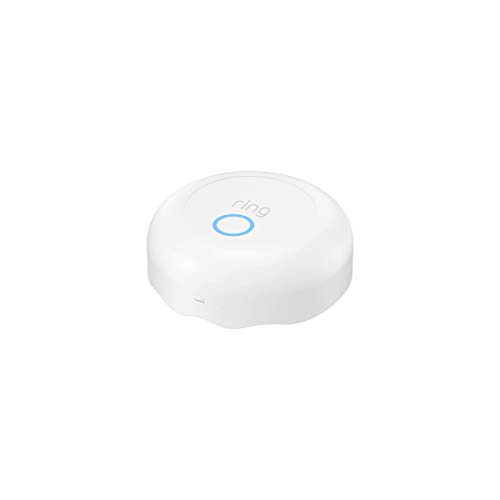
Ring’s sensor watches for two things rather than one: its listing describes real-time alerts for leaks and for low temperature, the second aimed at the frozen-pipe scenario where a burst is preceded by a cold snap in an unheated space. It is a detection and alerting device: it tells you what its sensors find, and what happens next is up to you.
The requirement that decides this pick is stated in the listing itself: a Ring Alarm Base Station is required, and it is not included here. If your home already runs a Ring Alarm system, this sensor drops into it as one more zone. If it does not, the true purchase is the base station plus the sensor, and that changes the comparison against the hub-included YoLink kit and the hub-free WiFi options. A newer generation of this sensor exists under separate listings with different features; those features belong to those listings and are not merged into this pick. Weigh it as what it is: the natural add-on for existing Ring Alarm households, and a bigger commitment for everyone else.
SwitchBot WiFi Water Sensor, 3 Pack
SwitchBot’s entry is a three-pack of WiFi sensors with two alert paths: a 100dB adjustable alarm on the device and app alerts on your phone, per the listing title. The listing also rates the sensor IP67 waterproof, and states plainly that no hub is required, which puts it in the same easy-start camp as the Govee WiFi set.
Two limits are worth noting from the listing. The WiFi support is 2.4 GHz only, so the sensors belong on a 2.4 GHz network or band, as with much smart-home gear. And SwitchBot sells a different version of this sensor with a sensing cable under a separate listing; cable length figures belong to that listing only and say nothing about this three-pack, which uses the standard sensor format. Between the two hub-free WiFi options here, the choice comes down to ecosystem and app preference: this one suits households already using SwitchBot devices, while the Govee set suits those already in Govee’s lighting and sensor app.
How to choose
Choose the alert channel first, because it decides everything else. If a leak at 3 a.m. or in an empty house must reach your phone, you need app, text or email alerts: the YoLink kit, the Govee WiFi set, the SwitchBot set or the Ring sensor. If the spot is in a lived-in part of the home, a loud local alarm, like the standalone Govee’s, may be enough on its own.
Then count the infrastructure. YoLink includes its hub in the kit. Ring requires a base station that is not included. Govee WiFi and SwitchBot need no hub but do need WiFi, and SwitchBot states 2.4 GHz support only. Battery and range figures, where listings state them, are makers’ figures: YoLink’s up-to-5-year battery life and quarter-mile open-air range are the listing’s claims, useful for comparison but not guarantees. Finally, place sensors where water actually appears: heater pans, sink cabinets, laundry connections, refrigerator lines and low basement corners, one sensor per spot, rather than one sensor expected to cover a whole floor.
Who should skip
Skip every product here if what you actually want is automatic shutoff: these are detectors and alarms, not valves, and none of them stops water flowing. Skip the Ring sensor if you do not own, and do not plan to buy, a Ring Alarm Base Station. Skip the standalone Govee alarm if the sensor will sit somewhere unoccupied for long stretches, since its only alert is sound in the room. Skip hub-based kits if you are unwilling to keep one more small box plugged into your router. And skip buying a single sensor for a whole house; coverage in this category is one sensor per leak spot.
FAQ
Do leak detectors stop leaks or prevent damage?
No. The products here detect water and alert you, by sound, app, text or email depending on the model. Stopping the flow requires a shutoff valve, which is a different product class and not part of any listing in this guide.
Which of these need a hub or base station?
The YoLink kit requires its hub, which is included in the box. The Ring sensor requires a Ring Alarm Base Station, which is not included. The Govee WiFi set and the SwitchBot set need no hub, and the standalone Govee needs nothing but its own battery.
Where should sensors be placed?
At individual leak spots: beside the water heater, under sinks, behind the washing machine, near refrigerator water lines and at low points in a basement. Each sensor watches the spot it sits on, so multi-packs exist to cover several spots at once.
What WiFi do these sensors use?
The SwitchBot listing states 2.4 GHz support, and its sensors need a 2.4 GHz network. The YoLink sensors talk to their hub over the maker’s long-range wireless link rather than your WiFi, with the hub making the internet connection.
Final verdict
For the widest alert net in one box, the YoLink kit is the strongest pick: four sensors, a hub included, and app, text and email alerts, with the range and battery figures understood as the maker’s claims. For hub-free phone alerts, the Govee WiFi three-pack and the SwitchBot three-pack are evenly matched and split mainly on ecosystem. Ring’s sensor is the right buy only for existing Ring Alarm homes. And the standalone Govee alarm earns its place as the simple, network-free option for occupied rooms. Match the alert path to your life first, and the rest of the choice follows.
More from Amazon
Programs that pair well with the guide above. Offers and eligibility are set by Amazon and may change.
Free shipping on eligible items, Prime Video and more. Eligible new members can start with a free trial.
Start a Prime free trialA Prime membership for ages 18-24 with a trial period. Eligibility is set by Amazon.
See Prime for Young AdultsAudiobooks and podcasts to listen to on the go. Eligible new members can start with a free trial.
Try Audible freeAd-free music streaming. Eligible new subscribers can start with a free trial.
Try Music Unlimited freeAs an Amazon Associate we earn from qualifying purchases.









Write Your Review
No reviews yet. Be the first to share your experience!