

Key takeaways
- Kitchen: favor an 8-inch or larger screen, a strong speaker, readable text, timers, recipe access, and easy cleaning. Keep it away from direct splashes and heavy steam.
- Bedside: favor a 5- or 7-inch display, a quiet alarm interface, microphone controls, and preferably no camera. Turn off unnecessary notifications and bright overnight features.
- Family room: favor camera feeds, video calling, music controls, and a display angle visible from seating areas.
- Wall dashboard: favor the Echo Show 15 or 21, but account for installation, cable management, and the risk that a fixed screen becomes visual clutter.
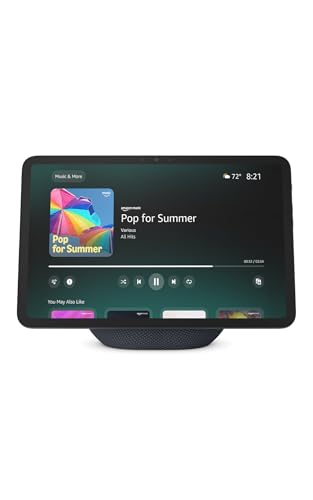
The best smart displays for most connected homes are the Google Nest Hub (2nd Gen) for a compact, low-distraction kitchen screen, the Amazon Echo Show 8 (3rd Gen) for the strongest all-around balance, and the Echo Show 15 or 21 for a wall-mounted family dashboard.
The right choice depends less on screen resolution than on your existing voice assistant, available counter space, camera preferences, and whether the display must control a broad mix of lights, locks, sensors, cameras, and appliances. A smart display can become a useful household control panel—but it can also become an expensive screen that sits unused if it does not fit your routines.
Our top picks


As an Amazon Associate we earn from qualifying purchases at no extra cost to you. Ratings are shown as listed on Amazon.
Best smart displays at a glance
| Model | Screen and size | Assistant | Camera privacy | Best fit | Typical market range |
|---|---|---|---|---|---|
| Google Nest Hub (2nd Gen) | 7-inch display; about 7.0 × 4.7 × 2.7 inches | Google Assistant | No camera; microphone switch | Bedside tables, kitchens, sleep and media basics | About $50–$100 |
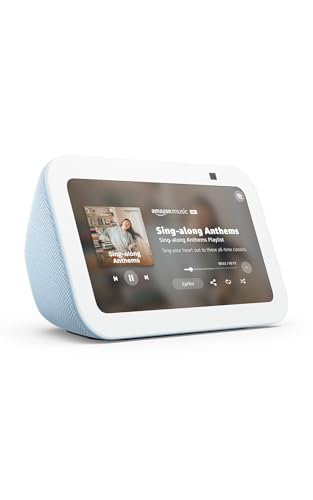
| Amazon Echo Show 5 (3rd Gen) | 5.5-inch display; about 5.8 × 3.4 × 2.9 inches | Alexa | Physical camera shutter; microphone/camera controls | Small bedside tables and simple visual commands | About $50–$90 |
| Amazon Echo Show 8 (3rd Gen) | 8-inch display; about 7.9 × 5.5 × 4.2 inches | Alexa | Physical camera shutter; microphone/camera controls | Most kitchens, offices, and general household use | About $100–$170 |
| Amazon Echo Show 10 (3rd Gen) | 10.1-inch display; rotating motorized screen | Alexa | Physical camera shutter; microphone/camera controls | Video calls and rooms where viewing angles change | About $180–$250 when available |
| Amazon Echo Show 15 | 15.6-inch display; wall-mount format | Alexa | Physical camera shutter; microphone/camera controls | Shared calendars, lists, recipes, and family dashboards | About $250–$350 |
| Amazon Echo Show 21 | 21-inch display; wall-mount format | Alexa | Physical camera shutter; microphone/camera controls | Large kitchens and high-visibility household information | About $350–$450 |
Dimensions and prices can vary by revision, bundle, and retailer. Treat the figures as buying estimates rather than guarantees. All of these are mains-powered devices; none is designed to operate as a portable, battery-powered tablet.
Best overall: Amazon Echo Show 8 (3rd Gen)
The Echo Show 8 is the easiest recommendation for a mixed-device home. Its 8-inch screen is large enough to read recipes, timers, weather, calendars, camera feeds, and music controls without taking over a counter. Alexa also supports a broad range of third-party smart-home products, including many lights, plugs, thermostats, cameras, doorbells, and routines.
The physical camera shutter is important in a kitchen or bedroom. Sliding it closed blocks the camera lens, while the microphone and camera controls let you disable sensing when needed. The screen is still not a private computer: voice requests are processed according to Amazon’s account and cloud settings, so review voice-history deletion and household profiles during setup.
Choose this model if you want one display to handle daily timers, shopping lists, video calls, music, smart-home controls, and occasional entertainment. It is less suitable if your household is built around Google services or if you want a screen with no camera at all.
Best compact, camera-free option: Google Nest Hub (2nd Gen)
The Nest Hub (2nd Gen) is a strong choice for people who want visual information without placing a camera in a bedroom or kitchen. Its 7-inch screen works well for timers, recipes, music, podcasts, photo slideshows, compatible cameras, and basic home controls. A hardware switch disables the microphones.
Google’s interface is especially convenient for households already using Google Calendar, Google Photos, YouTube, Google Maps, and other Google services. It can also control compatible Matter and Works with Google Home devices, although not every brand exposes every feature through Google Home.
The main limitation is that the Nest Hub has no camera for video calls and its compact screen can feel cramped for detailed dashboards. Its sleep-sensing features may appeal to some bedside users, but they are not a substitute for clinical monitoring or professional advice. For a quiet alarm, weather, music, and automation panel, it is a better fit than a camera-equipped display.
Best for a small bedside table: Echo Show 5
The Echo Show 5 makes sense when space is the deciding factor. Its 5.5-inch screen can show an alarm, clock, weather, music controls, and simple routines while occupying considerably less space than an 8-inch model. The physical camera shutter helps when the device is pointed toward a bed or dressing area.
Its small screen is the trade-off. Recipes, security-camera feeds, video calls, and multi-step smart-home controls are less comfortable to view. Text can also be difficult to read from across a room. Buy it for close-range interaction, not as a household command center.
Best for a family dashboard: Echo Show 15 or Echo Show 21
The Echo Show 15 and 21 are fundamentally different from tabletop displays. Mounted vertically or horizontally, they can present shared calendars, reminders, grocery lists, weather, recipes, photos, and smart-home widgets where multiple people can see them. The 21-inch version is easier to read from a distance, while the 15.6-inch model is more practical for narrower walls.
Measure before buying. A 21-inch diagonal screen has a display area roughly 18.3 inches wide by 10.3 inches high in a 16:9 layout, before accounting for its frame and mounting clearance. It needs a nearby power route and a wall that can accept the mounting hardware. Mounting it beside a sink or cooktop also exposes it to steam, grease, and splashes, so a nearby wall is safer than the busiest part of a backsplash.
Head-to-head buying decisions
Alexa versus Google Assistant
Alexa is usually the safer platform for a home containing many brands and specialized accessories. Its routines and device ecosystem are broad, and Echo displays are available in more screen sizes. Google Assistant is often more natural for Google calendars, photos, maps, and YouTube-oriented households.
Do not choose by assistant alone. Check whether your exact thermostat, doorbell, robot vacuum, light switches, and security devices support the platform’s controls you need. “Compatible” may mean only turning a device on and off, not changing every setting available in the manufacturer’s app.
Kitchen or bedside?
- Kitchen: favor an 8-inch or larger screen, a strong speaker, readable text, timers, recipe access, and easy cleaning. Keep it away from direct splashes and heavy steam.
- Bedside: favor a 5- or 7-inch display, a quiet alarm interface, microphone controls, and preferably no camera. Turn off unnecessary notifications and bright overnight features.
- Family room: favor camera feeds, video calling, music controls, and a display angle visible from seating areas.
- Wall dashboard: favor the Echo Show 15 or 21, but account for installation, cable management, and the risk that a fixed screen becomes visual clutter.
Privacy and power-saving features to check
Look for a physical microphone switch rather than relying only on an onscreen setting. If the model has a camera, a physical shutter is preferable to a software-only control. During setup, review voice-history retention, household profiles, purchasing by voice, personalized advertising, calling permissions, and which devices can appear on the dashboard.
Power consumption is modest but continuous. A display averaging 4 watts uses about 35 kilowatt-hours per year:
4 watts × 24 hours × 365 days ÷ 1,000 = 35.04 kWh per year.
At an electricity rate of $0.20 per kilowatt-hour, that is roughly $7 per year. A larger, brighter display may use more, especially when showing video. Enable adaptive brightness, scheduled quiet hours, screen-off periods, and ambient-light or low-power modes where available. These settings reduce glare and energy use, but a device still needs to remain connected to power for voice commands and automations.
Durability, cleaning, and ownership realities
The first parts likely to cause frustration are not the screen panel itself but the power adapter, microphone behavior, camera shutter, and accumulated dust or grease around the speaker grille. Do not spray cleaner directly onto the display. Unplug it, use a soft dry or slightly damp microfiber cloth, and keep liquid away from openings. Kitchen owners should clean more frequently and avoid placing the device next to flour, oil, or boiling kettles.
Common mistakes include buying a screen that is too small to read, putting a camera in a private room without using its shutter, mounting a display where glare makes it unusable, and assuming every smart-home brand will expose advanced controls. Also remember that cloud-dependent features can change when software support, accounts, or third-party integrations change.
A practical choice by situation
| Your situation | Best starting point | Why |
|---|---|---|
| Under about $100 and limited space | Nest Hub (2nd Gen) or Echo Show 5 | Compact control panels with the essential display features |
| Mixed-brand smart home | Echo Show 8 | Broad Alexa compatibility and a readable mid-size screen |
| Google-centered household | Nest Hub (2nd Gen) | Convenient Google calendar, photo, media, and Home integration |
| Frequent video calls | Echo Show 8 or Echo Show 10 | Camera-equipped models with more comfortable viewing areas |
| Shared family schedules and lists | Echo Show 15 or 21 | Wall-mounted information visible to several people |
| Privacy-first bedside use | Nest Hub (2nd Gen) | No camera and a physical microphone switch |
Bottom line
Choose the Nest Hub (2nd Gen) if you want a compact, camera-free Google display; the Echo Show 5 if the smallest footprint matters most; the Echo Show 8 if you want the best balance of screen size and smart-home usefulness; and the Echo Show 15 or 21 if your goal is a visible family dashboard. Before purchasing, measure the space, confirm platform compatibility for your important devices, and configure privacy and power-saving settings on the first day.


Write Your Review
No reviews yet. Be the first to share your experience!