

Key takeaways
- Buying before checking wiring. A missing C-wire is the most common installation problem.
- Setting extreme setbacks. With heat pumps, large changes can trigger expensive auxiliary heat.
- Ignoring the sensor placement. Place sensors away from windows, vents and direct sun.
- Overlooking privacy. Review data settings in the app, particularly for occupancy sensing.
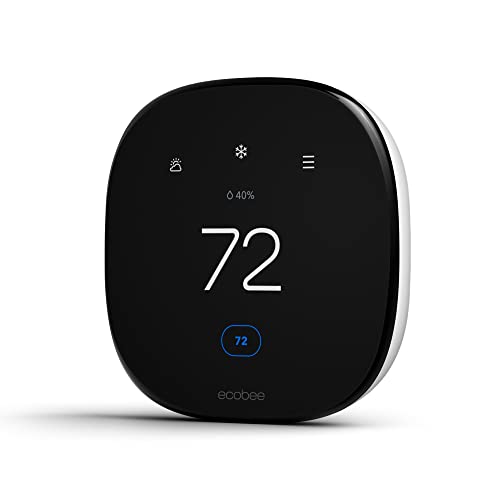
The best smart thermostat for most homes in 2026 is the ecobee Smart Thermostat Premium, with the Google Nest Learning Thermostat (4th generation) as the pick if you want automatic scheduling and live in the Google ecosystem. The Google Nest Thermostat and ecobee Enhanced cover the middle ground, the Sensi Touch 2 suits homes without a C-wire, and the Honeywell Home T9 suits multi-room setups with remote sensors. Check your wiring and system type before you choose.
Our top picks



As an Amazon Associate we earn from qualifying purchases at no extra cost to you.
Quick comparison
| Thermostat | Best for | Room sensors | Ecosystem | C-wire | Price tier |
|---|---|---|---|---|---|
| ecobee Smart Thermostat Premium | Best overall | One SmartSensor included, more sold separately | Alexa, Google, Apple Home, SmartThings, Matter | Power adapter included for homes without one | Upper-mid |
| Google Nest Learning Thermostat (4th gen) | Hands-off learning | One temperature sensor in the box | Google Home, Matter | Not required, power sharing built in | Premium |
| ecobee Smart Thermostat Enhanced | Value with sensors | Sensor support | Alexa, Google, Apple Home | Required or adapter | Mid-range |
| Google Nest Thermostat | Simple and affordable | Limited | Google Home | Not always required | Budget to mid |
| Honeywell Home T9 | Multi-room control | Remote sensors sold separately | Alexa, Google, Apple Home | Required, adapter kit available | Mid-range |
| Sensi Touch 2 | Batteries, no C-wire | No | Alexa, Google, Apple Home | Works without | Mid-range |
Features follow the makers’ published sheets and roundup coverage. Matter support has changed with firmware updates, so confirm it for your model.
Best overall: ecobee Smart Thermostat Premium
Reviewers split between the ecobee and the Nest, but most name the ecobee Premium first because it includes a room sensor, an air-quality monitor, voice assistant support and the widest ecosystem list including Apple Home. The sensor lets it prioritize the rooms you actually occupy, which is the main practical advantage over a thermostat that reads only the hallway. The trade-off is a less polished learning mode than the Nest.
Best learning thermostat: Google Nest Learning Thermostat (4th gen)
The Nest builds a heating and cooling schedule from how you adjust it, and the newest model has a larger display and a power-sharing feature that reduces the need for a C-wire. A remote temperature sensor comes in the box. Google claims energy savings in its own studies, but your result depends on your habits and home. It costs more than most rivals and works best if you already use Google Home.
Best middle ground: ecobee Enhanced and Google Nest Thermostat
The ecobee Enhanced keeps the sensor ecosystem and the Apple Home support at a lower price, while the Google Nest Thermostat is the simplest and cheapest from a major brand. The cheaper Nest has fewer sensing options and no learning features compared with the pricier Nest.
Best for many rooms: Honeywell Home T9
The T9 suits homes with hot and cold rooms because you can add remote sensors and choose which to follow. Sources disagree on whether it needs a C-wire adapter kit and on Matter support, so check the box contents and your firmware.
Best without a C-wire: Sensi Touch 2
This model can run on batteries, so it is practical in older houses with only two or four wires at the thermostat. The drawback is that it lacks the occupancy and learning features of the larger brands.
Worked calculation: what you might save
The US Department of Energy says setting a thermostat back 7 to 10 degrees Fahrenheit for 8 hours a day can cut heating and cooling costs by up to about 10 percent a year. A smart thermostat automates this.
| Scenario | Calculation | Result |
|---|---|---|
| Heating and cooling are half of the annual energy bill | 10 percent savings on that half | about 5 percent off the whole bill |
| Heating and cooling are 60 percent of the bill | 8 percent savings on that portion | about 4.8 percent off the whole bill |
| Empty house 9 hours on weekdays | Setback of 8 degrees | Results near the upper end of the range |
If the thermostat costs a mid-range price and your annual bill is moderate, payback often takes a couple of years, sometimes longer. Utility rebates in Pennsylvania and elsewhere can shorten this, so check your provider’s programs.
Compatibility checklist
- Turn off the power at the breaker, then remove the old thermostat cover and photograph the wires.
- Look for a C-wire, the common wire that supplies constant power. If you lack one, choose a model with a power adapter, power sharing or battery operation.
- Check the voltage. Standard thermostats use low voltage (24V). Electric baseboard heaters use line voltage (120 or 240V) and need a line-voltage model, such as Mysa, not these.
- Check the system type. Heat pumps, multi-stage systems and dual-fuel setups require support for those wire labels.
- Use the maker’s compatibility checker before ordering.
Mistakes to avoid
- Buying before checking wiring. A missing C-wire is the most common installation problem.
- Setting extreme setbacks. With heat pumps, large changes can trigger expensive auxiliary heat.
- Ignoring the sensor placement. Place sensors away from windows, vents and direct sun.
- Overlooking privacy. Review data settings in the app, particularly for occupancy sensing.
Decision matrix by situation
| Your situation | Choose | Reason |
|---|---|---|
| Family home with hot and cold rooms | ecobee Premium or Honeywell T9 | Room sensors balance uneven temperatures |
| Want it to program itself | Nest Learning Thermostat | Learns your routine from adjustments |
| Use Apple Home | ecobee Premium or Enhanced | Native Apple Home support |
| Older house without a C-wire | Sensi Touch 2 or a Nest with power sharing | Fewer wiring changes needed |
| Tight budget | Google Nest Thermostat | Core smart features at a lower price |
| Electric baseboard heat | A line-voltage model such as Mysa | Standard thermostats are low voltage |
Settings that cut energy use
- Use setbacks, not constant changes. Lower the heat by 7 to 10 degrees Fahrenheit for about 8 hours while you sleep or are out, following the Department of Energy guidance.
- Turn on geofencing or occupancy sensing so the system adjusts when the house is empty.
- Limit heat pump auxiliary heat. Large morning recovery jumps can trigger electric backup heat, which is costly; use gradual schedule steps instead.
- Review the app’s energy report monthly to spot long run times, which can point to a dirty filter or a drafty window.
- Use sensors well. Follow the bedroom at night and the living area during the day.
Pennsylvania-specific notes
Pennsylvania homes often mix older forced-air systems, hot-water radiators and heat pumps, and cold winters make heating the biggest share of the bill. Radiator and boiler systems often use two wires and a millivolt thermostat, which most smart thermostats do not support, so confirm compatibility first. Utilities and the state sometimes offer rebates on qualifying thermostats, and the ENERGY STAR certified list helps you check eligibility before you buy.
Frequently Asked Questions
Do smart thermostats really save energy?
They can, mostly by automating setbacks. Savings depend on how you used your old thermostat and on your climate.
Can I install a smart thermostat myself?
Many people do, since the process involves connecting low-voltage wires. If you see unusual wiring or high voltage, hire an HVAC professional.
Do I need a C-wire?
Many models need one, but some include an adapter or share power through other wires. Battery-powered models avoid the issue.
Will it work with my heat pump?
Most major models support heat pumps, but you should use the maker’s checker and set the aux heat options properly.
Is ecobee or Nest better?
Ecobee is stronger on sensors and ecosystem choice, while the Nest Learning Thermostat is better at learning your schedule automatically.



Write Your Review
No reviews yet. Be the first to share your experience!