

Key takeaways
- Compare five hand cultivators for loosening soil and weeding, from a forged DeWit three-tine tool to an extendable Corona and a standing Truper model.
A hand cultivator is the tool that keeps a bed workable between big jobs. Its tines break up crusted soil after rain, stir air and moisture into the top layer, and rake out shallow weed seedlings before they get a foothold. In Pennsylvania gardens, where clay-heavy soil can bake into a hard cap by midsummer, a few minutes with a cultivator after watering can be the difference between roots that spread and roots that stall.
The five picks below cover the main forms the tool takes. There is a short-handled forged model for heavy soil, an extendable-handle model for raised beds, a one-piece cast model for everyday weeding, a compact mini rake for tight rows, and a long-handled standing model for gardeners who would rather work upright. The right choice depends mostly on your soil, your beds, and the posture you want to work in.
As an Amazon Associate, we earn from qualifying purchases.
Quick answer
The best hand cultivator depends on soil and reach. For heavy clay, the hand forged DeWit three tine tool bites hardest. For raised beds, the Corona extendable handle reaches without kneeling. The Fiskars Ergo suits everyday weeding, the Edward Tools mini rake covers tight rows, and the long handled Truper works standing up. All five loosen crusted soil and lift shallow weed roots without tearing up nearby plants.
How to choose
Tine material and build. Forged steel tines, like the boron steel head on the DeWit below, are the pick for compacted or rocky ground because a forged head takes prying force without bending. Cast aluminum heads are lighter and resist rust, which suits sandy or loamy beds and long weeding sessions. If your soil is somewhere in between, either build works, and grip comfort matters more than the metal.
Handle length. A short handle gives the most control for close work around transplants and in containers. An extendable handle, like the Corona’s, adjusts between kneeling and standing reach, which helps in deep raised beds. A fixed long handle, like the Truper’s 54-inch ash shaft, keeps you fully upright but trades away fine control, so it fits open rows better than crowded borders.
Grip shape. Neutral, cushioned grips reduce wrist twist when you pull the tool toward you hundreds of times in a session. If your hands tire quickly, weigh grip shape as heavily as tine material.
Match the tool to the job. Hand cultivators are surface tools. They loosen the top few inches, mix in compost or granular feed, and clear young weeds. They are not made for breaking new ground, cutting thick roots, or prying out deep taproots, and using one that way is how tines bend.
Tierra Garden DeWit 3-Tine Cultivator with Short Handle (31-0904)

DeWit tools are hand forged in the Netherlands tradition, and this three-tine cultivator is the heavy-duty end of this roundup. The head is Swedish boron steel with sharpened tines, which gives it the bite to work into clay and compacted soil that would skate off a lighter cast head. The roundup that surfaced this pick singled it out for heavy clay, and the short ash handle keeps your hand close to the work for leverage when you pull through stubborn ground.
The short handle is a deliberate trade. You get maximum control and prying force, but you will be kneeling or crouching to use it, and the reach is limited to what your arm covers. For raised beds worked from the edge, container gardens, and small intensively planted plots, that is usually the right trade. Gardeners with large open beds may find the working radius slow going.
- Specs:
- Tines: 3, sharpened
- Head material: hand-forged Swedish boron steel
- Handle: ash wood, short handle
- Model: 31-0904
- Best for: heavy clay and compacted soil
Corona GT 3070 Extendable Handle Cultivator, Red, 18″-32″

The Corona GT 3070 solves the reach problem. Its handle extends from 18 to 32 inches, so the same tool works at kneeling distance in a low bed and at arm’s length across a deep raised bed without stepping into the soil. The head is aluminum alloy, which keeps the tool light at the far end of that extension, and a comfort grip fills the hand at the other end.
That extending handle is the defining feature, and it is a fixed mechanism rather than a fixed length: you set the length for the bed in front of you. It makes this the natural pick for raised-bed growers and for anyone whose beds vary in depth around the garden. The aluminum-alloy head suits ordinary loam and amended bed soil rather than prying in heavy unworked clay, so pair it with soil that is already in decent condition.
- Specs:
- Handle: extendable, 18 to 32 inches
- Head material: aluminum alloy
- Grip: comfort grip
- Color: red
- Best for: raised beds and variable reach
Fiskars Ergo Cultivator for Digging, Aerating Soil, and Weeding

The Fiskars Ergo is the straightforward everyday option. Its head is cast aluminum in a one-piece design, so there is no joint between head and handle to work loose over seasons of use, and the cast build keeps the tool light enough for long weeding sessions. The grip follows Fiskars’ Ergo shaping, a neutral hold meant to keep the wrist in a natural position while you rake and pull.
A hang hole in the handle makes storage simple on a peg or hook, a small detail that matters for a tool used weekly. The cast-aluminum head is best matched to worked soil: garden beds that are dug and amended regularly, where the job is loosening the surface, aerating around plants, and clearing weed seedlings. For breaking into compacted clay for the first time, the forged DeWit above is the stronger tool.
- Specs:
- Head: cast aluminum, one-piece design
- Grip: ergonomic neutral grip
- Storage: hang hole in handle
- Intended uses per listing name: digging, aerating soil, and weeding
- Best for: everyday bed maintenance
Edward Tools Hand Cultivator Mini Rake — ErgoGrip, Bend Proof Carbon Steel, Rust Proof Heavy Duty Tines
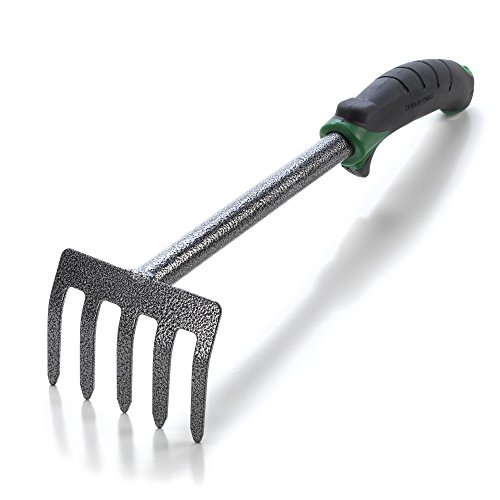
This Edward Tools model is built like a mini rake, a compact head on a short handle made for working between plants that are already growing close together. The listing title describes bend proof carbon steel and rust proof heavy duty tines, and the ErgoGrip handle is shaped for a secure hold during the short pulling strokes this kind of spot work involves. Treat those strength words as the maker’s listing language; the practical point is the small footprint.
In a crowded border, a salad bed, or a herb patch, a full-size cultivator head is clumsy, and this is the tool sized for that gap. It also suits container gardeners who need to freshen potting mix around established plants without disturbing roots more than necessary. If your beds are wide and open, the mini format will feel slow, and one of the larger picks will cover ground faster.
- Specs:
- Form: mini rake hand cultivator
- Grip: ErgoGrip
- Tines: heavy duty, per the listing title
- Strength claims: bend proof and rust proof, per the listing title
- Body material: not stated
- Best for: tight rows and crowded plantings
Truper 30293 Cultivator, 54-Inch North American Ash Handle
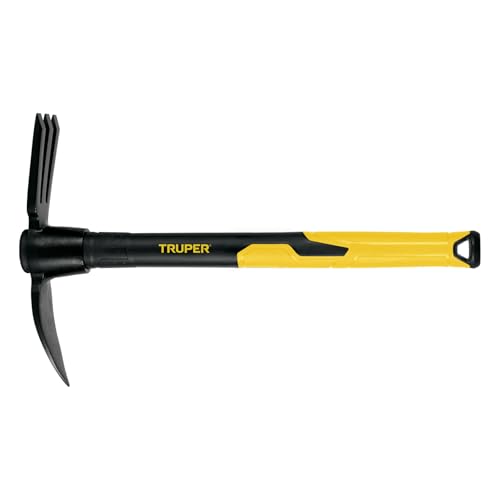
The Truper 30293 is the standing option in this group, and it should be read that way: a 54-inch North American ash handle puts the head at your feet while you work upright, which changes the job from kneeling bed work to walking row work. The head is gray steel with a clear coat, and the long shaft gives the leverage to drag the tines through open soil between rows of vegetables or along a path edge.
That length is fixed, unlike the Corona’s adjustable handle, and it comes with the standing tool’s usual trade-offs. You gain posture and reach down a row; you lose the fine control needed around closely spaced plants, where a short-handled pick is safer. Note that this listing is the 30293 cultivator as named here; Truper sells other long-handled tillers under similar descriptions, and their specifications are not interchangeable with this one.
- Specs:
- Handle: North American ash, 54 inches, fixed length
- Head: gray steel with clear coat finish
- Working position: standing
- Model: 30293
- Best for: open rows worked upright
Who should skip
Skip the hand cultivator category entirely if you are breaking new ground, clearing sod, or working more area than a few raised beds; a wheel hoe, a full-size fork, or a powered tiller will do that work better. Skip the short-handled picks if kneeling is difficult, and look at the extendable Corona or the standing Truper instead. Skip the standing Truper if your planting is dense and ornamental, since a long handle near crowded perennials invites root damage. And if your main problem is deep taprooted weeds like mature dandelions, none of these is the right tool; a dedicated weeding fork or taproot puller is.
FAQ
What is a hand cultivator used for?
It loosens the top few inches of soil, breaks up surface crust so water soaks in instead of running off, mixes compost or granular fertilizer into the bed surface, and rakes out shallow-rooted weed seedlings. It is a maintenance tool for soil that is already workable, not a ground-breaking tool.
When should I choose an extendable or long handle over a short one?
Choose reach when the bed demands it. Deep raised beds and wide borders reward the Corona’s adjustable 18-to-32-inch handle, and open vegetable rows reward the Truper’s fixed 54-inch shaft because you work standing. Short handles give better control and prying force at close quarters, which is why the forged DeWit keeps one.
Can a hand cultivator damage plant roots?
Used carelessly, yes. The tines work the top few inches, which is also where feeder roots of shallow plants spread. Work shallower near established plants, slow down around stems, and switch to finger weeding within a few inches of a plant you want to protect. In tight plantings, a compact tool like the Edward Tools mini rake gives you finer control.
How should I store and care for a hand cultivator?
Knock off soil after use, wipe the head dry before storage, and hang or shelve the tool out of the weather; the Fiskars Ergo has a hang hole in its handle for exactly that. Wooden handles like the ash on the DeWit and Truper last longer stored indoors, and a dry head keeps any finish or coating doing its job between seasons.
Final verdict
For most Pennsylvania beds, the Fiskars Ergo covers the everyday work: loosening, aerating, and weeding in soil that is already in rotation. Where the soil fights back, the hand-forged DeWit three-tine is the pick that will not bend the argument. Raised-bed gardeners should look first at the extendable Corona, tight plantings at the Edward Tools mini rake, and anyone who gardens standing at the long-handled Truper. Match the handle to your posture and the head to your soil, and any of the five will earn its hook on the shed wall.
Product and ASIN Reference
| Product | ASIN |
|---|---|
| Tierra Garden DeWit 3-Tine Cultivator with Short Handle (31-0904) | B001EBKH84 |
| Corona GT 3070 Extendable Handle Cultivator, Red, 18″-32″ | B00004TKJQ |
| Fiskars Ergo Cultivator for Digging, Aerating Soil, and Weeding | B004S0PGUC |
| Edward Tools Hand Cultivator Mini Rake — ErgoGrip, Bend Proof Carbon Steel, Rust Proof Heavy Duty Tines | B079P66Y4R |
| Truper 30293 Cultivator, 54-Inch North American Ash Handle | B006GZ234E |
More from Amazon
Programs that pair well with the guide above. Offers and eligibility are set by Amazon and may change.
Free shipping on eligible items, Prime Video and more. Eligible new members can start with a free trial.
Start a Prime free trialA Prime membership for ages 18-24 with a trial period. Eligibility is set by Amazon.
See Prime for Young AdultsAudiobooks and podcasts to listen to on the go. Eligible new members can start with a free trial.
Try Audible freeAd-free music streaming. Eligible new subscribers can start with a free trial.
Try Music Unlimited freeAs an Amazon Associate we earn from qualifying purchases.
Write Your Review
No reviews yet. Be the first to share your experience!