

Key takeaways
- Compare the best hand weeding tools for beds, paths and borders, from ergonomic weeders and hori hori knives to crack weeders for paving joints.
- Top Pick: Radius Garden 102 Ergonomic Aluminum Hand Weeder
- Runner-up: CobraHead Original Weeder and Cultivator
- Also consider: Nisaku NJP650 Hori Hori Namibagata Weeding Knife
Hand weeding is slow work when the tool fights the gardener, and fast, satisfying work when the tool matches the weed, the soil, and the space. A forked weeder that lifts dandelions cleanly from a flower bed will not fit between paving stones. A thin crack weeder that scrapes a path in minutes will not lever out a deep taproot beside a rose. This guide compares five proven designs for beds, paths, and borders: an ergonomic forked weeder for comfort, a curved cultivator hook for precision, a Japanese hori hori knife for digging and cutting, a classic steel fishtail weeder for everyday taproots, and a dedicated L-shaped crack weeder for joints and crevices.
As an Amazon Associate, we earn from qualifying purchases.
Quick answer
For most beds, start with an ergonomic forked weeder for taproots and a hori hori knife for digging, dividing, and cutting roots. Add a curved CobraHead for tight planting and a dedicated crack weeder for paths and paving. Gardeners with sore wrists should favor curved, cushioned handles and work in moist soil after rain.
Radius Garden 102 Ergonomic Aluminum Hand Weeder
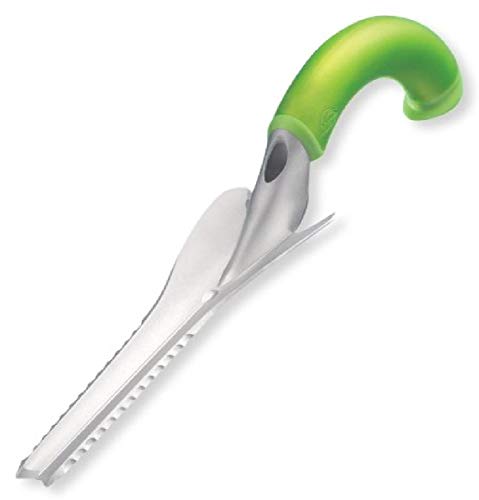
The Radius Garden 102 is built around hand comfort. Its curved, natural-radius grip keeps the wrist in a more neutral position than a straight handle, which matters during the repeated push, rock, and lift motion that bed weeding demands. The forked aluminum tip slides beside a taproot, and the curved neck acts as a fulcrum against the soil, so the root lifts with leverage rather than a hard pull. That combination makes it a strong first pick for gardeners who weed little and often and want to finish without aching hands.
In beds and borders, the narrow fork is precise enough to work between young plants without disturbing shallow roots nearby. It handles dandelions, dock seedlings, and thistles well in loam and compost-rich soil, especially when the ground is damp. The trade-off is leverage in very hard, stony ground, where a forged steel tool will take more punishment. Used within its strengths, in worked soil rather than unbroken clay, the Radius 102 rewards a gentle rocking technique and clean, whole-root removal.
Gardeners who weed raised beds, herb plantings, and perennial borders will likely reach for this tool most often, because comfort decides whether a ten-minute tidy actually happens.
CobraHead Original Weeder and Cultivator
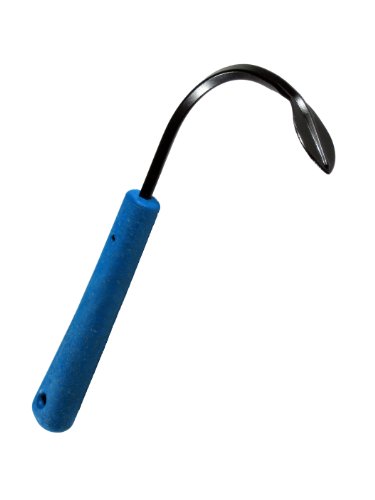
The CobraHead Original looks unlike any other tool in this guide. A single curved, forged steel tine, shaped like a steel fingernail, is set into a recycled plastic handle that suits either hand. Instead of straddling a root with a fork, the gardener hooks the tip under the crown, draws it through the soil, and lifts. The same curved head loosens crusted soil, scratches out seedling weeds, opens a shallow furrow for sowing, and teases roots from crowded planting where a wider blade would damage stems.
That versatility is the reason to choose it. In closely planted borders, vegetable rows, and containers, precision matters more than brute force, and the narrow point goes exactly where it is aimed. The forged steel head cuts through firmer soil than cast aluminum, including light clay, when used with a pulling rather than prying action.
The handle is smooth rather than cushioned, so gardeners who want thick padding may prefer the Radius or Fiskars designs. For gardeners who want one compact tool that weeds, cultivates, and plants, the CobraHead earns a permanent place in a trug or pocket.
Nisaku NJP650 Hori Hori Namibagata Weeding Knife

The Nisaku NJP650 is the original style of hori hori, a Japanese digging knife with a concave stainless steel blade, one straight edge, one serrated edge, and depth markings etched along the blade. It is less a single-purpose weeder than a complete bed-working knife. The pointed tip enters hard soil, the serrated edge saws through tough roots and fibrous crowns, the straight edge slices seedling weeds below the surface, and the concave blade scoops soil for transplanting bulbs and small plants.
For borders with established perennials, this breadth is valuable. The same tool that cuts out a dandelion can divide a clump, open a planting hole, and sever a buried root without swapping implements. The wooden handle is traditional and secure in dry conditions, and the blade length gives reach under low foliage where shorter weeders struggle.
A hori hori demands respect. The blade is sharp on two edges, so it belongs in a sheath, never loose in a bucket, and never where children can reach it. Choose the Nisaku when beds need digging and cutting as well as weeding.
Fiskars 373600-1001 Weeder with Ergo Handle

The Fiskars 373600-1001 is the classic fishtail, or dandelion, weeder in a modern ergonomic form. A heat-treated steel shaft ends in a sharpened forked tip, and the lightweight, ergonomically shaped handle is designed to feel natural in the hand and reduce fatigue during repetitive work. The method is familiar and effective: push the fork into the soil beside the taproot, angle it under the crown, and lever back so the root slides out whole rather than snapping and regrowing.
The steel head is the key difference from cast aluminum rivals. It will not snap off or loosen when digging in tough soil, and the rust-resistant coating supports long service with minimal care. That makes this a sensible everyday weeder for lawns edges, flower beds, and vegetable plots where dandelions and thistles are the main problem.
Gardeners with larger hands sometimes find the grip compact, and the narrow fork removes one weed at a time. Neither point undermines its core job as a dependable taproot tool with a steel head that tolerates dense soil.
GREBSTK Crack Weeder Crevice Weeding Tool

Paths, patios, and driveways need a specialist, and the GREBSTK Crack Weeder is exactly that. Its thin, L-shaped stainless steel blade is made to enter the narrow joint between paving stones, bricks, and concrete slabs, where no forked weeder can fit. One edge is serrated for cutting through matted roots and moss, and the hooked profile drags out loosened growth as the blade is drawn along the joint. The beech wood handle is strong, light, and shaped for the repeated pull-and-scrape motion that path work requires.
Used correctly, with a steady back-and-forth action rather than aggressive prying, it clears grass from block paving, moss from brick paths, and seedlings from driveway cracks far faster than a kitchen knife or screwdriver, the improvised tools it usually replaces. The hardened stainless blade resists abrasion from grit and stone, which destroys softer edges quickly in this job.
It will not extract a full deep taproot from open soil, and very wide cracks give the narrow blade less contact. Pair it with a forked weeder for beds: one tool for soil, one for stone.
How to choose
Start with location. Weeds in open bed soil need a forked weeder or hori hori that gets under the crown and lifts the root. Weeds in paving joints need a thin crack blade, full stop, because width decides whether the tool can enter the gap at all. Weeds in crowded planting need a narrow, precise head, such as the CobraHead, that works around stems without slicing them.
Next, match the head material to the soil. Forged or heat-treated steel tolerates stony, dense, or clay ground and hard prying. Cast aluminum is light and rust resistant and suits worked loam, raised beds, and compost-rich borders, but it should not be levered against buried rock. Stainless steel, as on the Nisaku and GREBSTK, wipes clean, resists rust in damp sheds, and holds up well against gritty soil and paving work.
Then consider hands and session length. Curved and cushioned handles reduce wrist strain during repetitive rocking, which matters for gardeners with stiff or sore joints. Smooth wood and recycled plastic handles offer control and durability but less padding. Weight matters too: a heavier knife is an asset when digging, and a burden during an hour of light seedling weeding.
Who should skip
Gardeners with large, heavily overgrown areas should skip hand weeders as a first step. A plot covered in established weeds needs cutting back, mulching, or a stand-up tool used from a standing position before hand tools become practical for maintenance. Kneeling tools are the wrong choice for anyone who cannot kneel comfortably or get back up safely; long-handled weeders and raised beds will serve those gardeners better.
Anyone expecting a hand tool to clear paving permanently should also pause. Crack weeders remove growth cleanly, but wind-blown seed will return to open joints until the joints are brushed, refilled with suitable jointing material where appropriate, and kept swept.
FAQ
Which hand weeding tool is best for dandelions?
A forked fishtail weeder, such as the Fiskars or Radius designs, suits dandelions best. Push the fork beside the taproot, angle it under the crown, and lever gently so the whole root lifts out. Working after rain, when soil is moist, greatly reduces snapped roots that regrow.
Are hori hori knives good for beginners?
Yes, with care. A hori hori is intuitive for digging and cutting roots, and the serrated edge helps with tough crowns. Beginners should choose a model with a sheath, store it in one fixed place, and treat both edges as sharp, because the blade cuts like a knife, not a trowel.
How can weeds be kept out of paving joints for longer?
Remove growth with a crack weeder, brush out loose debris, and keep joints swept so seed and soil do not collect. Where the paving system allows it, topping up jointing material helps. Regular quick passes with the crack weeder stop seedlings before roots establish and become hard to shift.
When is the best time to hand weed beds?
After rain or watering, when soil is moist but not waterlogged, is ideal. Roots slide out whole, soil structure suffers less damage, and less force is needed, which protects both hands and tools. Little and often, before weeds seed, keeps hand weeding fast and prevents bigger clearances later.
Final verdict
For a single bed tool, the Radius Garden 102 offers the most comfortable route to clean taproot removal, while the Fiskars steel fishtail is the durable everyday alternative. The CobraHead is the precision pick for crowded planting, the Nisaku hori hori is the most versatile digging and cutting tool, and the GREBSTK is the clear specialist for paths and paving. Most gardeners will be happiest with two: one forked or knife tool for beds, and the crack weeder for stone. Chosen that way, hand weeding tools turn a dreaded chore into short, regular maintenance that keeps beds and paths tidy without sprays.
More from Amazon
Programs that pair well with the guide above. Offers and eligibility are set by Amazon and may change.
Free shipping on eligible items, Prime Video and more. Eligible new members can start with a free trial.
Start a Prime free trialA Prime membership for ages 18-24 with a trial period. Eligibility is set by Amazon.
See Prime for Young AdultsAudiobooks and podcasts to listen to on the go. Eligible new members can start with a free trial.
Try Audible freeAd-free music streaming. Eligible new subscribers can start with a free trial.
Try Music Unlimited freeAs an Amazon Associate we earn from qualifying purchases.







Write Your Review
No reviews yet. Be the first to share your experience!