

Key takeaways
- Choose digits tall enough for the distance from road to house.
- Prioritize contrast over ornate typography.
- Use stainless or corrosion-resistant fasteners outdoors.
- Match the mounting method to brick, stucco, siding, or wood—not just the product’s appearance.
- Prefer durable finishes and replaceable individual digits when long-term ownership matters.
- Add reflective or illuminated visibility if the entrance is shaded or hard to find at night.
- Confirm local addressing, placement, and emergency-visibility rules before installation.
The best decorative house numbers for curb appeal are powder-coated metal for most homes, acrylic when you need lightweight modern styling, and sealed wood when warmth and repairability matter more than maximum weather resistance.
Choose by more than appearance: numbers must remain readable from the street, tolerate your local weather, suit the mounting surface, and be replaceable without damaging siding or masonry. A beautiful number that disappears at dusk or corrodes after two winters is a poor long-term purchase.
Our top picks


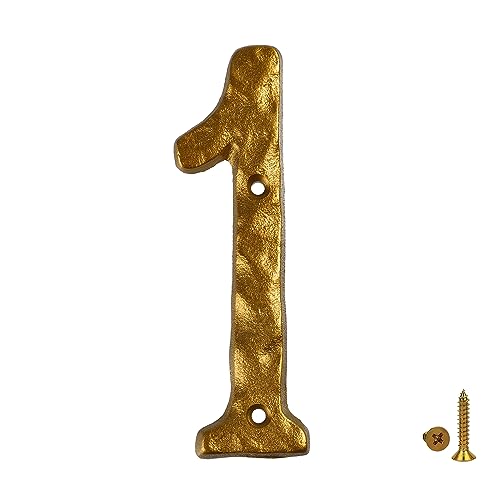

As an Amazon Associate we earn from qualifying purchases at no extra cost to you. Ratings are shown as listed on Amazon.
Metal vs. acrylic vs. wood: the head-to-head
| Material | Typical size | Expected outdoor life | Approximate weight per 6-inch number | Best exterior | Main weakness |
|---|---|---|---|---|---|
| Powder-coated aluminum | 4–8 inches tall | 10–20 years | 3–8 ounces | Brick, stucco, wood, fiber cement | Finish can fade or chip at screw holes |
| Stainless steel | 4–8 inches tall | 15–25 years | 5–12 ounces | Coastal or wet climates | Fingerprints and surface staining |
| Acrylic | 4–8 inches tall | 5–12 years | 1–4 ounces | Painted siding, smooth walls, contemporary homes | Scratches, clouding, and cracking in severe cold or impact |
| Sealed hardwood | 5–10 inches tall | 5–15 years with maintenance | 6–20 ounces | Porches, wood siding, craftsman-style homes | Needs periodic sealing; can swell at unprotected edges |
These lifespans are practical planning ranges, not guarantees. Direct sun, freeze-thaw cycles, salty air, sprinkler overspray, and the quality of the finish can shorten them considerably.
Best choice by situation
| Your situation | Best choice | Why | What to avoid |
|---|---|---|---|
| Small budget and simple installation | Raised aluminum numbers | Lightweight, commonly priced around $8–$25 per number, and easy to drill | Very thin painted steel that can rust at cut edges |
| Coastal, rainy, or snowy location | Stainless steel or marine-grade aluminum | Better resistance to moisture and salt than untreated steel | Unsealed wood and ordinary iron |
| Modern home with dark siding | High-contrast acrylic or brushed metal | Clean lines and strong contrast improve legibility | Glossy black numbers on charcoal siding |
| Traditional, cottage, or craftsman home | Sealed wood plaque with metal digits | Adds warmth while keeping the digits durable | Unfinished plywood or porous softwood |
| Rental or non-permanent installation | Light acrylic plaque with removable-rated hardware where appropriate | Low weight and fewer large holes | Adhesive-only mounting on rough brick or textured stucco |
| House set far back from the road | 8–10-inch reflective or illuminated numbers | Greater viewing area compensates for distance and low light | Decorative script that merges at a distance |
How large should house numbers be?
For a home approximately 30–50 feet from the road, 4–6-inch numbers are usually a practical starting point. At 50–100 feet, choose 6–8-inch numbers. Beyond 100 feet, consider 8–12-inch numbers, a roadside plaque, or a second set near the driveway.
A useful sizing calculation is to allow roughly 1 inch of number height for every 10–15 feet of viewing distance, then increase the size when the background is busy or lighting is poor. For example, a house 75 feet from the curb might need 6–8-inch numbers rather than a compact 4-inch set. This is a visibility rule of thumb, not a substitute for checking local addressing requirements.
Contrast matters as much as height. Dark numbers on a light wall or light numbers on dark siding are easier to identify than two similar shades. A matte or satin finish is often more readable than a highly reflective surface, which can produce glare in direct sun.
Mounting options and the surfaces they suit
Individual raised numbers
Individual digits create a clean appearance and allow air to circulate behind each number. They work well on brick, masonry, wood, fiber-cement siding, and stucco when the fasteners match the surface. Spacers can create a floating effect, but they also create small cavities where water and insects may collect, so use exterior-rated hardware and seal penetrations appropriately.
One-piece plaques
A plaque is usually the safer option when the wall is uneven, heavily textured, or difficult to mark precisely. It also gives you more contrast and can conceal old holes. Plaques are available in metal, acrylic, wood, and composite materials. The tradeoff is a larger visual element and more exposed edge area where moisture can enter.
Adhesive mounting
Adhesive mounting is best reserved for lightweight acrylic or thin metal on smooth, clean, painted surfaces. It is less dependable on dusty brick, rough stucco, damp siding, or surfaces exposed to large temperature swings. Clean the area according to the adhesive manufacturer’s instructions, allow paint to cure fully, and do not assume a pad rated for indoor use is suitable outdoors.
Posts, gates, and driveway signs
When the front wall is hidden by landscaping, a second set on a mailbox post, fence, or driveway marker may improve emergency and delivery visibility more than larger numbers at the door. Keep the digits facing approaching traffic and avoid placing them where branches, parked vehicles, or seasonal decorations will block them.
Installation steps that prevent early failure
- Measure the viewing distance. Stand at the street and note whether the proposed location is visible from both directions.
- Check the background. Look at the wall in morning, midday, evening, and wet conditions. Select a contrasting finish before drilling.
- Make a full-size paper template. Tape the digits or plaque in place. Check spacing, door swing, trim, and sightlines.
- Locate the substrate. Fasteners should enter solid wood, masonry anchors, or an appropriate structural backing—not just thin siding.
- Drill and seal carefully. Use the correct bit, avoid over-tightening, and seal exposed penetrations with an exterior-compatible sealant where the surface and manufacturer call for it.
- Check drainage. Do not create a ledge that directs water behind siding or traps water against wood.
- Inspect from the road. Confirm that every digit is clear at the required distance before removing the template.
Durability and ownership costs
Metal usually offers the lowest maintenance over a long ownership period, especially when the finish is powder-coated or the material is corrosion-resistant. Inspect painted metal annually for chips around screw heads and edges. Touch up small damage before rust can spread.
Acrylic is easy to clean and inexpensive to replace, but abrasive sponges, gritty dust, and aggressive solvents can haze or scratch it. Use mild soap, water, and a soft cloth. Avoid placing acrylic where thrown objects, lawn equipment, or low branches can strike it.
Wood is repairable rather than maintenance-free. End grain, screw holes, and the lower edge of a plaque usually wear first. Recoat according to the finish instructions—often every two to five years in exposed locations. Light sanding and a fresh exterior sealer can extend its life, but rot hidden behind a plaque means replacement is safer than repeatedly painting the surface.
Consider the total cost rather than the initial price. A $20 aluminum set lasting 15 years costs about $1.33 per year. A $35 wood plaque that needs a $12 finish refresh every three years could cost approximately $7.40 per year over a six-year period, before installation time. Wood may still be the better environmental choice if it is locally sourced, repairable, and kept in service for many years; frequent replacement of any material reduces that advantage.
Final buying checklist
- Choose digits tall enough for the distance from road to house.
- Prioritize contrast over ornate typography.
- Use stainless or corrosion-resistant fasteners outdoors.
- Match the mounting method to brick, stucco, siding, or wood—not just the product’s appearance.
- Prefer durable finishes and replaceable individual digits when long-term ownership matters.
- Add reflective or illuminated visibility if the entrance is shaded or hard to find at night.
- Confirm local addressing, placement, and emergency-visibility rules before installation.
For most exteriors, raised powder-coated aluminum is the balanced choice: light, visible, affordable, and simpler to maintain than wood. Choose stainless steel for harsh moisture or coastal exposure, acrylic for lightweight contemporary designs on smooth surfaces, and sealed wood when architectural character and repairability are worth the added upkeep.





Write Your Review
No reviews yet. Be the first to share your experience!