
Key takeaways
- Read three numbers on a bulb package and you can predict how it will look in your room: lumens tell you how bright it is.
Read three numbers on a bulb package and you can predict how it will look in your room: lumens tell you how bright it is, Kelvin tells you how warm or cool the light appears, and watts only tell you how much electricity it draws. Everything else on the label, from color rendering to life hours, helps you fine-tune the choice once those three are settled.
Why the Label Changed When LEDs Arrived
For decades shoppers picked bulbs by wattage. A 60 watt bulb was a medium-bright bulb, and a 100 watt bulb was a bright one. That shortcut worked because every incandescent turned electricity into light at roughly the same poor efficiency. LEDs broke the link: a modern LED can produce the same light as an old 60 watt bulb while drawing a small fraction of the power, so wattage stopped telling you anything about brightness.
Regulators responded by asking manufacturers to print a standardized panel on the package, often called a Lighting Facts label, that looks a bit like the nutrition panel on food. It lists brightness in lumens, estimated yearly energy cost, expected life, light appearance in Kelvin, and wattage. Once you know where each item sits, you can compare a bulb from one brand to another in a few seconds, without relying on the marketing words printed on the front.
The practical benefit of learning the label is that it lets you ignore the front of the box. Phrases like “soft white,” “super bright” and “daylight” are loose terms, while the panel gives you numbers you can compare across brands. Keep that in mind as you work through the sections below, and treat the printed figures as manufacturer estimates rather than exact measurements for your home.
The Three Numbers That Matter Most
Lumens: how much light you get
Lumens measure the total visible light a bulb produces. More lumens means a brighter bulb. As a rough translation, an old 40 watt bulb gave about 450 lumens, a 60 watt bulb about 800, a 75 watt bulb about 1100 and a 100 watt bulb about 1600. When you replace a bulb, aim for a similar lumen figure to the one you are used to, then go lower for relaxed spaces or higher for task areas like kitchens, workshops and reading corners.
Kelvin: the color of the light
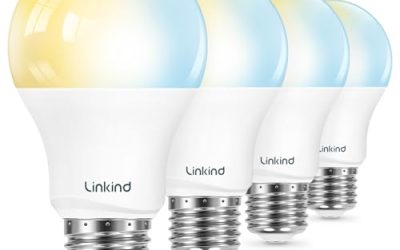
Kelvin, shown as a number followed by K, describes the color appearance of the light. Lower numbers look warm and yellowish, similar to a traditional incandescent bulb. Higher numbers look cooler and bluer. Around 2700K feels cozy and suits living rooms and bedrooms. Roughly 3000K is a slightly crisper warm white often chosen for kitchens and bathrooms. Around 4000K reads as neutral, and 5000K and above looks like bright daylight, which many people use in garages, basements and security lighting.
Watts: what the bulb costs to run
Watts measure power draw, not brightness. A lower wattage for the same lumens means a more efficient bulb. Many packages also print an “equivalent” figure, such as an LED that claims to replace a 60 watt bulb. That equivalence is a comparison of brightness, not a statement of how many watts the LED uses. Check the actual wattage line if you are comparing efficiency or fitting bulbs into fixtures with a maximum wattage rating.
Estimated yearly energy cost
The panel also prints an estimated yearly energy cost, based on a stated number of hours per day and a stated electricity rate. Your own cost will differ because your hours and your utility rate will differ. Use the figure only to compare two bulbs on the same basis, and do not treat it as a promise of what your bill will show.
Other Label Details Worth Reading
Once lumens, Kelvin and watts match your needs, a few more lines separate a decent bulb from a frustrating one. Color rendering index, shown as CRI, indicates how naturally colors appear under the bulb. A higher CRI tends to make skin tones, food and fabric look more true, which matters in kitchens, bathrooms and closets. Many packages do not print CRI on the front, so look on the back or the product page.
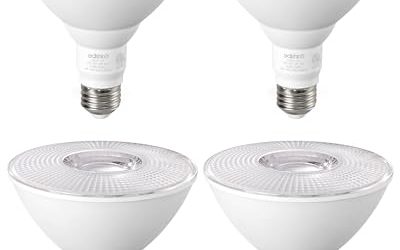
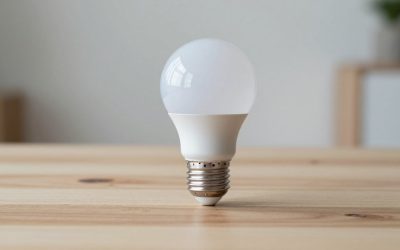
Life hours estimate how long the bulb is expected to operate under typical conditions. Numbers like 10,000 or 15,000 hours are a manufacturer rating, and a bulb in a hot, enclosed fixture may not reach it. Dimmable bulbs say so on the package, and they need a compatible dimmer switch; a non-dimmable LED on a dimmer can flicker or buzz. Base type, such as E26 medium screw or a smaller candelabra base, must match your fixture. The shape code, such as A19 for the classic bulb shape or PAR38 for a floodlight, tells you whether it fits the space.
Finally, look for the markings about where the bulb may be used. Terms like “enclosed fixture rated,” “damp rated” or “wet rated” tell you whether the bulb is meant for a closed globe, a bathroom or an outdoor socket. A bulb used outside its rating can wear out early, so match the rating to the fixture rather than guessing.
A Worked Example in the Aisle
Imagine you are standing in front of two packages for a bedside lamp. Package one says 800 lumens, 2700K and 9 watts. Package two says 1100 lumens, 5000K and 12 watts. The first matches a classic 60 watt look: warm, calm and moderate. The second is brighter and noticeably cooler, which suits a desk or a workbench much better than a place where you want to wind down. If both claim a 60 watt equivalent on the front, the lumen line reveals the difference immediately. Choose by the numbers on the panel, then confirm the base, shape and dimming support before the package goes in the cart.
The same approach works for outdoor and garage lighting. A porch fixture that sits under a roof needs a damp or wet rating, a brighter lumen figure and often a cooler Kelvin number for visibility, while a hallway sconce may call for a warm tone and modest output. Work through the label from top to bottom, and the right bulb tends to pick itself.
A Quick Label Checklist
| Label item | What it tells you | What to look for |
|---|---|---|
| Brightness (lumens) | How much light the bulb produces | Match to the room task, not to the old wattage |
| Light appearance (Kelvin) | Warm or cool color | Lower for relaxing rooms, higher for work areas |
| Energy used (watts) | Power draw | Lower is more efficient for the same lumens |
| Life (hours) | Manufacturer’s expected lifespan | Use only to compare, not as a promise |
| CRI | How accurately colors appear | Higher helps in kitchens, bathrooms and closets |
| Dimmable | Works with a compatible dimmer | Confirm your switch supports LED dimming |
| Base and shape | Physical fit in the fixture | Match the socket and the space available |
| Location rating | Where the bulb may be used | Enclosed, damp or wet if the fixture needs it |
Before You Buy
- Note the lumen figure of the bulb you are replacing, or decide what task the room needs.
- Pick a Kelvin number for the mood you want and stay consistent within a room.
- Check the fixture for a base type, maximum wattage and any enclosed or wet requirement.
- Confirm dimmer compatibility if the light is on a dimmer.
- Read the back of the package for CRI and life hours when they matter to you.
- Buy one bulb first if you are unsure of the color, and live with it for a few evenings.
Related guides
- Glass Spray Bottles For Homemade Cleaners
- Insulated Stainless Steel Water Bottles
- How To Reduce Household Plastic Room By Room
Frequently Asked Questions
How many lumens do I need for a living room?
Most living rooms do well with layered lighting rather than a single bulb. A few lamps with 450 to 800 lumens each often feel comfortable, and an overhead fixture can add more when you need it. Adjust to your taste and the room size.
Is a higher Kelvin number always brighter?
No. Kelvin describes color, not brightness. A 5000K bulb and a 2700K bulb can produce the same lumens, even though the 5000K bulb may look more intense because of its cooler tone.
Why does my new LED look different from the old bulb?
Differences in Kelvin, CRI and beam shape can change how a room looks. If the new bulb seems too bluish, choose a lower Kelvin number, and check that you are using the same shape and brightness as before.
Do I need to follow the maximum wattage on my fixture?
Yes. The maximum wattage marking is about heat, and it is based on the wattage the bulb actually draws. An LED that draws only a few watts is well within the limit even if it replaces a much larger old bulb, but never exceed the limit printed on the fixture, in 2026 or any other year.
More from Amazon
Programs that pair well with the guide above. Offers and eligibility are set by Amazon and may change.
Free shipping on eligible items, Prime Video and more. Eligible new members can start with a free trial.
Start a Prime free trialA Prime membership for ages 18-24 with a trial period. Eligibility is set by Amazon.
See Prime for Young AdultsAudiobooks and podcasts to listen to on the go. Eligible new members can start with a free trial.
Try Audible freeAd-free music streaming. Eligible new subscribers can start with a free trial.
Try Music Unlimited freeAs an Amazon Associate we earn from qualifying purchases.


Write Your Review
No reviews yet. Be the first to share your experience!