

Key takeaways
- Learn how to choose weather stripping for doors and windows, compare foam, V-strip, kerf and silicone seals, and cut drafts and heating waste at home.
- Top Pick: Frost King R338H Self-Stick Rubber Foam Weatherseal
- Runner-up: M-D Building Products 91890 Premium Rubber Kerf Door Seal
- Also consider: Holikme Door Draft Stopper and Door Sweep
A drafty door or window wastes heated and cooled air every hour it leaks. You feel it as a cold line along a frame in winter, dust on a sill, and a heating or cooling system that runs longer than it should. Weather stripping closes those gaps with a compressible or flexible seal, and it is one of the lowest waste home upgrades available because it uses little material, needs no power, and helps existing insulation work as intended.
Choosing well matters more than buying the longest roll. A seal that is too thick will strain hinges and latches, while one that is too thin will leave the leak untouched. The right choice depends on gap size, door or window use, how the seal attaches, and how long the material lasts. This guide covers foam tape, V-strip, door sweeps, kerf-in seals, and silicone tape, and matches each one to the job it does best.
As an Amazon Associate, we earn from qualifying purchases.
Quick answer
Measure each gap first, then match the seal to its size and movement. Use foam tape for small, uneven gaps, V-strip for friction points on windows and door sides, a sweep for the gap under a door, kerf-in seals for grooved frames needing a durable fix, and silicone tape for glass, sliding doors, and smooth surfaces.
Frost King R338H Self-Stick Rubber Foam Weatherseal

Foam tape is the starting point for most homes because it is forgiving, inexpensive in material terms, and easy to cut with household scissors. The Frost King R338H uses sponge rubber foam rather than the softest open cell foam, so it resists compression better and holds its shape through repeated door closings. It is sized for narrow gaps, at three eighths of an inch wide and three sixteenths of an inch thick, and it arrives in a ten foot roll that suits a single door side or a couple of window sashes.
Apply it to a clean, dry frame, press it firmly along the stop where the door or sash meets the frame, and close the opening gently for the first day while the adhesive sets. Rubber foam handles moisture better than basic foam, which makes it a sensible pick for exterior doors that see rain driven against the frame. It will still wear faster than rubber or silicone in high friction spots, so reserve it for compression points rather than sliding contact. For renters, the peel and stick format is a major advantage because removal is usually clean and no screws or nails are needed.
COSDINI V Shape Foam Weather Stripping Door Seal Strip
V-strip, also called tension seal, works differently. Instead of a block of foam that gets squashed, a folded strip springs open against both sides of a channel and wipes the gap as the door or window moves. The COSDINI V shape strip brings that idea in a self adhesive foam form supplied as a thirty three foot roll in white, enough for several openings from one purchase.
V-strip excels where parts slide or swing past each other, such as double hung window sides, slider meeting rails, and door hinge and latch sides with uneven gaps. Because the fold flexes, it tolerates gaps that widen and narrow along their length better than flat tape. Clean the channel thoroughly before fitting it, since dust breaks contact and weakens adhesive. Keep the fold pointing into the weather so wind pressure tightens the seal. On very old painted frames, test adhesion in a hidden corner first, as lifting paint can break the bond.
M-D Building Products 91890 Premium Rubber Kerf Door Seal

Kerf-in seals are the longest lasting option for doors built for them. A kerf is a thin slot cut into the frame, and the seal has a fin that pushes into that slot and locks in place without adhesive or fasteners. The M-D Building Products 91890 is a premium rubber seal for the top and sides of a door with a kerf channel, supplied at eighty four inches to trim to fit.
Rubber in this format resists flattening far longer than foam, stays flexible in cold weather, and can be pulled out and replaced in minutes once the profile matches the slot. That makes it the best sustainable choice over time, since a durable seal uses less material than cheap foam replaced every season. Check compatibility by pulling out a short section of the old seal and comparing its fin and bulb width, because kerf dimensions vary by door maker. If a frame has no slot, this type does not apply, and cutting a new kerf requires a router, a job many households will leave to a carpenter.
Holikme Door Draft Stopper and Door Sweep
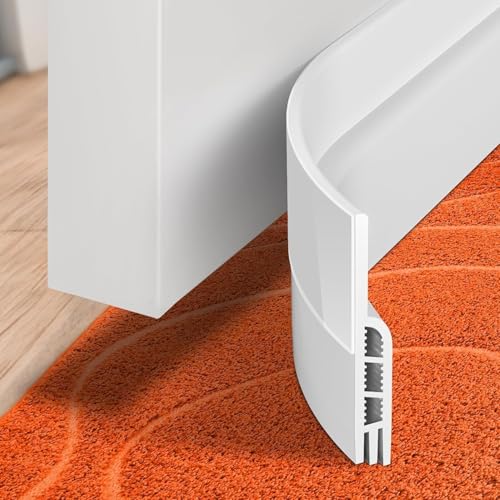
No frame seal helps if the largest gap sits under the door. Door sweeps and bottom draft stoppers close that horizontal slot between the door bottom and the threshold, where cold air, insects, light, and sound travel freely. The Holikme draft stopper uses a strong adhesive strip along a flexible sealing blade sized at two inches wide and thirty nine inches long, so it can be trimmed for narrower doors and fitted without drilling.
An adhesive sweep suits interior doors, rented homes, and smooth door bottoms where screws would cause damage. Screw on aluminum sweeps last longer on busy exterior doors, but they demand drilling and careful alignment to avoid dragging on the floor. Measure the under door gap at several points, since floors often slope, and set the blade to touch the threshold lightly along its full length without making the door hard to close. Pairing a sweep with frame seals completes the perimeter, and the difference is often felt immediately on a windy night when the whistle and cold line at the floor disappear together.
Bruiefpap Silicone Seal Strip Weather Stripping Tape

Silicone tape solves the jobs foam handles poorly. It is a wide, flat, transparent strip with strong self adhesive that folds over an edge or lies flat across a gap, and silicone stays flexible in heat and cold without hardening or cracking the way some plastics do. The Bruiefpap strip is supplied at twenty feet long and forty five millimeters wide in transparent form, which makes it discreet on glass and light colored frames.
Reach for silicone tape on sliding glass doors, shower and glass edges, frameless windows, and smooth metal or plastic frames where a bulky foam profile would look intrusive or prevent closing. Its width bridges wider, flatter gaps than narrow foam tape, and transparency helps in living spaces where a black strip would stand out. Surface preparation decides success here. Wipe the area clean, let it dry fully, warm the adhesive gently in a cold room, and press along the full length without stretching the strip, since stretched silicone will try to shrink back and lift at the ends. Avoid rough, flaking, or heavily textured paint, where adhesion is unreliable and a mechanical seal is a better answer.
How to choose
Start by measuring, not guessing. Close each door or window on a strip of paper or a banknote at several points. If the paper pulls out with no resistance, the gap is wide at that spot. If it tears or will not move, the seal there is already tight. Note the largest and smallest gaps along each side, because a seal must fill the widest point without over compressing at the narrowest point.
Next, match material to movement and exposure. Use foam tape for small, static, uneven gaps indoors and on sheltered frames. Use V-strip where parts slide or where gap width varies. Use kerf-in rubber where a slot exists and a long service life matters most. Use a sweep only for the bottom of a door, and size it to the floor gap rather than the frame gap. Use silicone tape on glass, sliders, and smooth surfaces, especially where appearance matters.
Then decide on attachment. Adhesive products are fastest and suit renters and smooth surfaces, but they fail early on dusty, damp, or flaking frames. Nail on and screw on products take longer to fit and leave holes, yet they hold in high traffic and exterior locations where adhesive softens in heat. Kerf-in fitting is the cleanest of all when the slot exists, with no glue and no holes.
Finally, think in whole perimeters. Sealing three sides while leaving the bottom open wastes effort. Replacing a full set at once, and choosing rubber or silicone over the cheapest foam for exterior use, will cut repeat work and material waste.
Who should skip
Skip weather stripping as a first step if the problem is structural. A door that has dropped on its hinges, a rotted frame, cracked glass, or a window that no longer latches needs repair first, because no flexible seal can compensate for an opening that will not close squarely. Adjust hinges, tighten latch plates, and repair timber before sealing.
Also skip adhesive products if surfaces cannot be cleaned and dried, if paint is peeling, or if the opening is a fire rated door whose listing restricts added seals. In those cases use the approved seal type, or seek a mechanical option fitted by a qualified installer. Households planning imminent replacement can also wait, sealing only the worst leaks with removable products in the meantime.
FAQ
How long does weather stripping usually last?
Foam tape often lasts one to three seasons before it flattens or loses adhesion, especially on busy exterior doors. Rubber kerf-in seals and quality silicone strips commonly last much longer because they resist compression and temperature extremes. Inspect seals each autumn by closing the door on paper at several points and replacing any section that no longer grips.
Can weather stripping be used on both doors and windows?
Yes, many types serve both, but the best fit differs. Foam tape and silicone tape work readily on window sashes and door frames. V-strip suits sliding window channels and door sides. Kerf-in seals are mainly for doors with grooved frames, and sweeps are only for door bottoms, so choose by location as well as gap size.
Will sealing drafts really lower heating and cooling use?
Sealing leaks reduces the volume of conditioned air escaping and outside air entering, so heating and cooling equipment runs less to hold a set temperature. The saving depends on how leaky the home was, how many openings are sealed, and local climate. The comfort gain, fewer cold lines, less dust, and quieter rooms, is usually noticeable even when the energy change is modest.
Should old weather stripping be removed before fitting new seals?
Yes. Old foam leaves adhesive residue and compressed ridges that stop a new seal sitting flat, and double layers can make doors hard to latch. Pull the old material away, scrape residue gently, clean the surface, and let it dry. For kerf-in seals, pull the old fin from the slot along its full length before pressing the replacement into place.
Final verdict
For most homes, the sustainable path is a matched set rather than a single product. Use Frost King rubber foam for narrow gaps, COSDINI V shape strip where parts slide, M-D kerf-in rubber where a grooved frame allows the most durable fix, Holikme sweep for the under door gap, and Bruiefpap silicone tape for glass and smooth surfaces. Measure first, prepare surfaces properly, and seal complete perimeters to cut drafts and ease the load on heating and cooling.
More from Amazon
Programs that pair well with the guide above. Offers and eligibility are set by Amazon and may change.
Free shipping on eligible items, Prime Video and more. Eligible new members can start with a free trial.
Start a Prime free trialA Prime membership for ages 18-24 with a trial period. Eligibility is set by Amazon.
See Prime for Young AdultsAudiobooks and podcasts to listen to on the go. Eligible new members can start with a free trial.
Try Audible freeAd-free music streaming. Eligible new subscribers can start with a free trial.
Try Music Unlimited freeAs an Amazon Associate we earn from qualifying purchases.










Write Your Review
No reviews yet. Be the first to share your experience!