

Key takeaways
- The best electric unicycles for commuting and recreation are the InMotion V8S for lighter urban use, the Begode A2 for a compact performance commuter, the InMotion V12 Pro for a versatile long-range choice, and the Veteran Sherman-S for riders who…
The best electric unicycles for commuting and recreation are the InMotion V8S for lighter urban use, the Begode A2 for a compact performance commuter, the InMotion V12 Pro for a versatile long-range choice, and the Veteran Sherman-S for riders who need exceptional range and stability.
An electric unicycle (EUC) can be efficient, portable transportation, but its useful range is usually lower than the headline figure. Cold weather, hills, rider weight, tire pressure, frequent acceleration, and high cruising speeds can reduce claimed range by 20–40%. The comparisons below focus on practical ownership rather than maximum speed alone.
Our top picks
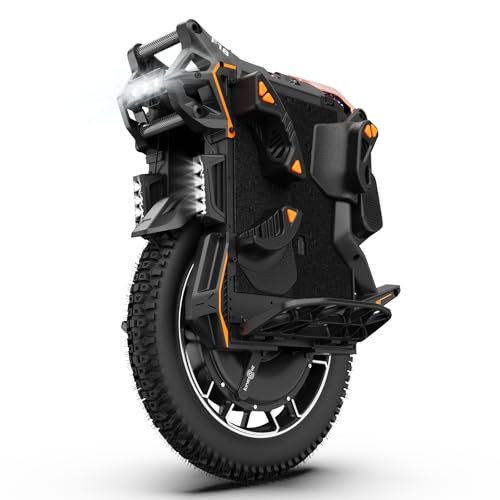


As an Amazon Associate we earn from qualifying purchases at no extra cost to you. Ratings are shown as listed on Amazon.
Best electric unicycles at a glance
| Model | Wheel | Motor | Battery | Typical real-world range | Approx. weight | Rider limit | Charge time |
|---|---|---|---|---|---|---|---|
| InMotion V8S | 16 inches | 1,000 W | 728 Wh | 25–40 miles | 53 lb | 265 lb | About 4–5 hours |
| Begode A2 | 16 inches | 3,000 W | 1,344 Wh | 40–60 miles | 73 lb | 265 lb | About 5–7 hours |
| InMotion V12 Pro | 16 inches | 2,800 W | 1,750 Wh | 55–80 miles | 66 lb | 265 lb | About 7–9 hours |
| King Song S22 Pro | 20 inches | 3,300 W | 2,220 Wh | 55–85 miles | 77 lb | 330 lb | About 8–10 hours |
| Veteran Sherman-S | 20 inches | 2,800 W | 3,600 Wh | 90–130 miles | 84 lb | 330 lb | About 10–12 hours |
These are planning figures, not guarantees. Actual specifications can vary by production revision, charger, and regional configuration. Treat the rider limit as a maximum, not a target: clothing, a backpack, and equipment count toward the load.
Which EUC fits your route?
For short city commutes and limited storage: InMotion V8S
The V8S is the easiest recommendation for a first-time commuter who values manageable weight over dramatic acceleration. At roughly 53 pounds, it is significantly easier to carry up stairs or lift into a vehicle than the larger 20-inch models. Its 16-inch wheel is agile in traffic and practical on paved paths.
Its 1,000-watt motor is adequate for moderate urban riding, but it offers less reserve on steep hills, rough pavement, or when carrying a heavier rider. A realistic 25–40-mile range covers many round trips with room for a battery reserve. Choose it when your normal ride is under 15 miles each way and you can recharge at work or home.
The trade-off is limited performance headroom. It is not the best choice for fast group rides, long hills, or frequent gravel riding. Its trolley handle, integrated headlight, and relatively compact body make it a sensible apartment-friendly option.
For a compact commuter with stronger hill performance: Begode A2
The Begode A2 occupies the middle ground between a lightweight commuter and a high-performance wheel. Its 3,000-watt motor provides more acceleration and climbing reserve than the V8S, while its 16-inch format remains less cumbersome than a 20-inch touring EUC.
Expect approximately 40–60 miles in mixed riding, depending heavily on speed and rider weight. That makes it suitable for a longer commute, recreational rides after work, or hilly routes where a smaller motor may feel strained. It is heavier than the V8S and generally more demanding for a new rider, so protective equipment and a larger practice area are worthwhile.
The A2 is a good decision when your route includes hills but you still need to carry the wheel through a building. It is less appealing if your priority is maximum range per charge or the smallest possible machine.
For one wheel that does almost everything: InMotion V12 Pro
The V12 Pro is one of the strongest all-purpose choices for experienced commuters and recreational riders. Its 1,750-Wh battery gives a practical 55–80-mile range, while the 2,800-watt motor supplies useful reserve for hills and brisk riding. The 16-inch wheel balances maneuverability with better stability than a small learner-oriented EUC.
Its display, lighting, adjustable riding modes, and protective features are useful for daily riding, but the wheel is still heavy enough that carrying it up several flights becomes unpleasant. A high-power wheel also demands more disciplined speed management: extra motor power does not make wet roads, potholes, or poor visibility safe.
For riders who want a daily commuter during the week and a recreational machine on weekends, the V12 Pro is more versatile than either a lightweight entry model or a dedicated long-range tourer.
For rougher routes and higher rider weight: King Song S22 Pro
The S22 Pro’s 20-inch wheel rolls over cracks, uneven pavement, and compacted paths more smoothly than a 16-inch wheel. Its suspension improves comfort on routes with repeated bumps, although suspension requires periodic inspection and adjustment. The 2,220-Wh battery can provide roughly 55–85 miles of real-world riding.
Its higher weight and broad body make it less convenient on public transit or narrow office storage. The higher rider limit also makes it worth considering for larger riders, but the correct choice depends on total load, terrain, and desired range rather than the rating alone.
Pick the S22 Pro when stability and comfort matter more than portability. It is particularly suited to mixed pavement, bike paths, and recreational rides where a small wheel can feel busy over imperfections.
For maximum distance: Veteran Sherman-S
The Sherman-S is a long-range touring machine rather than an easy-to-carry commuter. Its approximately 3,600-Wh battery can deliver around 90–130 miles for moderate-speed riders in favorable conditions. The 20-inch wheel and suspension support long rides, and its substantial construction feels planted at speed.
The costs are weight, charging time, and storage. At about 84 pounds, it is difficult to carry through stairs or lift into a car. It can also be excessive for a five-mile commute. Choose it when charging opportunities are limited, your recreational rides regularly exceed 50 miles, or you prefer a heavy, stable platform.
Decision matrix for common buyers
| Your situation | Best match | Why | Main compromise |
|---|---|---|---|
| First EUC, short paved commute, little storage | InMotion V8S | Lowest weight and simple urban handling | Less hill and speed reserve |
| Hilly commute under 30 miles round trip | Begode A2 | Powerful motor in a 16-inch body | Heavier and less beginner-friendly |
| One wheel for commuting and recreation | InMotion V12 Pro | Balanced range, power, lighting, and controls | Too heavy for frequent stair carrying |
| Rough paths or larger rider | King Song S22 Pro | 20-inch wheel, suspension, and higher load rating | Bulky and slow to charge |
| Long touring with infrequent charging | Veteran Sherman-S | Largest battery and long-distance stability | Very heavy and expensive to transport |
How to calculate the range you actually need
Start with the complete daily distance, then add a reserve rather than planning to arrive at zero. For example, a 12-mile commute each way is a 24-mile round trip. Adding a 30% reserve gives:
24 miles × 1.30 = 31.2 miles of practical minimum range.
For winter, substantial hills, or a heavier rider, use a 50% reserve instead: 24 × 1.50 equals 36 miles. A V8S may cover the first example, but the A2 or V12 Pro gives more comfort when conditions change. If the route includes a reliable workplace charger, the reserve can be smaller, but do not depend on charging immediately after every ride unless the charger and schedule are dependable.
Safety and ownership realities
Wear a certified bicycle or skate-style helmet, wrist guards, knee protection, and suitable footwear while learning and when riding quickly. Practice mounting, stopping, turning, and dismounting on flat, low-traffic ground before commuting. Keep speed within local rules and check whether EUCs are permitted on roads, sidewalks, or shared paths in your area.
Important safety features include a bright headlight, rear lighting, audible alerts, battery temperature monitoring, a lift switch that stops the motor when the handle is raised, and adequate pedal clearance. Some performance EUCs include multiple battery packs or improved battery management; nevertheless, inspect the wheel for damage after a crash and stop using it if the case, wiring, or battery area is compromised.
The tire is usually the first consumable. Check pressure weekly because a soft tire reduces range, makes steering vague, and increases the chance of rim damage. Inspect the tread and valve, tighten loose pedal hardware, and remove mud before it reaches the charging port or suspension components. Never charge on a bed, carpet, or near combustible materials; use the correct charger, allow the wheel to cool after a hard ride, and unplug it when charging is complete.
For most owners, the best electric unicycles are not the fastest models. Select the smallest wheel that comfortably covers your route, the motor power that handles your hills with reserve, and a battery large enough to finish the trip without routinely reaching a low-charge warning. That approach produces a safer, more portable, and less frustrating daily ride.




Write Your Review
No reviews yet. Be the first to share your experience!