

Key takeaways
- Do not force a dented can into position; the rim can slip and overload the drive.
- Do not run the opener around an empty can after the lid has separated.
- Do not wash an attached motor housing under a faucet.
- Replace weak batteries before concluding that a handheld opener has failed.
- Keep the cord away from hot burners and wipe spills before they reach the base.
The best electric can openers are hands-free, easy to clean, and matched to the cans you open most often; for most kitchens, a side-cutting countertop model is the safest all-around choice, while a battery-powered handheld model is better for small spaces and occasional use.
Our top picks


As an Amazon Associate we earn from qualifying purchases at no extra cost to you. Ratings are shown as listed on Amazon.
Quick picks by kitchen situation
| Situation | Best type | Representative choice | Why it fits |
|---|---|---|---|
| Frequent everyday use | Corded countertop opener | Hamilton Beach Smooth Touch 76606ZA | Stable, hands-free operation and a side-cut mechanism that leaves a smoother rim |
| Compact counter or limited storage | Battery-powered handheld opener | Kitchen Mama electric can opener | Stores in a drawer and does not require an outlet |
| Occasional use with a clean-looking appliance | Countertop automatic opener | Cuisinart CCO-50N Deluxe | Simple one-touch operation with a removable cutting assembly |
| Mixed can sizes and heavy pantry use | Full-size countertop model | Hamilton Beach or Cuisinart countertop design | More stable than a handheld unit and generally easier to align repeatedly |
Best electric can openers compared
Hamilton Beach Smooth Touch 76606ZA: best for safer edge handling
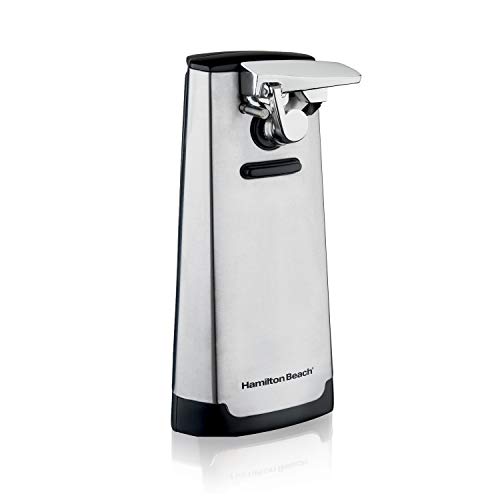
This model uses a side-cutting system rather than cutting down through the lid. The blade travels below the lid’s rolled edge, which can leave the separated lid and the can rim less sharp than conventional top-cut designs. That does not make the metal harmless, but it reduces one common source of jagged edges.
The opener is corded, weighs roughly 3 pounds, and is designed for standard household cans. Its tall body takes more counter space than a handheld device, but its broad base makes it easier to use without holding the can. It is a strong choice for cooks who open several cans per week or who find manual turning difficult.
The main compromises are storage and cleaning. The power cord needs a nearby outlet, and the cutting mechanism still needs wiping after use. Check the can’s position before starting: a dented rim or badly distorted can may not engage smoothly.
Cuisinart CCO-50N Deluxe: best conventional countertop balance
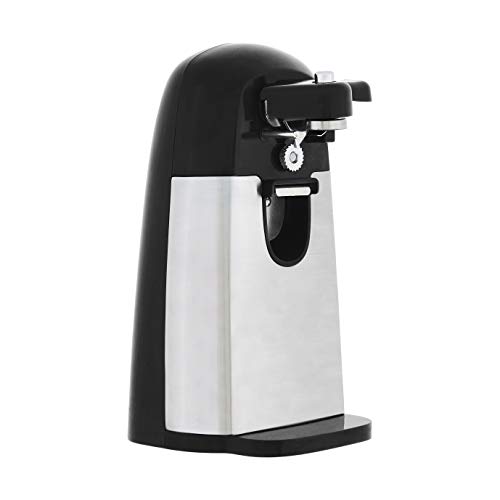
The Cuisinart CCO-50N is a corded, one-touch countertop opener with a removable cutting assembly. It is intended for common household cans and typically occupies about 5 by 7 inches of counter depth and width, depending on how the cord is routed. At roughly 3 pounds, it is stable without being unusually difficult to move.
Its conventional top-cut operation is familiar and generally quick. The magnetic lid holder can help keep the lid from dropping immediately into the food, although users should still remove the lid carefully. The removable blade area is useful for maintenance because food residue is less likely to remain hidden around the cutting wheel.
Choose this model when straightforward operation matters more than a side-cut rim. It is also a sensible middle ground for households that want a permanent countertop appliance but do not need an especially tall or heavy-duty unit.
Kitchen Mama electric can opener: best for small kitchens
The Kitchen Mama is a battery-powered handheld design that travels around the lid while the user presses a button. It commonly uses four AA batteries, although the exact package and battery requirements can vary by version. Because it has no power cord and can be stored in a drawer, it is convenient for apartments, RVs, offices, and infrequent use.
Its hands-free cutting action applies to the cutting motion, not to every part of the task: you still need to position the opener, monitor its path, and lift away the lid. Battery-operated torque can also be less consistent as batteries weaken. Large, unusually tall, damaged, or heavily ridged cans may be more difficult than ordinary soup and vegetable cans.
A handheld model is usually the better space-saving purchase, but it is not automatically the better high-volume purchase. If you open multiple cans during meal preparation, a corded base usually provides more predictable power and easier positioning.
Feature and ownership comparison
| Feature | Corded countertop models | Battery handheld models | What the difference means |
|---|---|---|---|
| Typical power | About 50–70 watts | Four AA batteries is common | Corded models maintain cutting force; batteries gradually lose power |
| Typical weight | About 2.5–4 pounds | About 0.5–1.5 pounds with batteries | Countertop units are steadier; handheld units are easier to store |
| Counter footprint | About 5–7 inches wide and 6–9 inches deep | Usually under 4 inches wide when stored | Measure depth as well as width, especially beneath cabinets |
| Common can range | Standard cans, often approximately 6–20 ounces | Standard cans, commonly approximately 6–20 ounces | Very large institutional cans may not be supported |
| Cleanup | Wipe body; remove or clean cutting assembly where allowed | Wipe blade area and housing; do not immerse the motor body | Removable parts are easier to inspect and clean |
| Expected consumables | Electricity; replacement blade assembly may eventually be needed | AA batteries; blade mechanism may eventually wear | Battery cost matters more for frequent users |
These figures describe common specifications and operating ranges, not a guarantee for every revision. Confirm the manufacturer’s instructions before buying if you regularly use tall, mini, pull-tab, dented, or unusually thick cans.
How to choose by safety and can compatibility
For the smoothest lid-handling experience, prioritize a side-cut model. It separates the lid from the side rather than leaving a freshly cut edge across the lid’s underside. However, every metal can edge deserves caution, and a side-cut lid may still be sharp enough to cut skin.
For standard cans, look for a stable base, an automatic stop, and a magnet or lid-retention feature. Automatic stopping reduces the chance that the opener will continue running after completing the circle. A magnetic holder helps, but it is not a substitute for keeping fingers away from the lid.
If your pantry includes large cans, measure their diameter and height before purchasing. A model advertised for “regular cans” may work well with common 6-, 12-, and 15-ounce containers but struggle with a 28-ounce can or a tall coffee tin. Pull-tab cans do not need an opener, while square or irregularly shaped containers may not engage correctly at all.
Cleanup, durability, and common failure points
The cutting wheel and drive gear usually experience the most wear. Dried food, sticky sauces, and metal filings can make the wheel drag. After each use, unplug a corded unit or remove its batteries when the design requires it, then wipe the cutting area with a damp cloth. Never submerge a motorized base unless the instructions specifically say it is washable.
- Do not force a dented can into position; the rim can slip and overload the drive.
- Do not run the opener around an empty can after the lid has separated.
- Do not wash an attached motor housing under a faucet.
- Replace weak batteries before concluding that a handheld opener has failed.
- Keep the cord away from hot burners and wipe spills before they reach the base.
A useful maintenance check is to inspect the cutting wheel every few months. If it leaves uncut bridges, produces unusual metal shavings, or requires repeated passes on ordinary cans, clean the mechanism first. If the problem remains, a replaceable blade assembly is preferable to a sealed design that must be discarded.
Battery versus corded cost in real use
Suppose a handheld opener uses four AA batteries and a set costs roughly $4 to $8, producing about 30 to 60 ordinary can-opening cycles depending on battery quality, can resistance, and storage age. That works out to approximately 7 to 27 cents per use. A corded opener has no comparable battery expense, although it occupies more space and depends on an accessible outlet.
For someone opening two cans per week, one battery set could last several months. For someone opening two cans per day, the convenience advantage can disappear quickly, making a corded countertop model the more practical long-term choice.
Bottom line
Choose the Hamilton Beach Smooth Touch 76606ZA if smoother side-cut edges, stability, and frequent use are your priorities. Choose the Cuisinart CCO-50N if you want a conventional one-touch countertop opener with a removable cutting assembly. Choose the Kitchen Mama if drawer storage and cordless operation matter more than maximum consistency.
Whichever design you select, verify the supported can dimensions, leave room for cleaning, and treat every detached lid as sharp metal. Those details matter more to everyday satisfaction than a long feature list.



Write Your Review
No reviews yet. Be the first to share your experience!