

Key takeaways
- Small apartment, daily kitchen touch-ups: Choose the Bissell SpinWave Cordless. Its shorter runtime is adequate, and its simpler design makes quick sessions less burdensome.
- Mostly tile or vinyl across several rooms: Choose the Kärcher FC 7 Cordless if you value longer runtime and less sweeping before mopping.
- Children, pets, and frequent wet spills: Choose the Tineco iFLOOR 3 Breeze Complete or another wet-dry floor cleaner with separate clean- and dirty-water tanks.
- Finished hardwood: Favor controlled water delivery, soft microfiber, and short cleaning passes. A pad-based machine can be easier to manage than a high-moisture roller cleaner.
- Lowest ongoing cost: A washable-pad mop generally uses fewer specialized parts. Wet-dry cleaners may require replacement rollers, filters, and branded solution.
- Infrequent cleaning: Do not buy based on battery capacity alone. A machine that is difficult to rinse and dry may be neglected between uses.
The best cordless electric mops depend on what you clean most: choose the Bissell SpinWave Cordless for light daily polishing, the Kärcher FC 7 Cordless for larger sealed-hard-floor areas, and the Tineco iFLOOR 3 Breeze Complete when you want vacuuming and mopping in one pass.
These machines are not interchangeable. A spinning-pad mop is relatively simple and leaves less water behind, while a wet-dry floor cleaner vacuums debris, washes the floor, and collects dirty water—but it needs more cleaning after every use. The right choice comes down to battery runtime, tank capacity, pad or roller design, and how much maintenance you will tolerate.
Our top picks


As an Amazon Associate we earn from qualifying purchases at no extra cost to you. Ratings are shown as listed on Amazon.
Best cordless electric mops at a glance
| Model | Best for | Advertised runtime | Clean-water capacity | Cleaning head | Approximate weight |
|---|---|---|---|---|---|
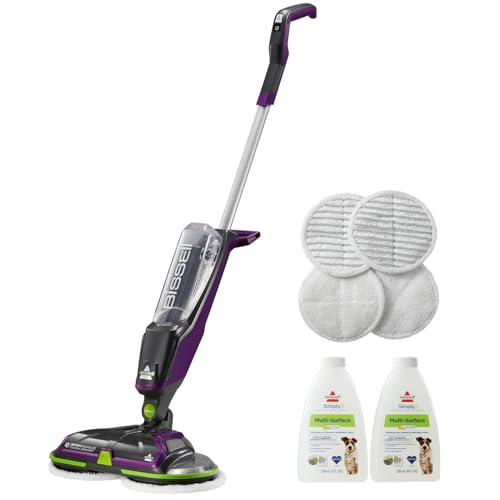
| Bissell SpinWave Cordless 2315 | Quick maintenance cleaning and gentle scrubbing | Up to 20 minutes | About 28 oz / 0.83 L | Two rotating washable microfiber pads | About 11 lb |
| Kärcher FC 7 Cordless | Larger sealed floors and mixed dry and wet messes | Up to 45 minutes | About 400 ml | Four counter-rotating rollers | About 10.3 lb |
| Tineco iFLOOR 3 Breeze Complete | Vacuuming and mopping in one pass | About 20 to 25 minutes, depending on mode | About 0.6 L | Motorized microfiber roller | About 9.9 lb |
Specifications can vary by package and market, so treat the figures as useful buying benchmarks rather than guarantees. Actual runtime falls when a machine uses a higher-power mode, handles heavy soil, or has an aging battery.
Our picks by cleaning situation
Best for quick daily cleaning: Bissell SpinWave Cordless
The Bissell SpinWave Cordless is the closest match to a traditional mop with powered assistance. Its two rotating pads help loosen footprints, dried splashes, and kitchen film without requiring the strong suction system found in a wet-dry vacuum. The removable tank holds roughly 28 ounces, enough for several small cleaning sessions in a typical kitchen or entryway.
Its approximately 20-minute runtime is short, but that is not necessarily a disadvantage. If your routine is a 10-minute wipe after cooking, the SpinWave avoids the extra steps of emptying a dirty-water tank and rinsing a vacuum path. Washable microfiber pads reduce recurring waste, although you will need multiple pad sets if you clean several rooms before doing laundry.
Choose it for sealed hardwood, tile, laminate rated for damp cleaning, and other hard surfaces where you already sweep or vacuum first. It is less suitable for loose crumbs, pet hair, or wet spills because it does not replace a vacuum.
Best for larger hard-floor areas: Kärcher FC 7 Cordless
The Kärcher FC 7 Cordless is the strongest choice here for a home with extensive sealed hard flooring. Its advertised runtime of up to 45 minutes is roughly twice that of the SpinWave, and its four rollers spread the cleaning action across a wider head. The counter-rotating roller arrangement is designed to collect dry debris while washing, reducing the need to vacuum every small crumb beforehand.
The trade-off is a smaller fresh-water tank of about 400 milliliters. Because the machine uses water efficiently and separates clean and dirty liquid, that capacity can still cover a useful area, but households with a large open-plan floor may need a refill. The rollers also demand more attention than flat mop pads: remove them after use, rinse them, and allow them to dry fully.
This is a good fit for frequent cleaning of tile, sealed stone, vinyl, and finished wood floors. Avoid treating “cordless” as permission to flood a wood floor. Use the lowest effective moisture level and follow the flooring manufacturer’s care instructions.
Best vacuum-and-mop combination: Tineco iFLOOR 3 Breeze Complete
The Tineco iFLOOR 3 Breeze Complete suits people who want one machine for crumbs, tracked-in dirt, and light wet messes. Its motorized roller picks up debris while applying cleaning solution, then directs dirty liquid into a separate recovery tank. With roughly 20 to 25 minutes of runtime and a clean-water tank around 0.6 liter, it is sized more for routine floor maintenance than a whole-house deep-cleaning marathon.
Its main advantage is reduced pre-cleaning. You can usually collect fine crumbs and wipe a spill in one pass, provided the debris is within the machine’s intended size range. Its main disadvantage is ownership work: the roller, dirty-water tank, filter, and suction channel should be rinsed after each session. If dirty water sits inside, odors and residue can develop quickly.
Pick the iFLOOR 3 Breeze when convenience means combining two chores. Pick the SpinWave instead if you already own a good vacuum and want a simpler, quieter powered mop.
Spin pads versus wet-cleaning rollers
| Cleaning design | What it does well | Limitations | Typical consumables |
|---|---|---|---|
| Rotating microfiber pads | Polishes and scrubs light soil; leaves relatively little water | Does not collect loose debris like a vacuum | Washable pads; occasional replacement pads |
| Single motorized roller | Combines debris pickup with wet cleaning | Roller and suction path need rinsing after use | Rollers, filters, cleaning solution |
| Four counter-rotating rollers | Good coverage and controlled water delivery on larger floors | More parts to remove, rinse, and dry | Multiple rollers, filters, cleaning solution |
How to choose by home, budget, and frequency
- Small apartment, daily kitchen touch-ups: Choose the Bissell SpinWave Cordless. Its shorter runtime is adequate, and its simpler design makes quick sessions less burdensome.
- Mostly tile or vinyl across several rooms: Choose the Kärcher FC 7 Cordless if you value longer runtime and less sweeping before mopping.
- Children, pets, and frequent wet spills: Choose the Tineco iFLOOR 3 Breeze Complete or another wet-dry floor cleaner with separate clean- and dirty-water tanks.
- Finished hardwood: Favor controlled water delivery, soft microfiber, and short cleaning passes. A pad-based machine can be easier to manage than a high-moisture roller cleaner.
- Lowest ongoing cost: A washable-pad mop generally uses fewer specialized parts. Wet-dry cleaners may require replacement rollers, filters, and branded solution.
- Infrequent cleaning: Do not buy based on battery capacity alone. A machine that is difficult to rinse and dry may be neglected between uses.
Runtime in practical terms
Manufacturers measure maximum runtime under particular conditions, not necessarily while cleaning heavily soiled floors. As a planning example, suppose a home takes eight minutes to mop the kitchen, seven minutes for the entryway, and six minutes for a bathroom. That is 21 minutes of active cleaning. A machine rated for 20 minutes may finish only if the operator moves efficiently and avoids repeated passes; a 45-minute model leaves much more reserve for edges and stubborn spots.
For quick daily cleaning, reserve matters less than storage and cleanup time. For a 600- to 900-square-foot hard-floor area, however, a longer-runtime machine reduces the chance of stopping midway to recharge. Battery replacement can also be expensive or service-dependent, so check whether the battery is removable and whether replacement parts are available before buying.
Ownership realities: what wears out first
Microfiber pads and rollers are consumables. They gradually lose absorbency, become rough, or retain odor even when washed. Keep at least two pad sets or a spare roller so one can dry completely while the other is in use. Filters can also restrict airflow when coated with fine dust; rinse them according to the manual and replace them when they no longer dry clean.
The most common mistake is storing a wet machine assembled. After every use, empty the recovery tank, rinse it, remove the roller or pads, clean hair from the head, and leave washable parts open to air-dry. Do not put a damp filter back into the machine unless the instructions specifically permit it.
Use only the recommended cleaning solution or a compatible low-foaming formula. Excess detergent can leave a sticky film, create foam, and interfere with suction. Never add bleach, essential oils, or household disinfectant unless the manufacturer explicitly approves it.
Safe setup for hardwood, tile, and laminate
- Confirm the floor is sealed and approved for damp cleaning. Unsealed wood, damaged laminate joints, and cracked grout can admit moisture.
- Remove large objects and tangled cords. Wet-dry rollers can catch string, hair, and small loose items.
- Fill only to the marked line. Overfilling increases leaking and leaves more liquid on the floor.
- Make one slow pass. Repeatedly scrubbing one spot can add moisture without improving the result.
- Dry problem areas immediately. Pay particular attention to seams, corners, and the edges of wood flooring.
- Clean the machine before storage. This protects the next session from odor, residue, and reduced suction.
Final recommendation
For the best balance of quick daily cleaning and simple ownership, the Bissell SpinWave Cordless is the most sensible choice when you already vacuum separately. The Kärcher FC 7 Cordless is better for broad sealed-floor coverage and longer sessions, while the Tineco iFLOOR 3 Breeze Complete is the better all-in-one option for homes that regularly deal with crumbs and wet spills. Compare the complete maintenance routine—not just runtime—because the machine that is easiest to rinse and dry is often the one that gets used most.





Write Your Review
No reviews yet. Be the first to share your experience!