

Key takeaways
- Vent upward whenever possible. A short, mostly vertical vent is easier to keep moving than a long run with several elbows.
- Do not undersize the fan or vent. Restriction reduces airflow and can push odors into the bathroom.
- Provide make-up air. A tightly sealed room may starve the fan, especially when a woodstove, range hood, or other exhaust appliance is operating.
- Plan for winter. Urine lines and external containers can freeze. A system that works in summer may need insulation, heat tracing, or an indoor collection tank in cold climates.
- Keep access panels usable. The toilet must be removable or openable without dismantling cabinets and plumbing.
- Use the specified bulking medium. Peat alternatives such as coconut coir may work in some units, but the manufacturer’s instructions take priority.
The best composting toilets for off-grid living are usually urine-diverting models when you want low power use, compact installation, and predictable maintenance; self-contained units make more sense when you need a simpler one-box installation and have room for a larger vented base.
Our top picks


As an Amazon Associate we earn from qualifying purchases at no extra cost to you. Ratings are shown as listed on Amazon.
Quick picks by off-grid situation
| Situation | Best fit | Why | Main compromise |
|---|---|---|---|
| Small cabin or occasional weekend use | Compact urine-diverting toilet | Small footprint, low solids volume, and modest ventilation requirements | Urine must be routed to a separate container or approved drain system |
| Two to four people using a cabin regularly | Large urine-diverting model with a 12-volt fan | Higher solids capacity and better moisture control | More installation work and routine emptying of the urine container |
| Users who do not want a separate urine tank | Self-contained composting toilet | Urine and solids are handled inside one base | Usually larger, heavier, and more sensitive to moisture balance |
| High use in a remote home | Large-capacity self-contained or advanced urine-diverting system | Less frequent solids handling | Higher purchase price, more ventilation planning, and more consumables |
Urine-diverting vs. self-contained composting toilets
Urine-diverting designs
Urine-diverting toilets separate liquid at the bowl. Solids fall into a lined or removable solids chamber, while urine flows into a bottle, tank, or dedicated drain route. A small fan normally pulls air through the solids chamber and out through a vent.
Separating urine is the central odor-control advantage. Most unpleasant toilet odors come from wet organic material and the interaction of urine with fecal matter. Keeping the solids chamber relatively dry helps the material dehydrate and reduces odor, although it does not eliminate the need for cleaning or ventilation.
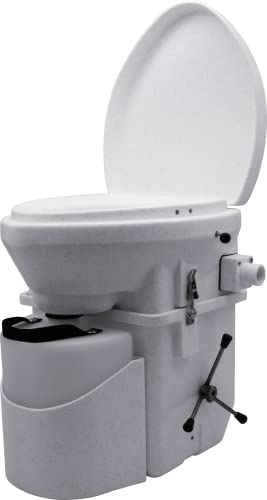
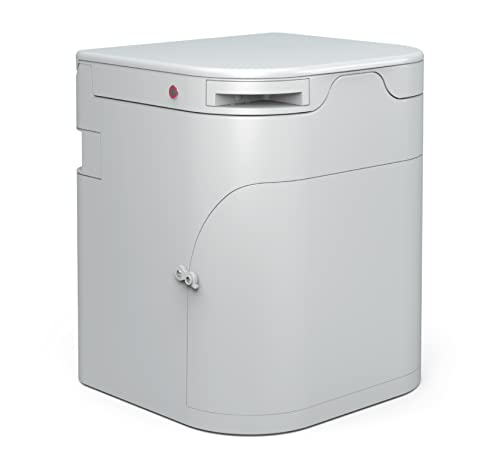
Nature’s Head and Air Head are established examples of compact urine-diverting toilets. Separett Villa models use the same general separation principle but are designed more like a household fixture, with a larger housing and a more conventional seating position. OGO Origin is another compact option aimed at small spaces.
Self-contained designs
Self-contained toilets keep the liquid and solids-processing components in one base. They may use a rotating drum, evaporation chamber, heating element, mixing medium, or a combination of these approaches. Sun-Mar’s larger composting toilets are examples of this category.
The installation can be appealing because you do not have to position a separate urine bottle beneath the toilet. However, “self-contained” does not mean maintenance-free. The unit still needs a vent, the chamber still needs correct moisture management, and the capacity can be consumed quickly by a family using the toilet every day.
Head-to-head comparison
| Characteristic | Urine-diverting toilet | Self-contained toilet |
|---|---|---|
| Typical footprint | About 19–24 inches wide and 19–28 inches deep | About 22–30 inches wide and 28–36 inches deep |
| Typical weight | Approximately 20–35 pounds before installation | Approximately 50–120 pounds, depending on chamber and heating equipment |
| Solids capacity | Roughly 20–60 uses for a compact chamber, depending on chamber size and use pattern | Often several weeks to several months, but household capacity varies greatly with moisture and occupancy |
| Urine handling | Usually a 1.6–2.2 gallon removable bottle or an external tank | Handled inside the appliance or collected in an integrated section |
| Power | Often a small 12-volt fan; some models use roughly 0.1–0.5 amps continuously | May use a fan only or may require substantially more power for heating and evaporation |
| Vent pipe | Usually about 1.5–2 inches in diameter, depending on the model | Commonly about 2–4 inches, with routing determined by the appliance |
| Best installation location | Small cabins, vans, boats, and rooms where the urine route can be planned | Larger bathrooms with floor space and reliable ventilation or electrical service |
Dimensions, capacity, and electrical consumption differ by model and revision, so check the current installation manual before building the platform or wiring a solar system. The figures above are useful planning ranges rather than a substitute for the manufacturer’s specifications.
Best composting toilets by design
Best compact urine-diverting choice: Nature’s Head
Nature’s Head is well suited to a cabin, tiny house, boat, or hunting shelter where floor space is limited. Its separate urine container and removable solids tank make the ownership routine easy to understand. A built-in fan supports continuous ventilation, and the unit can generally operate from a small 12-volt electrical system.
Choose it when portability, simple controls, and a proven compact layout matter more than a household-style appearance. Its limitations are equally important: the urine bottle may need frequent emptying for a full-time household, and the solids chamber is not sized for unlimited family use.
Best household-style urine-diverting choice: Separett Villa
Separett Villa models are worth considering for a permanent off-grid bathroom. They are generally larger than portable marine-style units and offer a more familiar seating and ventilation arrangement. The design is especially practical when the toilet can sit against an exterior wall, allowing a short, direct vent run.
The Villa’s advantage is not simply capacity. It is the cleaner division between the toilet room, the vent system, the urine outlet, and the solids container. That can make regular use more comfortable, but installation needs careful attention to slope, freeze protection, and access for emptying.
Best for a modern compact installation: OGO Origin
OGO Origin targets users who want urine diversion in a relatively compact, contemporary housing. It uses a powered ventilation system and an electrically operated solids-handling mechanism. This can reduce the amount of manual mixing compared with basic bucket-style arrangements.
It is a better fit for an off-grid home with dependable 12-volt or inverter power than for an unoccupied hunting cabin with no battery maintenance. More mechanisms mean more parts to keep clean and more opportunities for a failed fan, switch, or actuator to interrupt service.
Best when one integrated base matters: Sun-Mar-style self-contained units
Large self-contained units are appealing when routing urine separately would be difficult or when the bathroom layout requires a single appliance. They can provide substantial chamber volume, but they need adequate room, a correctly sized vent, and a realistic plan for power if evaporation or heating is part of the process.
These toilets are most suitable for a stationary cabin with a dedicated bathroom. They are usually a poor choice for a tiny bathroom, a mobile build, or a solar system that is already close to its daily energy limit.
How much capacity do you actually need?
Capacity claims are easy to misread because “uses” depend on whether the toilet is used full-time, whether urine is diverted, how much bulking material is added, and whether the solids chamber is emptied before it is completely full.
As a planning example, assume two people generate 1.5 solids deposits per person per day. That equals three deposits daily. A chamber rated for 60 deposits would reach its nominal use count in:
60 deposits ÷ 3 deposits per day = 20 days.
That calculation does not mean the toilet must be emptied on day 20. Dehydration, paper use, and the manufacturer’s recommended fill line all affect the practical interval. It does show why a compact unit that works well for weekend use may require frequent servicing in a full-time home.
For a family, compare the manufacturer’s capacity estimate with your actual occupancy, then allow reserve capacity for guests and delays caused by freezing weather or difficult road access.
Installation details that control odor and reliability
- Vent upward whenever possible. A short, mostly vertical vent is easier to keep moving than a long run with several elbows.
- Do not undersize the fan or vent. Restriction reduces airflow and can push odors into the bathroom.
- Provide make-up air. A tightly sealed room may starve the fan, especially when a woodstove, range hood, or other exhaust appliance is operating.
- Plan for winter. Urine lines and external containers can freeze. A system that works in summer may need insulation, heat tracing, or an indoor collection tank in cold climates.
- Keep access panels usable. The toilet must be removable or openable without dismantling cabinets and plumbing.
- Use the specified bulking medium. Peat alternatives such as coconut coir may work in some units, but the manufacturer’s instructions take priority.
Maintenance and durability realities
The parts that commonly need attention are the ventilation fan, urine bottle seals, drain fittings, screens, hinges, and any motorized mixing or lid mechanism. Fans can accumulate dust, insects, and mineral deposits. Urine containers can develop scale if they are rinsed irregularly, while drain lines can clog when they lack adequate slope.
Emptying a urine bottle before it is completely full reduces spills and makes carrying safer. Rinse it according to the manufacturer’s instructions; aggressive chemicals can damage seals or interfere with biological processing. For the solids chamber, add only enough cover material to control surface moisture. Excessive material wastes capacity, while too little can leave the chamber wet and odor-prone.
Keep a spare fan, fuse, seal, and replacement container cap if the property is remote. A basic parts kit is inexpensive compared with a service trip. Never assume finished material is safe for food gardens simply because a toilet is marketed as composting. Follow local sanitation rules and the product’s handling instructions; disposal requirements vary by jurisdiction.
What should you buy?
Choose a urine-diverting toilet if you have limited space, want low electrical demand, and are comfortable emptying a urine container or arranging a separate urine drain. For many off-grid cabins, a compact model such as Nature’s Head or Air Head offers the most manageable balance.
Choose a larger household-style urine-diverting model such as Separett Villa when the toilet will serve several people regularly and you can build a proper vent and urine route.
Choose a self-contained model when a single integrated appliance is more important than compactness, and when your bathroom has sufficient floor area and the electrical system can support its ventilation or heating needs. In every case, capacity, winter operation, access for cleaning, and local waste rules matter more than the label “composting.”
Frequently asked questions
Do composting toilets need electricity?
Many urine-diverting toilets need only a small fan, and some can be configured for low-voltage operation. Self-contained models that evaporate liquid or use heat may require much more power. Check the continuous wattage, startup load, and winter performance against the battery and solar system rather than looking only at the voltage.
Are composting toilets odorless?
No toilet is odorless under every condition. Correct urine separation, continuous ventilation, adequate make-up air, dry cover material, and regular cleaning can keep odors low. A blocked vent, full urine container, wet solids chamber, or frozen drain can quickly change the result.
Can a composting toilet replace a septic system?
It can reduce or eliminate toilet wastewater, but it does not automatically solve every wastewater issue. Handwashing, showers, kitchen water, and local regulations still need a separate plan. Consult the relevant building or environmental authority before installing a system in a permanent dwelling.


Write Your Review
No reviews yet. Be the first to share your experience!