

Key takeaways
- Best all-around choice: a 35-pint ENERGY STAR compressor dehumidifier with a built-in pump or gravity-drain outlet.
- Best for a large, frequently wet basement: the Midea Cube 35 Pint, particularly when its expandable tank and continuous drain are useful.
- Best for a tighter budget: a conventional 35-pint unit from Frigidaire, GE, or a comparable established brand with a washable filter.
- Best for cold basements: a low-temperature-rated basement or crawl-space dehumidifier, or a desiccant model if temperatures regularly fall below about 55°F.
- Best when the drain is higher than the appliance: a model with an integrated condensate pump, rather than relying on an add-on hose alone.
The best basement dehumidifiers are usually 35- to 50-pint ENERGY STAR compressor models with continuous-drain capability, but the right choice depends on your basement’s temperature, floor area, and whether you want to empty a bucket.
Our top picks
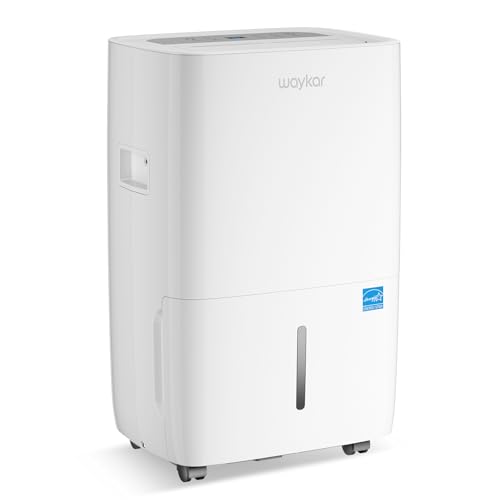


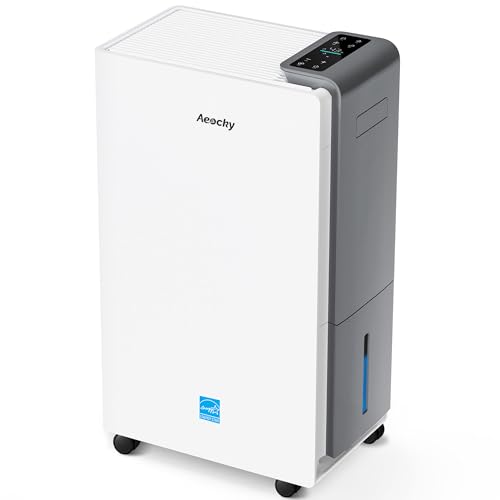
As an Amazon Associate we earn from qualifying purchases at no extra cost to you. Ratings are shown as listed on Amazon.
Best basement dehumidifiers by situation
- Best all-around choice: a 35-pint ENERGY STAR compressor dehumidifier with a built-in pump or gravity-drain outlet.
- Best for a large, frequently wet basement: the Midea Cube 35 Pint, particularly when its expandable tank and continuous drain are useful.
- Best for a tighter budget: a conventional 35-pint unit from Frigidaire, GE, or a comparable established brand with a washable filter.
- Best for cold basements: a low-temperature-rated basement or crawl-space dehumidifier, or a desiccant model if temperatures regularly fall below about 55°F.
- Best when the drain is higher than the appliance: a model with an integrated condensate pump, rather than relying on an add-on hose alone.
Capacity labels can be misleading. A “50-pint” machine tested under older, warmer conditions may be sold as a 35-pint model under current testing standards, so compare the published pint rating and operating specifications rather than assuming a larger number is automatically better.
Head-to-head comparison
| Type or example | Published capacity | Practical basement coverage | Low-temperature behavior | Drainage | Typical noise | Typical price range |
|---|---|---|---|---|---|---|
| Frigidaire FFAD35-series portable compressor | 35 pints/day | Up to about 1,000 sq. ft. in a damp basement | Best above 60°F; may need defrost cycles below that | Bucket and gravity hose outlet; pump depends on model | About 47– fifty-one dB on low, depending on model | $180–$300 |
| Midea Cube 35 Pint | 35 pints/day | About 800–1,200 sq. ft. when moderately damp | Compressor design; allow extra margin in cool rooms | Large lift-out tank, continuous drain, pump-equipped versions available | About 49–54 dB | $220–$350 |
| Honeywell TP70-series portable compressor | Approximately 50 pints/day under older rating conventions; current labels may differ | About 1,000–1,500 sq. ft., depending on moisture load | Typically intended for normal indoor temperatures, not unheated winter spaces | Bucket and continuous gravity drain; pump availability varies | About 49–53 dB | $220–$350 |
| Dedicated low-temperature basement or crawl-space unit | 35–90 pints/day, model-dependent | About 1,000–2,500 sq. ft. | Often operates closer to 40°F with hot-gas or enhanced defrost | Usually continuous drain; pumps may be optional | About 50–65 dB | $700–$1,500+ |
Noise figures are approximate because fan speed, compressor cycling, floor vibration, and room acoustics affect what you hear. Check the exact model’s label before buying; product families often contain several versions with different controls and pumps.
How much capacity does your basement need?
For a finished basement that is slightly damp, a 20- to 35-pint portable unit can be adequate for roughly 500 to 1,000 square feet. Choose 35 to 50 pints for a larger or noticeably damp space, and consider a commercial or whole-basement unit when the area exceeds 1,500 square feet, the basement has several separated rooms, or humidity returns quickly after the machine shuts off.
Use moisture level, not just square footage, to size the appliance:
- Slightly damp: musty odor or humidity around 55–60%.
- Moderately damp: occasional condensation, damp masonry, or humidity around 60–70%.
- Very damp: visibly wet floors, persistent condensation, or humidity above 70%.
- Wet or flood-affected: fix water intrusion first; a household dehumidifier is not a substitute for drainage, waterproofing, or professional drying.
A practical example: a 900-square-foot basement at 65% relative humidity may be adequately served by a 35-pint unit if it has normal ceiling height and limited air leakage. If the same basement has bare concrete, an unsealed sump pit, and water entering after rain, the appliance may run almost continuously. A larger unit provides more removal capacity, but it will not correct structural moisture.
Low-temperature performance matters more than the pint number
Portable compressor dehumidifiers work by cooling a coil below the room’s dew point. In a cold basement, frost can build on that coil, forcing the machine into defrost mode. During defrost, it removes little or no moisture, so a nominally powerful unit can disappoint in winter.
If your basement commonly falls below 60°F, look for a stated low-temperature operating range, automatic defrost, and preferably a design intended for basements or crawl spaces. A dedicated low-temperature compressor unit costs more but is generally more efficient than running a small portable unit continuously in unfavorable conditions.
Desiccant dehumidifiers are another option for very cold rooms because they do not rely on a refrigerated coil. They usually produce warm exhaust air and consume more electricity for the same amount of moisture removed, making them better suited to small, cold areas than to a large damp basement.
Drainage: the feature that determines whether you keep using it
A bucket is acceptable for occasional use, but a damp basement can fill a 1.5- to 2-gallon tank every day. If you must empty it twice daily, the appliance is likely to be switched off at exactly the time it is needed.
- Gravity drain: inexpensive and reliable, but the hose must slope continuously downward to a floor drain, sump pit, or suitable utility sink.
- Built-in pump: necessary when water must travel upward or horizontally to a drain. Confirm the pump’s maximum lift, commonly around 12 to 16 feet, and clean its small intake screen.
- Large removable tank: useful during occasional operation, especially where no drain is available.
- External condensate pump: a workable solution when the dehumidifier has a hose outlet but no integrated pump.
Before buying, measure the distance from the appliance to the drain and the vertical rise. A hose that reaches the drain but rises even a few inches without a pump can back up and trigger the full-tank shutoff.
Energy efficiency and operating cost
Look for the ENERGY STAR label and compare the appliance’s integrated energy factor or energy factor, expressed in liters of water removed per kilowatt-hour. A higher number means more moisture removal for the electricity used. Do not compare only wattage: a lower-wattage machine may remove less water and run longer.
For a simple cost estimate, suppose a dehumidifier averages 500 watts while operating, runs 12 hours per day, and electricity costs 18 cents per kilowatt-hour:
0.5 kW × 12 hours × $0.18 = $1.08 per day, or approximately $32 per month if it runs every day.
Actual cost may be lower because the compressor cycles off after reaching the humidity setting, or higher if the basement is persistently wet. Setting the control around 45–55% relative humidity is usually more practical than forcing the machine to run continuously at its lowest setting.
Ownership details that product listings often omit
The filter is the first routine maintenance item. Dust and lint restrict airflow, reduce water removal, and can make the compressor run longer. Inspect a washable filter every two to four weeks during heavy use and rinse it according to the manual. Let it dry fully before reinstalling it.
Clean the water tank and its float mechanism periodically. A dirty float can cause premature “full tank” warnings, while a cracked tank or worn gasket can leak. Inspect the drain hose for kinks and algae film. If the unit has a pump, flush or clean the pump reservoir at least seasonally.
Leave several inches of clearance around the air intake and outlet. Do not place the machine directly against a cold foundation wall, cover it while running, or use an extension cord unless the manufacturer specifically permits it. Portable dehumidifiers are heavy—often 30 to 50 pounds—so place them on a stable, level surface that can tolerate occasional condensation.
Our decision matrix
| Your situation | Best specification | Why |
|---|---|---|
| Small, mildly damp finished basement | 20–35 pints/day, ENERGY STAR, gravity drain | Lower purchase and operating cost without excessive capacity |
| 900–1,500 sq. ft. basement used daily | 35–50 pints/day, humidity display, continuous drain | Better recovery after showers, laundry, or rainy weather |
| No nearby floor drain | Built-in pump or compatible external pump | Prevents frequent bucket emptying |
| Unheated basement below 55°F | Low-temperature compressor model or desiccant unit | Reduces frost-related downtime |
| Persistent water intrusion | Waterproofing or drainage repair first | Dehumidification alone cannot solve the source |
Bottom line
For most damp but structurally sound basements, choose a 35-pint ENERGY STAR compressor dehumidifier with a washable filter, adjustable humidistat, automatic defrost, and continuous-drain outlet. Choose a pump when the drain is elevated, upgrade to a dedicated low-temperature unit for cold winter spaces, and treat recurring leaks or flooding as a building problem rather than a dehumidifier-sizing problem.




Write Your Review
No reviews yet. Be the first to share your experience!