

Our Top Picks
The best energy monitor for a single appliance is a plug-in watt meter like the MECHEER, while the best for hardwired loads such as dryers and air conditioners is a circuit-level panel kit like Emporia Vue 3 or Refoss. That split is the first decision, because the eight listings here fall into three types: plug-in meters, smart plugs, and panel monitors that need installation. The sections below tell you which type each one is and what to check.
Eight monitors, grouped by type
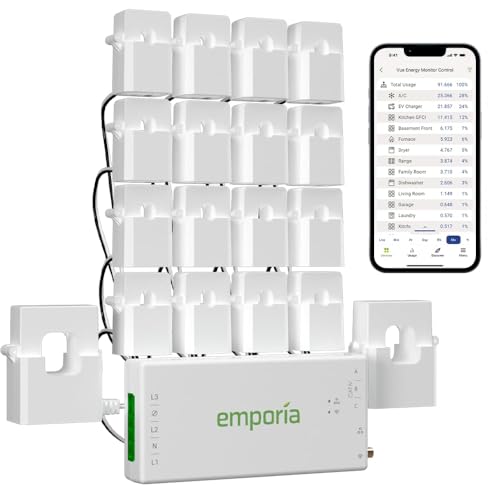
Emporia Vue 3 Home Energy Monitor - Smart Home Automation Module and Real Time Electricity Usage Monitor, Power Consumption Meter, Solar and Net Metering for UL Certified Safe Energy Monitoring


As an Amazon Associate we earn from qualifying purchases. Product prices and availability are accurate as of the date/time indicated.

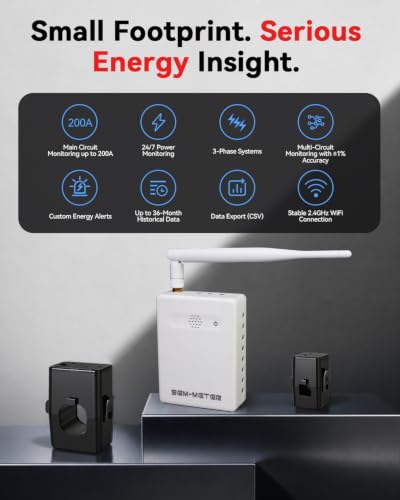
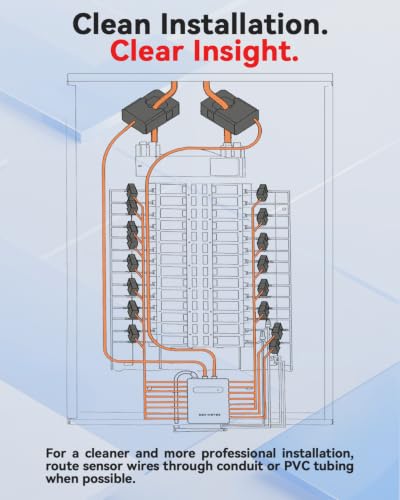
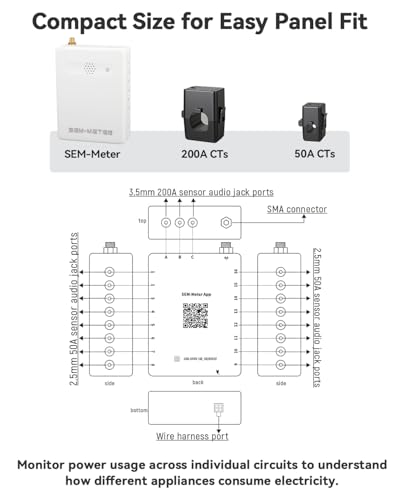
Smart Home Energy Monitor with 16 50A Circuit Level Sensors, Real-Time Power Usage & Electricity Cost Tracking, Ideal for Rental Homes & Shared Apartments, App History, Compatible with Home Assistant


As an Amazon Associate we earn from qualifying purchases. Product prices and availability are accurate as of the date/time indicated.

Refoss Smart Home Energy Monitor with Open API, Home Assistant, No Cloud | 16 60A Circuit Sensor, Real Time Electricity Usage Monitor, Power Consumption Meter, Solar Metering, ETL Certified, EM16P


As an Amazon Associate we earn from qualifying purchases. Product prices and availability are accurate as of the date/time indicated.

Emporia Energy Monitoring Smart Plug, WiFi Smart Outlet Plug Works with Alexa and Google Home - 15a WiFi Outlet with Timer, Mobile App, Home Energy Monitor, Scheduling - 2.4ghz WiFi Only (4 Pack)


As an Amazon Associate we earn from qualifying purchases. Product prices and availability are accurate as of the date/time indicated.

Meross Smart Home Energy Monitor with 18 Circuit Monitoring, Home Assistant Support, Real-Time Energy Usage Tracking, Solar Surplus Detection, Smart Alerts, No Subscriptions, 2-Year Warranty


As an Amazon Associate we earn from qualifying purchases. Product prices and availability are accurate as of the date/time indicated.

SIEMENS Inhab Smart Home Energy Monitor with 16-50Amp Circuit Level Sensors and 2-200Amp Main Sensors for Real Time Electricity Monitoring and Metering





As an Amazon Associate we earn from qualifying purchases. Product prices and availability are accurate as of the date/time indicated.
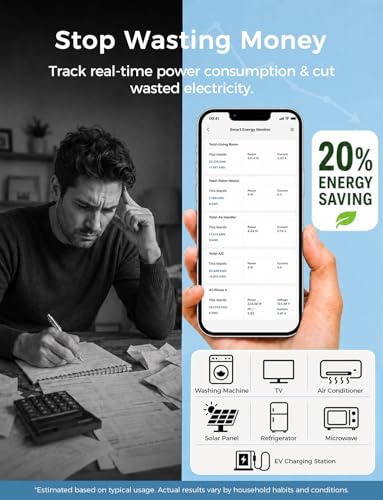
Meross Smart Home Energy Monitor, Real-Time Power & Cost Tracking | 16×60A CT Sensors Support Home Assistant, Electrical Monitoring Device, Solar Metering, No Subscription, 2-Year Warranty


As an Amazon Associate we earn from qualifying purchases. Product prices and availability are accurate as of the date/time indicated.
| Model | Key point from title | Price tier | Best for |
|---|---|---|---|
| MECHEER Watt Meter | Plug-in, 7 display modes, backlight, overload protection | Budget | Single plug-in appliance |
| Emporia Smart Plug (4 pack) | WiFi, 15A, timer, Alexa/Google, app | Budget | Several small loads |
| Fusion Energy 16-sensor | 16 x 50A sensors, app history, Home Assistant | Mid-range | Apartments (with permission) |
| Refoss EM16P | 16 x 60A, open API, no cloud, ETL certified | Mid-range | Local-control fans |
| Meross 18-circuit | 18 circuits, solar surplus, no subscription | Mid-range | Solar homes |
| Meross 16 x 60A | 16 CT sensors, solar metering, no subscription | Premium | Larger panels |
| Emporia Vue 3 | UL certified, solar/net metering, smart-home module | Premium | Whole-home plus solar |
| SIEMENS Inhab | 16 x 50A plus 2-200A main sensors | Premium | Full-panel coverage |
Tiers are relative within this set. Two Meross listings are near-duplicates that differ in circuit count and sensor rating.
What each monitor is, and what it does
MECHEER Plug-In Watt Meter
This is the classic Kill-A-Watt style device: it plugs into the wall, and the appliance plugs into it. The title lists 7 display modes, a backlight, overload protection and readouts for voltage, amps and energy. It is the most direct answer to the keyword. Maximum load rating is not in the title, so check it before you try a heater or window AC. Used for a week on a refrigerator or a gaming PC, a plug meter turns a vague bill into a per-device number you can multiply by your rate. Cheap units differ in accuracy at very low wattage, so treat tiny standby readings as approximate.
Pros
- Simple, no app or installation
- Backlit display and overload protection
Cons
- One appliance at a time
- Rated limit not in the title
Who it’s for: anyone auditing a fridge, TV or office gear.
Emporia Smart Plug 4-Pack
These are WiFi smart outlets, rated 15A, that report energy use and support timers and scheduling through an app, with Alexa and Google Home. The title notes 2.4GHz WiFi only. Four units let you watch several loads at once. It is not a whole-home monitor, and it only covers plug-in devices within the amp rating. The upside over a basic meter is remote control: you can switch a lamp or fan on a schedule and watch its running cost in the app. Check the listing for how long history is kept and whether data is stored on a server.
Pros
- Four plugs for multi-device tracking
- Scheduling and voice assistants
Cons
- 2.4GHz WiFi only
- 15A limit rules out some heavy loads
Who it’s for: renters tracking and scheduling several small appliances.
Fusion Energy 16-Circuit Monitor
The title advertises 16 circuit-level sensors rated at 50A, real-time power and cost tracking, app history and Home Assistant compatibility, and mentions rental homes and shared apartments. It is a panel monitor, so installation involves the breaker panel. A rental needs landlord approval and, in most cases, a licensed electrician. Check the listing for data handling. The value is the breakdown: you see how much the dryer, oven or heat pump contributes to the bill, which a plug meter cannot show. Sensors clip around circuit wires, so measure your panel space and breaker count against what the listing supports before ordering.
Pros
- Circuit-level view across 16 breakers
- Home Assistant compatible
Cons
- Panel installation required
- Fits only panels that match the sensor rating
Who it’s for: households that want a breaker-by-breaker bill.
Refoss EM16P
Refoss highlights an open API, Home Assistant support and no cloud dependence, with 16 sensors rated 60A, solar metering and ETL certification. That combination appeals to local-control fans who prefer data that stays on their network. Like the other panel kits, it needs installation by a qualified person. Confirm what the app offers without cloud access. The 60A rating suggests it can sit on heavier circuits than the 50A kits, but confirm wire size and panel layout on the listing. Open APIs also make it easier to feed data into dashboards you already use.
Pros
- Open API and no-cloud approach
- 60A sensors and ETL certification
Cons
- Needs panel installation
- Smaller app ecosystem is possible; check the listing
Who it’s for: smart-home users who prioritize local data.
Meross 18-Circuit Monitor
The title lists 18 circuits, Home Assistant support, real-time tracking, solar surplus detection, smart alerts, no subscriptions and a 2-year warranty. The extra circuits suit larger panels, and alerts help catch a forgotten heater. As with every panel kit, installation inside the breaker box is a job for a licensed electrician. If your goal is cost visibility rather than automation, check whether the alert features are customizable, because too many notifications get ignored. With 18 channels you may also cover sub-panels, which is worth confirming for your setup.
Pros
- 18 circuits and smart alerts
- No subscriptions, 2-year warranty
Cons
- Panel install required
- Sensor amp rating not in the title
Who it’s for: homes with big panels and solar panels.
Meross 16 x 60A CT Monitor
A near-duplicate of the other Meross, this listing states 16 clamp sensors at 60A, Home Assistant, solar metering, no subscription and the same 2-year warranty. The practical difference is circuit count and sensor rating, so choose by how many breakers you want to see and the wire size on each. It sits at a higher tier here. Confirm compatibility with your panel before buying. If you do not need the higher amp rating, the price gap between the two Meross models is worth weighing, since extra capacity only helps if your circuits need it.
Pros
- 60A sensors for heavier circuits
- Solar metering and no subscription
Cons
- Fewer circuits than the 18-circuit model
- Installation required
Who it’s for: homes with heavier branch circuits.
Emporia Vue 3
The title calls it a home energy monitor and smart-home module with real-time usage, solar and net metering, and UL certification. UL listing is a safety point worth noting. Like the others it is a panel product, so it is not for a quick plug-in check. Sensor count and app features are not in the title. The smart-home module wording suggests integration with automation setups, but compatibility details are on the listing, so read them first. Those with rooftop solar will care most about the net metering note, as it can show export as well as consumption.
Pros
- UL certified per the title
- Solar and net metering support
Cons
- Needs installation in the panel
- Sensor count not in the title
Who it’s for: whole-home tracking with solar.
SIEMENS Inhab Smart Home Energy Monitor
Siemens lists 16 circuit sensors at 50A plus 2-200A main sensors for real-time monitoring and metering. The main sensors give a whole-home total alongside the circuits, and the brand is a long-established electrical name. It is the most expensive listing here. The installation requirement applies, so budget for a professional. Having both main and branch measurement helps you check whether the circuit totals roughly match the whole-home figure, which is a quick sanity check for placement errors. Premium pricing is the trade-off, along with a setup that is heavier than the smart-plug options.
Pros
- Main plus circuit sensors
- Established electrical brand
Cons
- Highest price tier
- Panel install required
Who it’s for: buyers who want a complete panel view and are paying for an electrician.
How we picked these
The Editorial team compared the eight listings using published specifications, manufacturer documentation and buyer reviews. Nobody on the team used or measured these units. We sorted by device type first, because a plug meter and a panel kit answer different questions, then by connectivity and certification mentions. Missing details are marked “check the listing”, and we flag off-type pairs, such as the plug-in meter and the smart plugs sitting beside whole-panel kits. Price tier is relative within the set, and we did not rank by brand name. Where one product repeats another, as with the two Meross listings, we say so.
Choosing a monitor for your appliances
Decide the scope first
If you want to know what a fridge or dehumidifier costs, a plug meter does the job in minutes. If you want to know what the dryer, oven or air conditioner costs, you need a panel kit because those are hardwired or on dedicated circuits.
A worked cost example
Assume electricity costs 17 cents per kWh, an estimate you should replace with your rate. A 100W device running all day uses 2.4 kWh daily, about 72 kWh monthly, or roughly 12 dollars. A 1,500W space heater running 4 hours daily uses 180 kWh monthly, around 31 dollars. A 15W standby load running all year uses roughly 131 kWh, about 22 dollars. These are estimates, not measurements.
Safety and installation
Plug meters should stay below their rated amperage, and heaters or air conditioners need care. Panel kits involve working inside a live breaker box: leave it to a licensed electrician, follow the manufacturer’s instructions and local code, and ask for landlord permission in a rental.
Match type to appliance
Refrigerators, dehumidifiers, TVs, computers and small heaters can be checked with a plug meter. Dryers, ranges, water heaters, heat pumps and EV chargers are usually hardwired or on 240-volt circuits and need circuit sensors. A good approach is to start with a plug meter, learn which devices matter, and add a panel monitor only if the questions grow.
Data access and privacy
Some listings highlight Home Assistant, an open API or no cloud, while others list app history. Decide whether you want local data or cloud convenience, and whether you accept a subscription.
Solar and future plans
If you have or plan solar, look for solar or net metering mentions. Our guide to LED light bulbs for energy saving covers a cheap first upgrade once your monitor shows where the watts go. Also check warranty length, the app’s platform support and whether firmware updates are mentioned, since a monitor you cannot update is harder to keep secure.
Mistakes buyers make
The first is buying a panel kit when a plug meter would answer the question. The second is ignoring amp ratings; a heavy load on a lightweight plug can overheat it. The third is assuming a rental allows panel work. The fourth is expecting a monitor to save money by itself; it only shows data. The fifth is mixing up near-duplicates, like the two Meross models. Finally, skipping WiFi checks leaves you with a device that cannot connect, especially the 2.4GHz-only plugs. Another is forgetting that a monitor shows historical use only after it has been collecting for a while, so patience is part of the plan. Last, many buyers treat a monitor as a safety device; it is not a substitute for breakers, smoke alarms or professional electrical inspection.
Verdict
For one appliance, buy the MECHEER plug meter. For several small loads with scheduling, take the Emporia four-pack. For a whole panel with local control, Refoss is our pick, while Emporia Vue 3 suits solar homes and Siemens suits buyers who want a premium panel kit. Whichever you choose, hire a licensed electrician for any panel work. If budget is tight, begin with the plug meter, unplug or schedule the biggest offenders, and revisit panel monitors once you know where the money goes. Panel kits pay off most for larger homes with electric heating or cooling.
Related guides
Frequently asked questions
What is the difference between a plug-in meter and a panel energy monitor?
A plug-in meter measures one appliance at a time through its outlet. A panel monitor clamps sensors on your breaker panel wires and tracks whole-home and circuit-level use. Plug meters are cheap and simple but limited to plug-in loads, while panel kits cover hardwired appliances like dryers and ovens but need installation.
Do I need an electrician to install a home energy monitor?
For plug-in meters, no. For panel-mounted kits with clamp sensors, yes, in most cases. Working inside a live panel is dangerous, and local codes apply. Hire a licensed electrician, follow the manufacturer’s instructions, and get landlord or utility permission before modifying a rental. Do not open the panel yourself unless you are qualified.
Can an energy monitor lower my electric bill?
A monitor does not cut usage by itself; it shows which loads cost the most so you can change habits or replace equipment. Savings depend on what you find. Common results include old fridges, standby loads and space heaters. Treat any savings figure as an estimate based on your rate and hours of use.
Does a monitor need a subscription or the cloud?
It varies. Two Meross titles say no subscription, the Refoss title mentions no cloud and an open API, and others list app history. Check the listing for what works offline, whether data is stored locally, and whether Home Assistant integration is supported if you value local control.
Are smart plugs with energy monitoring accurate enough?
They are good for relative comparisons, like which of two appliances uses more, and for estimating monthly cost. Accuracy at very low loads and the maximum rated amperage vary by product, and the titles do not state either. Check the listing’s specifications and keep within the plug’s rated load.




Write Your Review
No reviews yet. Be the first to share your experience!