

Key takeaways
- If you are new to TENS: prioritize simple program selection, clear instructions, a timer, and an automatic shutoff. Manual control over every pulse parameter is optional at this stage.
- If you already know your preferred settings: choose two channels with separate intensity controls and adjustable frequency, pulse width, and treatment time.
- If you use it several times a week: compare rechargeable runtime, charging time, warranty length, and replacement-pad availability rather than focusing only on the device price.
- If you have limited storage or travel often: select a small unit with a protective case, integrated lead storage, and standard-sized pads that are easy to replace.
- If more than one person will use it: buy separate pad sets and clean the device and leads according to the manual. Sharing used adhesive pads is not hygienic.
Best TENS Units for Pain Relief
The best TENS unit depends on how you will use it: choose a simple dual-channel device such as the TENS 7000 for a low-cost starting point, an Omron Max Power Relief for a compact pre-set option, a Beurer EM49 for more adjustable programs, or a rechargeable, higher-end model when frequent use makes battery convenience important.
Transcutaneous electrical nerve stimulation (TENS) units send mild electrical pulses through adhesive electrodes placed on the skin. They are used by some people as part of a broader pain-management plan, but they are not appropriate for every condition and do not replace diagnosis or treatment. Ask a healthcare professional whether TENS is suitable for you, particularly if you have an implanted electronic device, reduced skin sensation, epilepsy, are pregnant, or have unexplained, severe, or worsening pain.
Our top picks


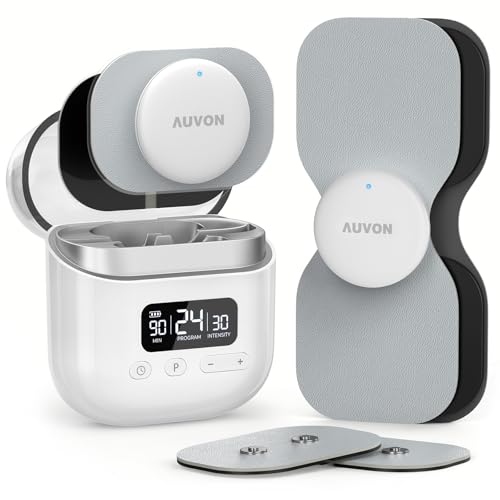

As an Amazon Associate we earn from qualifying purchases at no extra cost to you. Ratings are shown as listed on Amazon.
Best TENS units by situation
| Best for | Recommended type or model | Why it stands out | Trade-off |
|---|---|---|---|
| Lowest initial cost | TENS 7000-style dual-channel unit | Usually offers adjustable intensity, pulse rate, width, timer, and two channels | Often uses a 9-volt battery and has a less polished interface |
| First-time users | Omron Max Power Relief | Compact controls and named programs reduce setup decisions | Less manual control than a clinical-style unit |
| Multiple body areas | Beurer EM49 | Two channels, multiple programs, and separate intensity adjustment | More buttons and settings to learn |
| Frequent home use | Rechargeable dual-channel TENS unit | No regular battery purchases and commonly includes a USB charging cable | Charging adds another item to maintain; battery replacement may be difficult later |
| Travel and occasional use | Small single- or dual-channel portable unit | Typically about 4–6 oz and small enough for a toiletry bag | Smaller controls and fewer program options can be harder to use |
Head-to-head: what matters more than the brand name
Pulse settings and programs
Pulse frequency is measured in hertz (Hz), pulse width in microseconds (µs), and intensity in milliamps (mA). Many entry-level TENS units provide roughly 2–150 Hz frequency adjustment, approximately 50–250 µs pulse-width adjustment, and a stepped intensity control. That range is more useful than a long list of branded “massage” modes because it lets a clinician or experienced user fine-tune the sensation.
Pre-set programs are more convenient for beginners. They may automatically vary frequency or pulse width, so you can select a labeled program and increase intensity gradually. The compromise is control: a device with only several programs may not let you reproduce a particular setting recommended by a physical therapist.
Look for two independently adjustable channels if you want to treat two areas or use four pads around one larger area. A dual-channel unit is not automatically stronger; it simply gives you more placement and control options.
Pad size and coverage
Most reusable electrode pads are approximately 2 by 2 inches or 2 by 3 inches. Smaller pads are easier to position around a compact joint, while larger pads can cover more surface area on a back or thigh. Some kits include a mixture of sizes, which is more useful than receiving four identical pads.
Pad size does not determine how deeply stimulation travels. Placement, skin contact, intensity, and individual sensitivity all affect the experience. Never place electrodes across the front of the neck, over the head, directly over the heart, or across broken, infected, irritated, or numb skin. Follow the manufacturer’s placement instructions and professional guidance.
Battery life and charging
A basic TENS 7000-style unit commonly uses one 9-volt battery. Actual runtime varies with intensity, program, resistance at the skin, and battery quality, but occasional users can often expect several weeks or more from one battery. A rechargeable model may contain a lithium-ion battery in the approximate 500–1,000 mAh range, with several hours of active stimulation per charge depending on output and settings.
For a simple ownership calculation, suppose a disposable-battery device uses one $3–$6 battery every six weeks. At weekly use, that is about $0.50–$1 per session in battery cost before replacing pads. A rechargeable unit costing $20–$40 more may take many months to offset that difference, but it is more convenient if you use TENS several times per week. Rechargeable batteries also age; expect capacity to decline after repeated charging cycles, and check whether the battery is user-replaceable before buying.
Portability and controls
Portable units generally weigh about 3–8 oz without packaging, while larger models with a cradle or extensive accessories can weigh more. A belt clip is useful for moving around, but do not use a TENS unit while driving, operating machinery, bathing, or sleeping unless a qualified professional and the manufacturer specifically say it is appropriate.
Large, tactile intensity dials are easy to adjust without looking. A backlit screen helps in low light, while a compact digital unit may be easier to pack but more frustrating for someone with limited dexterity or vision. A lock function helps prevent accidental intensity changes in a bag.
Key specifications compared
| Feature | Basic dual-channel unit | Compact pre-set unit | Rechargeable advanced unit |
|---|---|---|---|
| Typical channels | 2 | 1–2 | 2–4 |
| Typical pad size | 2 × 2 in or 2 × 3 in | About 2 × 2 in | 2 × 2 in, 2 × 3 in, or mixed sizes |
| Frequency range | Approximately 2–150 Hz | Usually preset | Approximately 1–150 Hz, depending on model |
| Power source | One 9V battery | AAA batteries or proprietary battery, depending on model | Built-in rechargeable lithium-ion battery |
| Typical device weight | 4–8 oz | 3–6 oz | 4–10 oz |
| General market price | $25–$60 | $35–$80 | $70–$200 or more |
These are buying ranges rather than promises for every package. Accessories, regional pricing, bundled pads, and revisions can change the specifications, so confirm the current manual before purchasing.
How to choose without overbuying
- If you are new to TENS: prioritize simple program selection, clear instructions, a timer, and an automatic shutoff. Manual control over every pulse parameter is optional at this stage.
- If you already know your preferred settings: choose two channels with separate intensity controls and adjustable frequency, pulse width, and treatment time.
- If you use it several times a week: compare rechargeable runtime, charging time, warranty length, and replacement-pad availability rather than focusing only on the device price.
- If you have limited storage or travel often: select a small unit with a protective case, integrated lead storage, and standard-sized pads that are easy to replace.
- If more than one person will use it: buy separate pad sets and clean the device and leads according to the manual. Sharing used adhesive pads is not hygienic.
Setup and maintenance that affect results
- Inspect the skin first. It should be clean, dry, and free of lotion or oil. Trim excessive hair only if needed for adhesion; do not shave immediately before use if that irritates your skin.
- Connect pads before increasing intensity. Attach the leads, place the pads as directed, turn the device on at zero or its lowest setting, and increase slowly until the sensation is strong but comfortable.
- Use the timer. A 20–30 minute session is a practical starting point unless your clinician or product instructions recommend otherwise. Stop if you feel pain, burning, dizziness, unusual weakness, or significant skin irritation.
- Remove pads from the skin, not by pulling the wires. Return them to their protective film immediately. Store them sealed and away from heat; dried-out gel loses adhesion and can create uneven contact.
- Check the leads and pads regularly. Frayed wires, cracked connectors, curling edges, or a sharp tingling sensation in one small spot are reasons to replace the pad or lead rather than simply increasing intensity.
Electrode pads are usually the first consumable to wear out. With careful use, a quality reusable pad may last around 15–30 applications, but skin oils, hair, humidity, and storage conditions can shorten that considerably. Replacement pads often cost roughly $10–$30 per pack. Avoid substituting unrelated adhesive electrodes unless the manufacturer confirms compatibility; incorrect connector size, gel composition, or electrical resistance can affect performance.
Bottom line
For the lowest-cost route, a basic TENS 7000-style dual-channel unit offers the most manual control per dollar. The Omron Max Power Relief is a sensible choice when compact controls and pre-set programs matter more than customization. The Beurer EM49 suits users who want several programs and independent two-channel adjustment. Frequent users should consider a rechargeable model, but only after checking battery runtime, pad prices, charging details, and warranty support.
TENS is a comfort-management tool, not a universal solution for pain. Consult a healthcare professional for advice on whether it fits your condition, where electrodes should go, and when persistent or changing symptoms need further evaluation.



Write Your Review
No reviews yet. Be the first to share your experience!