

Key takeaways
- Two selectable speeds: Start on the lower setting and move up only after the child can stop, steer, and reverse reliably.
- Parent remote control: Prefer a system that can stop propulsion, not merely sound a horn or lock the steering.
- Seat belts: A belt should fit snugly over the child’s lap and remain fastened on every ride.
- Automatic or protected braking: The vehicle should stop when the accelerator is released; test this before outdoor use.
- Low center of gravity: A broad chassis and low seat are more valuable than decorative roll bars.
- Covered wiring and battery compartment: This reduces exposure to water, dirt, and curious fingers.
- Working headlights or reflectors: Useful for visibility, but not permission to drive after dark or near traffic.
The best kids electric cars for most families are 12-volt models for younger children, 24-volt vehicles for supervised outdoor driving on grass and mild slopes, and 36-volt ride-ons only for older, experienced children with plenty of open space.
The right choice depends less on top speed than on a child’s age, weight, confidence, the terrain around your home, and whether you can safely store and charge a lead-acid or lithium battery. Treat every specification below as a buying benchmark: exact limits and equipment can vary by model year and configuration, so confirm the manufacturer’s manual before purchase.
Our top picks


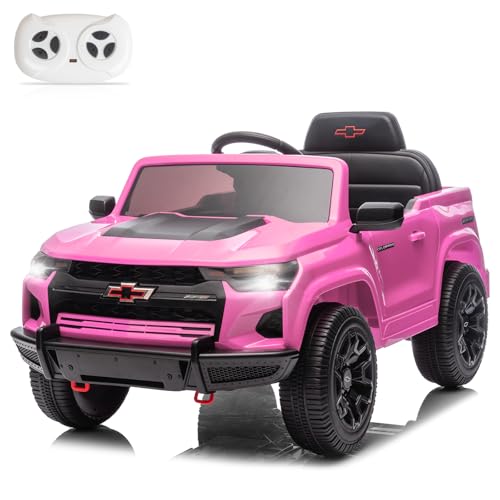

As an Amazon Associate we earn from qualifying purchases at no extra cost to you. Ratings are shown as listed on Amazon.
Quick comparison of leading kids’ electric cars
| Vehicle or type | Recommended age | Typical child limit | Battery and runtime | Speed settings | Best terrain | Typical price range |
|---|---|---|---|---|---|---|
| Power Wheels Jeep Wrangler 12V | 2–5 years | Up to about 65 lb | 12V lead-acid; roughly 45–90 minutes of active driving | Low and high, commonly about 2.5 and 5 mph | Flat grass, pavement, compact soil | $180–$350 |
| Power Wheels Dune Racer Extreme 12V | 3–7 years | Up to about 130 lb, depending on version | 12V lead-acid; roughly 45–90 minutes | Forward and reverse; commonly up to about 5 mph | Firm grass, driveways, smooth trails | $250–$450 |
| Peg Perego John Deere Ground Force | 2–7 years | Up to about 85 lb | 12V lead-acid; roughly 45–90 minutes | Two forward speeds, often up to about 4.5 mph, plus reverse | Grass and gently uneven ground | $300–$500 |
| Polaris Ranger RZR 24V ride-on | 6–12 years | Up to about 110 lb | 24V lead-acid; roughly 45–75 minutes | Low and high, often about 3.5 and 7 mph | Grass, packed dirt, moderate inclines | $500–$850 |
| 24V two-seat UTV, general category | 5–10 years | About 100–130 lb combined | 24V lead-acid or lithium; about 45–120 minutes | Selectable low/high, commonly 3–7 mph | Firm grass and level dirt | $350–$800 |
Runtime is highly variable. A heavy child driving continuously uphill on grass may use a battery in half the stated time, while intermittent flat-ground driving can last longer. Charging time is commonly 8–12 hours for lead-acid packs, so a second battery is not a substitute for safe charging practices.
Best choices by family situation
| Your situation | Most suitable choice | Why | What to avoid |
|---|---|---|---|
| First ride-on for a 2- to 4-year-old | 12V Jeep-style car or tractor with a low-speed setting | Lower speed and simpler controls reduce the consequences of steering mistakes | 24V models with no parent speed control |
| Small yard or shared driveway | Compact single-seat 12V vehicle | Usually easier to turn, store, and carry through a gate | Long two-seat UTVs with a wide turning circle |
| Grass, mild slopes, and frequent use | 24V UTV with rubber-like traction tires and selectable speeds | More torque and ground clearance than basic 12V cars | Low-clearance models designed primarily for pavement |
| Two children riding together | Two-seat 24V vehicle with a combined weight limit exceeding both children’s weight | Provides a margin for clothing, shoes, and cargo | Assuming “two seats” automatically means two full-size children are allowed |
| Occasional use and a limited budget | Used branded 12V model with a healthy battery and available replacement parts | Lower purchase cost can be sensible if the electrical system is sound | Unbranded vehicles with no manual, charger, or parts support |
| Older, confident child and a large private property | 24V model with parental remote control and a low-speed override | Allows gradual progression without immediately using maximum speed | 36V or faster vehicles near roads, ponds, retaining walls, or steep drops |
How age, weight, and fit should affect the decision
Age labels are only a starting point. A child must be able to sit with their back against the seat, reach the pedals without stretching, turn the steering wheel, and understand that the accelerator is not an on-off switch. For a two-seat vehicle, add the riders’ weights together and compare that total with the stated limit. Leave at least a 10% margin where possible.
For example, two children weighing 48 and 55 pounds total 103 pounds. A vehicle rated for 110 pounds technically qualifies, but leaves only 7 pounds for shoes, jackets, and small cargo. A 130-pound combined limit is the more comfortable choice. Weight also affects range: the same car will generally accelerate more slowly and run for less time when carrying a heavier load.
Look for a lap belt or properly positioned restraint, a wide wheelbase, a low seat, and a power switch that an adult can reach. A parental remote emergency stop is particularly useful for younger drivers, but it does not replace direct supervision.
12V versus 24V: which system is better?
Choose 12V for control and simplicity
Most 12V ride-ons are appropriate for beginners. They are usually slower, lighter, and less demanding on the drivetrain. They work well on pavement and short, dry grass. Their limitation is torque: thick grass, loose soil, and hills can stop the vehicle or overwork the motor.
Choose 24V for terrain and growing children
24V vehicles typically climb mild slopes more confidently and maintain speed better on grass. They are also heavier and can continue moving with more momentum, so a low-speed setting, a usable brake, and careful supervision matter. “Off-road” styling does not mean a vehicle is suitable for mud, deep gravel, wet slopes, or public trails.
Voltage alone is not a terrain rating. Tire tread, motor gearing, ground clearance, total weight, and surface moisture are equally important. Four-wheel drive can help with traction, but it does not make a toy safe on steep hills or near hazards.
Safety features worth paying for
- Two selectable speeds: Start on the lower setting and move up only after the child can stop, steer, and reverse reliably.
- Parent remote control: Prefer a system that can stop propulsion, not merely sound a horn or lock the steering.
- Seat belts: A belt should fit snugly over the child’s lap and remain fastened on every ride.
- Automatic or protected braking: The vehicle should stop when the accelerator is released; test this before outdoor use.
- Low center of gravity: A broad chassis and low seat are more valuable than decorative roll bars.
- Covered wiring and battery compartment: This reduces exposure to water, dirt, and curious fingers.
- Working headlights or reflectors: Useful for visibility, but not permission to drive after dark or near traffic.
Use a properly fitted bicycle helmet, closed-toe shoes, and adult supervision within immediate reach. Keep the vehicle away from streets, driveways open to traffic, pools, ponds, stairs, steep embankments, and loose gravel. Check local rules before allowing use on sidewalks or shared paths.
Runtime: a practical calculation
Suppose a 24V vehicle is advertised with a 60-minute runtime, but your child drives continuously on grass and the battery delivers only 70% of its ideal rating under that load:
60 minutes × 0.70 = about 42 minutes of realistic active driving.
If the child drives in 10-minute sessions with pauses, the pack may last through four short outings, but it still needs a complete recharge afterward. Lead-acid batteries should generally be recharged promptly after use rather than stored empty. Use only the supplied or manufacturer-approved charger, place it on a hard nonflammable surface, and do not charge in a child’s sleeping area.
Ownership costs and durability realities
The battery is usually the first major consumable. With seasonal use and correct charging, a sealed lead-acid pack may last roughly one to three years; heat, deep discharge, overloading, and long periods of neglect can shorten that span. Replacement costs commonly range from $50–$150 for a 12V or 24V pack, depending on capacity and brand. Lithium packs may last longer and weigh less, but replacement cost and charger compatibility deserve extra attention.
Other wear points include drive gears, motor brushes, tires, switches, steering linkages, and charger connectors. Before buying, search the manufacturer’s parts documentation for replacement batteries, wheels, gearboxes, fuses, and chargers. A slower branded vehicle with available parts can create less waste than a cheaper model that must be discarded after one failed component.
After each muddy or grassy outing, brush debris from the axles and pedal area. Wipe the body with a damp cloth, but never hose the battery compartment or electrical connectors. Inspect tire wear, loose fasteners, belt condition, and cracked plastic every few rides. Store the vehicle indoors or under a dry, ventilated cover; freezing temperatures and damp storage are hard on batteries and terminals.
Final buying recommendation
For a young first-time driver, choose a 12V model with low and high speed settings, a belt, and a stable four-wheel chassis. For regular grass use or an older child, move to a 24V vehicle with real traction tires, a parent remote, and a clearly stated weight limit. Prioritize repairable parts, safe charging, and a suitable riding area over extra lights, sound effects, or the highest advertised speed. When the child outgrows the seat or the terrain exceeds the vehicle’s limits, replacement is safer than trying to modify the motor or battery.



Write Your Review
No reviews yet. Be the first to share your experience!