

Key takeaways
- Best for: daily or near-daily shaving, straight strokes, and people who want a particularly close finish.
- Advantages: precise control, easy sideburn alignment, and usually fewer complicated moving head parts.
- Trade-offs: they work best with up-and-down or side-to-side strokes; pressing hard can increase heat, friction, and irritation.
Best Electric Shavers for a Comfortable Close Shave
The best electric shavers depend on your beard pattern and skin: choose a foil shaver for the closest, most controlled result and sensitive-skin routines, or a rotary shaver for navigating a rounded face and several days of uneven growth.
For most buyers, the strongest all-round choices are a premium foil model such as the Braun Series 9 Pro+ or Panasonic Arc5, and a rotary model such as the Philips Shaver Series 9000. A less expensive foil shaver or a rechargeable beard trimmer can be the better environmental purchase if it meets your needs and avoids expensive replacement parts.
Our top picks


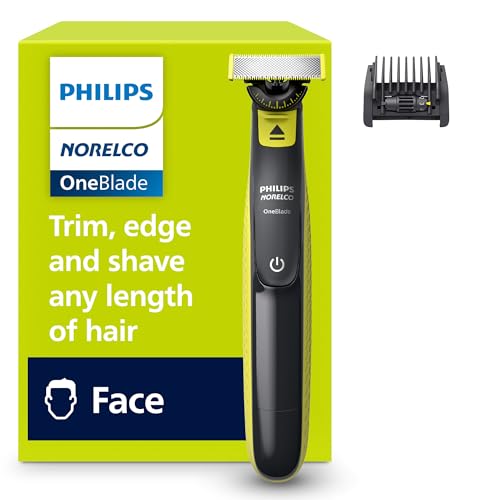
As an Amazon Associate we earn from qualifying purchases at no extra cost to you. Ratings are shown as listed on Amazon.
Foil versus rotary: the decision that matters most
Foil shavers
Foil shavers use straight, perforated metal screens over oscillating cutters. Hair enters the holes and is cut beneath the foil. Their narrow, flat shaving surface makes them predictable around sideburns, the upper lip, and the edges of the jaw.
- Best for: daily or near-daily shaving, straight strokes, and people who want a particularly close finish.
- Advantages: precise control, easy sideburn alignment, and usually fewer complicated moving head parts.
- Trade-offs: they work best with up-and-down or side-to-side strokes; pressing hard can increase heat, friction, and irritation.
Rotary shavers
Rotary shavers use circular cutters beneath three or more floating heads. Each head can follow facial contours, so the shaver is moved in slow circles rather than straight passes.
- Best for: angular jaws, necks, dense growth in different directions, and people who do not shave every day.
- Advantages: flexible heads can cover curved areas efficiently, and rotary designs can be forgiving when whiskers grow in multiple directions.
- Trade-offs: the circular motion takes practice, and a very close finish may require more passes for some users.
Neither design is automatically gentler. A clean, sharp foil or rotary cutter, light pressure, and a short routine generally matter more than the label on the box. If your skin reacts to shaving, introduce any new device gradually and stop if persistent irritation occurs.
Best electric shavers by situation
| Situation | More suitable choice | Why | Ownership caution |
|---|---|---|---|
| Very close daily shave | Premium foil shaver | Flat foil gives controlled, repeatable contact | Foil and cutter cassettes are consumables |
| Curved face or 2–4 days of growth | Rotary shaver | Floating circular heads follow contours and varied growth | Replacement rotary heads can be costly |
| Sensitive-feeling skin | Wet-and-dry foil or rotary model used gently | Shaving gel can reduce drag for some people | More cleaning is needed after wet use |
| Lowest initial budget | Basic corded or rechargeable foil shaver | Simple designs can provide adequate daily shaving | Check whether replacement foils are still sold |
| Frequent travel | Compact rechargeable model with travel lock | Small footprint and cordless operation reduce luggage | Confirm charging voltage before international travel |
| Lowest long-term waste | Repairable model with available heads and battery service | Extends the useful life of the motor and housing | A sealed battery can limit eventual repair |
Shortlist: strong options and who should buy them
Braun Series 9 Pro+
This is a premium foil option for someone who shaves frequently and values a comfortable, refined routine. Depending on the exact bundle, it offers wet-and-dry use, a flexible shaving head, a cleaning-and-charging station, and roughly 50 to 60 minutes of cordless runtime. Some versions include a built-in precision trimmer or additional conditioning features.
Its main drawback is ownership cost. A cleaning station consumes proprietary cleaning fluid, while the foil-and-cutter cassette is a significant replacement expense. If you do not need automated cleaning, a model sold without the station may create less packaging, less fluid waste, and fewer components to maintain.
Panasonic Arc5
The Arc5 is a foil shaver aimed at users who prioritize a close finish and are comfortable with a more active technique. Its five-blade head, high-speed linear motor, wet-and-dry operation, and approximately 45 to 50 minutes of cordless use make it a capable daily shaver.
The head is relatively broad, which can cover the cheeks quickly but feel less nimble around the nose. Panasonic replacement outer foils and inner blades are commonly sold separately or as a combined set, so check availability for your particular model before buying. A replaceable component is useful only if it remains obtainable several years later.
Philips Shaver Series 9000
This premium rotary range suits people whose whiskers grow in different directions or who find a foil head awkward around the jaw and neck. Typical models provide three floating heads, wet-and-dry operation, a pop-up trimmer, and approximately 50 to 60 minutes of cordless runtime.
Rotary heads need a different technique: place the shaver lightly against the skin and use small, slow circular movements. Repeatedly scrubbing one patch to chase a perfectly smooth result can defeat the comfort advantage. Replacement head prices vary by model, so identify the exact series number rather than assuming all Philips heads fit.
OneBlade-style hybrid trimmers
Hybrid products such as the Philips OneBlade are useful for trimming, edging, and leaving short stubble rather than producing the closest possible shave. They are often a sensible choice for people who shave only a few times a week or who prefer a deliberately short beard.
The trade-off is recurring blade replacement. A hybrid device may reduce over-shaving and water use, but it is not automatically the lowest-waste option if its proprietary blades are replaced frequently. Select it for the style you want, not because it is marketed as a full substitute for every shaver.
Wet-and-dry use: useful feature or unnecessary complexity?
Wet-and-dry means the device is designed for use with water, and often shaving gel or foam, as well as dry shaving. It does not mean every part should be submerged indefinitely. Follow the manufacturer’s cleaning instructions, keep the charging connector dry when required, and never use a mains-connected shaver in the shower unless it is specifically designed for that use.
Wet shaving can make a routine feel more comfortable for some people, but it adds rinsing, drying time, and possible soap residue. Dry shaving is quicker and may use fewer consumables. If you choose a wet-and-dry model, rinse it thoroughly, shake out excess water, and let the head dry before closing it in a case.
Battery life, charging, and repairability
Most mid-range and premium cordless shavers provide about 40 to 60 minutes of stated runtime. Assuming a three-minute shave, a 50-minute battery theoretically provides about 16 sessions:
50 minutes ÷ 3 minutes per shave = 16.7 shaves.
Real-world runtime falls with dense growth, a dirty cutter, battery age, and extra passes. A five-minute routine reduces that estimate to 10 sessions. A quick-charge function is useful when the battery is empty, but it does not compensate for a battery that can no longer hold a charge.
Before buying, look for:
- published availability of replacement foils, cutters, or rotary heads;
- a removable or serviceable battery, or an authorized battery-replacement pathway;
- separately replaceable screens and blades rather than a whole discarded head;
- a cleaning brush and washable head, which can reduce reliance on disposable cleaning cartridges;
- a standard or widely available charging cable where possible.
Many shavers use sealed lithium-ion batteries. Do not open one while it is charged or attempt an improvised battery swap: damaged lithium batteries can be hazardous. At end of life, use an electronics or battery-recycling program rather than placing the device in household trash.
Replacement costs and long-term waste
A shaver’s purchase price is only part of its environmental and financial cost. Foils can thin or dent, cutters become less effective, rotary heads lose sharpness, and cleaning-station fluid creates a continuing stream of plastic containers. A typical replacement interval is roughly 12 to 24 months, but heavy use, coarse hair, and poor cleaning can shorten it.
Compare total ownership rather than the shelf price. For example, a $180 shaver used for four years with a $55 replacement head costs:
($180 + $55) ÷ 1,460 daily uses = about 16 cents per use.
That calculation excludes electricity and cleaning fluid, but it shows why a cheaper device with unavailable replacement parts may create more waste. Conversely, a premium model is not sustainable if its battery fails after two years and the entire unit must be discarded.
How to make any electric shaver last longer
- Start with a clean, dry cutter unless you are deliberately using a wet routine. Oil and residue can make hair pull and encourage extra passes.
- Use light pressure. Let the head do the cutting; pressing harder increases friction and can deform a foil.
- Keep the motion appropriate to the design. Use straight strokes with a foil and small circles with a rotary shaver.
- Clean after use. Brush or rinse according to the manual, then dry the head before storage.
- Replace worn parts, not the whole shaver. A noisy motor, pulling, patchy results, or a damaged screen can indicate a head needs replacement.
- Store it ventilated. A damp, closed travel case encourages residue and odors.
For a close daily shave, start with a foil model such as the Braun Series 9 Pro+ or Panasonic Arc5. Choose the Philips Series 9000 when facial contours and multidirectional growth are your main challenges. If you only need short stubble or edging, a hybrid trimmer may be the more sensible low-use purchase. In every category, prioritize replacement-part availability and battery repair options: the shaver that remains usable for years is usually the better green-living choice.

Write Your Review
No reviews yet. Be the first to share your experience!