

Key takeaways
- Best recovery: two-chamber tumblers, because you can stop feeding a wet batch and begin a corrected batch separately.
- Best aeration: models with internal fins or mixing bars, especially when the drum is not overfilled.
- Most vulnerable to compaction: single-chamber units loaded with wet grass, cooked vegetables, or finely ground food.
- Fastest fix: add dry shredded cardboard or coarse leaves, break apart clumps by hand through the access door, and rotate only after the dry material is distributed.
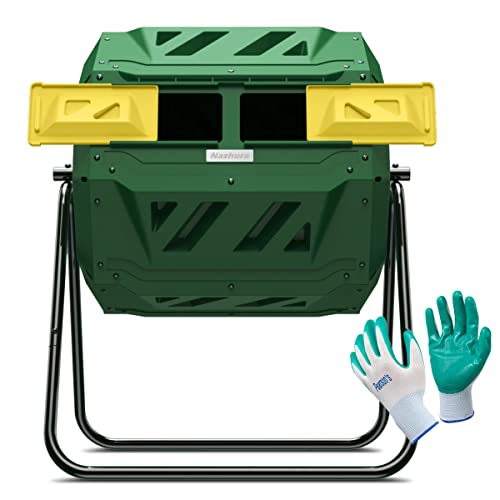
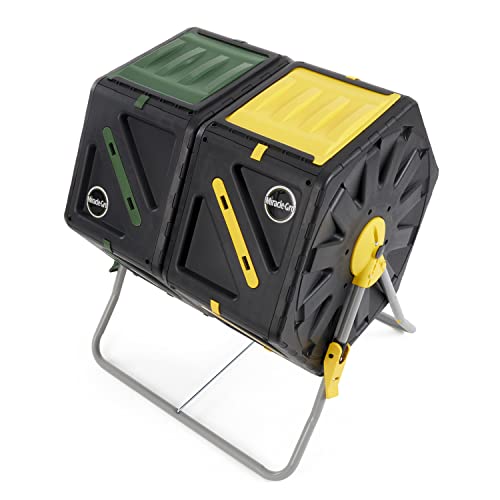
The best compost tumblers for fast backyard compost are the FCMP Outdoor IM4000 for most households, the Lifetime 60058 for large batches, and the Jora JK270 for year-round speed in cold climates. A tumbler cannot make unsuitable ingredients compost quickly, but the right design can shorten turning time, improve aeration, and make a wet or compacted pile easier to recover.
Our top picks


As an Amazon Associate we earn from qualifying purchases at no extra cost to you. Ratings are shown as listed on Amazon.
Best compost tumblers at a glance
| Model | Approx. capacity | Chamber design | Main material | Best for | Typical market range |
|---|---|---|---|---|---|
| FCMP Outdoor IM4000 | 37 gal / 140 L | Two separate batches | Recycled polypropylene frame and panels | Most kitchens and small yards | $150–$220 |
| Lifetime 60058 | 80 gal / 303 L | Single large chamber | High-density polyethylene panels and steel frame | Families generating frequent scraps | $200–$350 |
| Jora JK270 | 71 gal / 270 L | Two insulated chambers | Insulated galvanized-steel construction | Fast composting and colder weather | $450–$700 |
| Envirocycle Composter | 35 gal / 132 L | Single rolling drum | Food-grade plastic drum and metal stand | Compact patios and tidy appearance | $250–$400 |
Capacities are approximate nominal figures; usable capacity is lower because a tumbler needs air space. Prices are broad 2026 market ranges and vary with retailer, shipping, and seasonal discounts.
Our picks by backyard situation
| Your situation | Best match | Why | Trade-off |
|---|---|---|---|
| First tumbler, limited space, moderate scraps | FCMP Outdoor IM4000 | Two chambers let one batch finish while the other fills | Small openings and a full chamber can be awkward to rotate |
| Large household or active garden | Lifetime 60058 | Large volume and broad rotating body | One chamber means new scraps can disturb a finishing batch |
| Cold region or determined year-round user | Jora JK270 | Insulation retains heat and two chambers support continuous use | High purchase price and heavier components |
| Small yard, patio, or appearance-sensitive location | Envirocycle Composter | Compact rolling form and enclosed drum | Single batch and less capacity for bulky garden waste |
FCMP Outdoor IM4000: best overall for most homes
The IM4000 is a sensible starting point because its two 18.5-gallon chambers solve one of the biggest tumbler problems: a batch needs time to finish, but the kitchen keeps producing scraps. Fill one side, rotate it into the finishing position, and begin adding fresh material to the other side.
Its internal mixing bars help break up clumps during rotation, and the dark recycled-plastic panels absorb solar heat. Rotation is manageable when each chamber is only partly full, but a fully loaded drum becomes noticeably harder to turn. The access doors are not generous, so long stems and whole vegetable trimmings should be chopped before loading.
Expect roughly four to eight weeks for a well-balanced warm-weather batch. Wet food scraps, too little brown material, or infrequent turning can push that beyond two months. The plastic body does not rust, but the frame, axle hardware, and door fasteners are the parts to inspect first.
Lifetime 60058: best for high volume
The Lifetime 60058 offers about 80 gallons of enclosed capacity, making it a better fit for a household that cooks often or maintains a garden. Its large single chamber accepts more leaves and trimmings than compact dual-chamber models, and the internal fin design improves mixing as the unit rotates.
The compromise is batch management. When you add fresh scraps to a partly decomposed load, the finished material is mixed back into the active batch. That is acceptable if you compost continuously, but inconvenient if you want a clean, finished harvest on a predictable schedule.
Size also affects rotation. A tumbler with 80 gallons of nominal capacity should not be filled to the top. Leaving about 20 percent empty gives the contents room to lift and fall rather than sliding as one heavy mass. Position the unit on level ground; a tilted frame increases axle friction and can make a large load unsafe to turn.
Jora JK270: best premium choice for speed and cold weather
The Jora JK270 uses two insulated chambers and a galvanized-steel construction that is more substantial than most plastic tumblers. Insulation helps preserve microbial heat during cool weather, while the divided design allows one side to finish as the other receives new material.
This is the strongest choice when “fast” means reliable progress through spring and fall rather than merely quick summer compost. Under favorable conditions, a batch may finish in about three to six weeks. That timing still depends on particle size, moisture, and the carbon-to-nitrogen balance; insulation cannot compensate for a waterlogged or mostly woody load.
The drawbacks are cost, weight, and more hardware to maintain. Hinges, latches, door seals, and the rotating mechanism deserve occasional cleaning. For a small household producing only a few cups of scraps per week, the extra capacity may not justify the price.
Envirocycle: best compact rolling design
The Envirocycle uses a relatively compact drum that can be rolled or rotated on its stand, making it attractive where a tall frame would obstruct a patio or narrow side yard. Its enclosed form also keeps the contents visually tidy and reduces access for some pests.
It is better suited to kitchen scraps, small amounts of shredded cardboard, and modest garden waste than to a large autumn leaf load. Because it uses one batch chamber, the same “finish or keep feeding” decision applies as with the Lifetime. Rolling a partially filled drum is easy; a saturated drum full of food scraps is substantially less pleasant.
What actually determines batch timing?
A practical target is two parts brown material to one part green material by volume. Browns include dry leaves, torn cardboard, and untreated paper. Greens include fruit and vegetable scraps, coffee grounds, and fresh grass. “Two to one” is a starting point, not a laboratory formula: coffee grounds are nitrogen-rich but dense, while dry leaves can be bulky and slow to wet.
Moisture should resemble a wrung-out sponge. If a squeezed handful drips, add shredded cardboard or dry leaves. If it will not hold together at all, add a small amount of water while rotating. Turn the tumbler every one to three days during the active phase. More turning is not always better if the material is already dry, because repeated opening and agitation can lose moisture and heat.
A simple capacity calculation
Suppose two adults produce about 1 gallon of compostable kitchen scraps per week and you add 1 gallon of shredded browns. A 37-gallon two-chamber tumbler has 18.5 gallons per side, but an effective working fill of about 14 to 15 gallons leaves room for mixing. That gives approximately seven weeks of capacity per chamber at this input rate. A larger 80-gallon model is useful mainly if you also add garden waste; it will not make a small stream of scraps compost faster by itself.
Wet and compacted scraps: which designs cope best?
- Best recovery: two-chamber tumblers, because you can stop feeding a wet batch and begin a corrected batch separately.
- Best aeration: models with internal fins or mixing bars, especially when the drum is not overfilled.
- Most vulnerable to compaction: single-chamber units loaded with wet grass, cooked vegetables, or finely ground food.
- Fastest fix: add dry shredded cardboard or coarse leaves, break apart clumps by hand through the access door, and rotate only after the dry material is distributed.
Do not add meat, dairy, oils, pet waste, or diseased plants unless the manufacturer and your local composting guidance specifically allow them. These materials create odor, pest, or sanitation problems that a rotating drum does not solve.
Durability and ownership costs
The component most likely to wear first is usually not the drum. Check the axle bushings, frame bolts, door latches, hinges, and plastic support points. A cheap tumbler can remain serviceable for years if it is kept level and never forced while overloaded; a premium steel model can still develop noisy or stiff hardware if grit and compost slurry are left around moving joints.
Plan for occasional replacement hardware rather than routine consumables. Rinse the interior only when necessary, since a thorough wash removes helpful microorganisms and creates extra wastewater. Empty finished compost with a scoop, clear debris from vents, tighten loose fasteners, and lubricate only where the instructions permit it. Avoid petroleum products on plastic parts unless the manufacturer approves them.
Bottom line
Choose the FCMP Outdoor IM4000 for the best balance of price, aeration, and continuous two-batch use. Choose the Lifetime 60058 when volume matters more than separate batch control. Choose the Jora JK270 for insulated, premium year-round composting, particularly in a cold climate. Choose the Envirocycle when a compact, tidy rolling drum matters more than maximum capacity.
Whichever tumbler you buy, leave mixing space, balance wet greens with dry browns, and treat turning as part of the process rather than a substitute for correct moisture and ingredients.




Write Your Review
No reviews yet. Be the first to share your experience!