

Key takeaways
- Learn how to choose garden gloves for thorny, wet and everyday jobs, with material, cuff, fit and grip guidance for calmer, safer gardening.
- Top Pick: Pine Tree Tools Bamboo Working Gloves
- Runner-up: COOLJOB Garden Gloves
- Also consider: OZERO Leather Work Gloves
A good pair of garden gloves does three jobs at once. It shields skin from thorns, blisters and rough bark, it keeps grip steady on wet tools and muddy stems, and it stays comfortable long enough that you actually keep it on. The challenge is that no single design does all three equally well. A thin, breathable glove that feels perfect for sowing seeds will not stop a rose thorn, while a heavy leather gauntlet that shrugs off brambles can feel clumsy for transplanting seedlings. Choosing well means matching material, cuff length and fit to the work you do most often, then keeping a second, different pair for the jobs the first pair handles poorly. This guide walks through five well-known options and the decisions behind them.
As an Amazon Associate, we earn from qualifying purchases.
Quick answer
For thorny work, choose leather gauntlet garden gloves that cover the forearm, such as the HANDLANDY pruning gloves. For everyday weeding and planting, choose a breathable coated knit, such as the Pine Tree Tools bamboo gloves or the COOLJOB two-pair set. For wet, heavy digging, choose a sturdy cowhide work glove, such as the Wells Lamont or OZERO leather gloves, and always check fit before ordering.
Pine Tree Tools Bamboo Working Gloves

The Pine Tree Tools bamboo gloves are the lightweight, everyday end of this roundup. The knit is made from bamboo fiber, which is valued for breathability and a soft feel against the skin, and the palm carries a nitrile coating for grip. That combination suits the jobs that fill most garden time: weeding, planting, tying in stems, handling seed trays and light pruning of soft growth.
Because the fabric is thin and flexible, finger movement stays close to bare-hand movement. That matters when you are thinning seedlings, picking out small weeds between close-spaced plants, or handling twine and plant labels. Gardeners who dislike bulky gloves often keep a pair like this by the door because putting them on never feels like a chore.
COOLJOB Garden Gloves
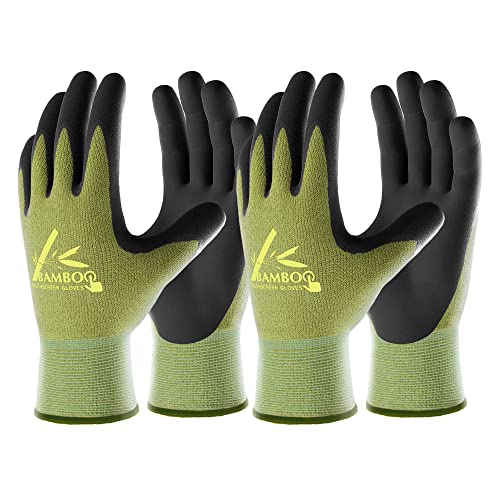
The COOLJOB garden gloves covered here come as a two-pair bamboo working set with a nitrile coating and touchscreen-friendly fingertips. The two-pair format is the practical headline: one pair can be drying after a wash or a wet session while the other is in use, and a spare pair is useful when a helper joins you in the garden.
Like the Pine Tree Tools design, this is a breathable knit glove built for dexterity rather than heavy protection. The coated palm helps with grip on tools, pots and wet stems, and the knit back lets heat escape during warm weather work. The touchscreen fingertips add a small but real convenience for checking a phone for a plant name, a weather update or a photo without peeling a muddy glove off first.
Wells Lamont Leather Work Gloves
The Wells Lamont leather work gloves bring a traditional cowhide work-glove design into the garden. Cowhide is thicker and more abrasion resistant than a coated knit, with a gunn cut pattern and an adjustable wrist in the listing for this style. That build suits heavier garden jobs: digging in stony soil, moving logs and stones, handling rough timber for raised beds, and clearing ground where hidden sharp edges are likely.
Leather also handles wet conditions differently from knit fabric. It will get wet, and it should be dried slowly away from direct heat, but a good cowhide palm keeps a steadier grip on a wet spade handle and offers more protection against blisters during long digging sessions. For gardeners who split time between the garden and general outdoor work, a glove like this earns its place across both.
OZERO Leather Work Gloves

The OZERO leather work gloves use cowhide with a flex-grip design and a mesh lining detail in the listing for this style, aiming for a balance between protection and movement. In garden terms, that places them between the light knits and the heaviest work gloves: sturdy enough for digging, pruning soft to medium stems, carrying tools and clearing beds, while still allowing a reasonable feel on the handle.
A leather glove in this middle ground is often the one gardeners reach for when the day mixes jobs. You might dig, then prune, then move pots and bags, without wanting to change gloves each time. Cowhide resists scrapes from bark, stone and tool edges, and it offers more thorn resistance than a knit, although a determined rose thorn at the wrong angle can still get through any glove that is not a dedicated gauntlet.
HANDLANDY Garden Gloves
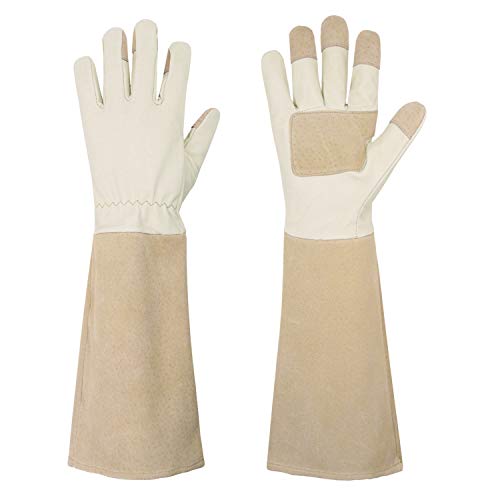
The HANDLANDY garden gloves are the dedicated thorn option in this guide. They use pigskin leather with a long gauntlet cuff designed to protect the hand and forearm during rose pruning and similar work. That extended coverage is the whole point: most thorn injuries during pruning happen not on the palm but on the wrist and forearm as you reach past canes to make a cut deep inside the plant.
Pigskin is often chosen for pruning gloves because it stays relatively supple and breathable for a leather, which helps during longer pruning sessions in warm weather. The gauntlet shape also helps keep debris, clippings and insects from slipping inside the cuff, and it offers a layer against sun on the forearm during summer work.
How to choose
Start with the job, not the brand. List the three tasks you do most often. If they are weeding, planting and tidying, a breathable coated knit should be your main glove. If they include pruning thorny shrubs, a leather gauntlet moves to the top of the list. If they include digging, hauling and building, a cowhide work glove deserves priority. Many gardeners end up with two pairs, and that is not excess; it is the simplest way to get both dexterity and protection.
Next, look at material. Bamboo and other knit fabrics offer breathability, softness and fine control, with a nitrile or latex style coating adding grip and some water resistance on the palm. Leather offers abrasion resistance, blister protection and better thorn resistance, with cowhide generally tougher and pigskin generally more supple. Synthetic coatings and mesh panels try to bridge the gap, but they rarely match leather for thorns or knit fabric for cool comfort.
Then check the cuff. A short elastic cuff suits everyday work and keeps soil out during planting. A gauntlet cuff that reaches toward the elbow suits pruning and clearing thorny growth. An adjustable wrist helps a work glove stay put during digging. Think about what usually scratches you: if the marks are on your forearms, cuff length is your answer.
Fit comes next. Measure your hand as the maker directs, usually around the knuckles, and compare it with the size chart for that exact listing, because sizing varies between brands. A glove should close fully around a tool handle without fingertip seams pressing hard, and it should not have loose fabric that can catch on thorns or machinery. If you fall between sizes in a knit glove, the closer fit usually gives better control; in leather, allow for the material to ease with use without starting out sloppy.
Finally, consider wet work and care. Coated palms help on wet handles, but fully breathable backs will let water in. Leather needs slow drying and occasional care to stay supple. Knit gloves are often easier to wash, which matters after muddy sessions. A glove you maintain is a glove you keep wearing, and a glove you wear is the only one that protects you.
Who should skip
Skip the lightweight knit gloves if your main work is clearing brambles, pruning mature roses or handling cactus, because thin fabric will not give the protection those jobs demand. Skip the heavy leather work gloves if your gardening is mostly container planting, seed sowing and light weeding on a balcony, because the bulk will slow you down and the warmth may put you off wearing them at all.
Skip gauntlet gloves if you rarely work with thorny plants, since the long cuff adds cost, warmth and bulk you will not benefit from. Skip buying any glove without checking its size chart if you have had fit problems before, and skip relying on a single pair for every job if your garden mixes delicate planting with aggressive pruning. In that case, two simpler, well-matched pairs will serve you better than one compromise pair that does neither job especially well.
FAQ
Are leather gloves better than knit gloves for gardening?
Neither is better in every situation. Leather gives stronger protection against abrasion, blisters and many thorns, which suits digging and pruning. Knit gloves give better breathability and fingertip control, which suits planting and weeding. The best choice depends on your most common jobs, and many gardeners keep one of each.
How do I stop thorns going through my gloves?
Choose a leather gauntlet for thorny work, grip stems on smoother sections, and hold cut canes with pruners or tongs instead of your hand. Work slowly when reaching into a shrub, and inspect gloves for worn thin spots, because protection falls as material wears. No glove removes all risk, so technique matters alongside equipment.
Can garden gloves be used in wet conditions?
Yes, with the right expectations. Coated palms help maintain grip on wet handles, and leather palms can work well in damp soil, but most garden gloves are not fully waterproof. Hands may still get damp through a breathable back. After wet use, air the gloves fully before storing them, and keep a dry spare pair for rotation.
How should I clean and store garden gloves?
Shake off loose soil first. Knit gloves can usually be cleaned following the maker guidance and then air dried. Leather gloves should be brushed clean, dried slowly away from radiators or strong sun, and stored dry with air around them. Avoid sealing damp gloves in a closed bag or box, because trapped moisture shortens their life and creates unpleasant odors.
Final verdict
For most gardens, the winning combination is a breathable everyday glove plus a protective specialist. Start with the Pine Tree Tools bamboo gloves or the COOLJOB two-pair set for planting and weeding, add the HANDLANDY gauntlets if thorns are part of your routine, and choose the Wells Lamont or OZERO cowhide gloves if digging and hauling dominate your weekends. Match the glove to the job, check the fit, and you will spend more time gardening and less time picking thorns out of your hands.
More from Amazon
Programs that pair well with the guide above. Offers and eligibility are set by Amazon and may change.
Free shipping on eligible items, Prime Video and more. Eligible new members can start with a free trial.
Start a Prime free trialA Prime membership for ages 18-24 with a trial period. Eligibility is set by Amazon.
See Prime for Young AdultsAudiobooks and podcasts to listen to on the go. Eligible new members can start with a free trial.
Try Audible freeAd-free music streaming. Eligible new subscribers can start with a free trial.
Try Music Unlimited freeAs an Amazon Associate we earn from qualifying purchases.







Write Your Review
No reviews yet. Be the first to share your experience!