

Key takeaways
- Blues Junior IV: the most direct control layout, with a three-band EQ, master volume, and spring-style reverb.
- AC15C1: separate Normal and Top Boost channels, cut control, tremolo, and reverb; more flexible, but easier to set too bright.
- DSL5CR: two channels, gain and volume controls, tone shift, reverb, and effects loop; useful for switching between cleaner and higher-gain sounds.
- Rocker 15: especially simple Natural channel plus a fuller Dirty channel, with output reduction and a valve-buffered effects loop.
The best tube amps for warm, detailed sound are the Fender Blues Junior IV for a small-to-medium room, the Vox AC15C1 for chiming detail, the Marshall DSL5CR for apartment-friendly volume, and the Orange Rocker 15 for flexible power reduction and recording.
Those choices are not interchangeable. Wattage affects clean headroom and usable volume, speaker size changes bass response and projection, and a compact amp can still create substantial heat. The right purchase depends as much on your room and maintenance tolerance as on tone.
Our top picks
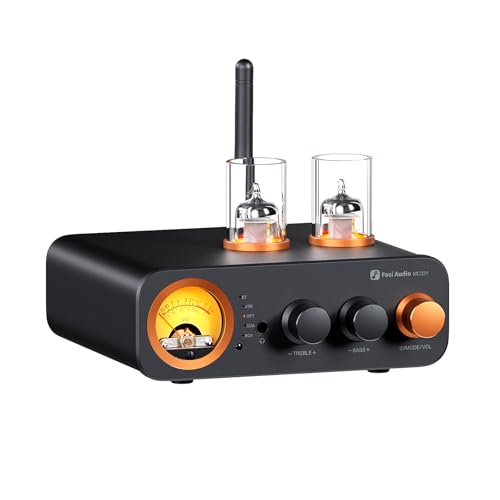

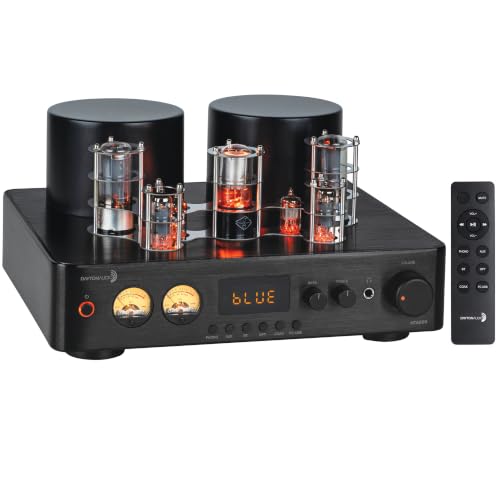
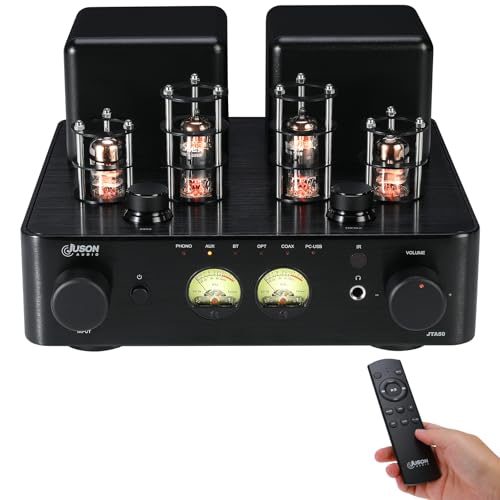
As an Amazon Associate we earn from qualifying purchases at no extra cost to you. Ratings are shown as listed on Amazon.
Best tube amps at a glance
| Model | Power options | Speaker | Approx. weight | Best fit | Typical new-price range |
|---|---|---|---|---|---|
| Marshall DSL5CR | 5W / 0.5W | 10-inch Celestion Ten-30 | About 33 lb | Home practice, recording, small rooms | $600–$750 |
| Fender Blues Junior IV | 15W | 12-inch Celestion A-Type | About 31.5 lb | Blues, pedals, rehearsals, compact gigs | $750–$900 |
| Vox AC15C1 | 15W | 12-inch Celestion G12M Greenback | About 48.5 lb | Chime, classic rock, medium rooms | $800–$950 |
| Orange Rocker 15 | 15W / 7W / 1W / 0.5W | 10-inch Voice of the World | About 34 lb | Flexible home use and overdrive | $900–$1,100 |
Prices are broad market ranges and vary with finish, promotions, and whether you buy new or used. Tube and speaker specifications can also differ between production revisions, so confirm the current manufacturer listing before ordering replacement parts.
Head-to-head: which amp suits your room?
Small apartment or shared home: Marshall DSL5CR
The DSL5CR is the practical choice when five watts is still too loud unless you can reduce it. Its 0.5-watt setting lowers output power, while the 10-inch speaker keeps the cabinet relatively compact. The two-channel design provides clean and overdrive voices, and its effects loop is useful if you place delay or modulation after the preamp distortion.
It is not silent at 0.5 watt. Tube amps still produce speaker output, and an efficient guitar speaker can sound surprisingly loud in a small room. For late-night use, headphones or a dedicated low-volume modeling setup is more appropriate. The DSL5CR is best for players who want real tube response at manageable—not zero—volume.
Warm cleans and pedals: Fender Blues Junior IV
The Blues Junior IV is a strong all-rounder because its 15-watt output and 12-inch speaker provide fuller low frequencies than most compact five-watt combos. It has simple controls—volume, treble, middle, bass, reverb, and master volume—so it is easy to pair with overdrive, fuzz, delay, or reverb pedals.
Its limitation is the lack of a built-in low-power mode. In a small room, you may reach uncomfortable volume before the power section produces its richest compression. A good solution is to use the master volume carefully, angle the speaker away from ear level, or use an appropriate attenuator rated for the amp’s output and impedance. The Blues Junior is a better rehearsal and small-gig amp than a bedtime practice amp.
Maximum chime and touch response: Vox AC15C1
The AC15C1 is the pick for detailed upper-midrange chime, especially with single-coil guitars. Its 15 watts, 12-inch Greenback speaker, Top Boost controls, tremolo, and reverb cover classic British clean and edge-of-breakup tones. The Normal and Top Boost channels offer more tonal shaping than the Blues Junior, but the amp is also heavier at roughly 48.5 pounds.
Choose it when you value harmonic detail more than portability. The AC15C1 can fill a rehearsal or small venue, but its high volume and strong upper-mid projection may be excessive in a bright, reflective room. Its two-channel architecture also makes it less immediately simple than the Fender.
Flexible power and British overdrive: Orange Rocker 15
The Rocker 15 has the widest power range in this group: 15, 7, 1, or 0.5 watts. Its 10-inch speaker and Dirty channel favor thick, saturated overdrive, while the Natural channel gives you a simple clean platform. The selectable output makes it easier to move between bedroom, recording, and rehearsal duties without buying separate amplifiers.
The compact speaker does not produce the same broad low-end spread as a 12-inch cabinet. That can be an advantage in a small room, where excess bass creates reflections and disturbs neighbors, but players seeking large cleans may prefer the Fender or Vox.
Decision matrix: match the amp to your situation
| Your priority | Best starting choice | Why | Trade-off |
|---|---|---|---|
| Lowest practical room volume | Marshall DSL5CR | 0.5W setting and compact 10-inch speaker | Less spacious clean sound |
| One amp for pedals and rehearsals | Fender Blues Junior IV | 12-inch speaker, simple controls, useful clean platform | No built-in power reduction |
| Classic chime and tremolo | Vox AC15C1 | Top Boost circuit, Greenback speaker, built-in tremolo | Heavy and loud for home use |
| One amp for several room sizes | Orange Rocker 15 | Four output-power settings | Less low-end breadth than a 12-inch combo |
| Minimal controls and easy learning curve | Fender Blues Junior IV | Familiar three-band EQ and master volume | Fewer channel and routing options |
Wattage, speaker compatibility, and room size
Wattage is not a direct loudness rating. A 15-watt tube amp is only about 4.8 decibels quieter than a 100-watt amp at full output, so the difference is noticeable but not dramatic. Speaker sensitivity, cabinet design, and how much clean headroom you need matter just as much.
For a bedroom or office of roughly 100–150 square feet, 0.5 to 5 watts is usually easier to control. A 7- to 15-watt amp works well in a 150–300-square-foot room when you want clean headroom or moderate rehearsal volume. Larger rooms and drums may require 15 watts or more, or a microphone through a PA.
Never connect an external cabinet with an unverified impedance. Tube amplifiers generally require a specific speaker load, commonly 4, 8, or 16 ohms. Match the amp’s output setting to the cabinet’s rated impedance, and never run a tube amp without a properly connected speaker or approved load box. Doing so can damage the output transformer.
Controls and tone-shaping differences
- Blues Junior IV: the most direct control layout, with a three-band EQ, master volume, and spring-style reverb.
- AC15C1: separate Normal and Top Boost channels, cut control, tremolo, and reverb; more flexible, but easier to set too bright.
- DSL5CR: two channels, gain and volume controls, tone shift, reverb, and effects loop; useful for switching between cleaner and higher-gain sounds.
- Rocker 15: especially simple Natural channel plus a fuller Dirty channel, with output reduction and a valve-buffered effects loop.
If you use several pedals, prioritize a stable clean platform and an effects loop. If the amplifier itself supplies most of your distortion, channel switching and power reduction may matter more than a large pedalboard.
Tube replacement costs and maintenance reality
Tube replacement is an ownership cost, not an annual subscription. Preamp tubes such as 12AX7s commonly cost about $20–$45 each, while matched power tubes such as EL84s or EL34s often cost roughly $25–$60 per tube. A full replacement set may therefore cost $80–$200 before labor, depending on the design and tube brand.
Some amps use cathode bias and allow relatively simple power-tube replacement, while others require bias adjustment after power tubes are changed. Ask a qualified amplifier technician before opening the chassis. Tube amplifiers contain potentially lethal voltages even after being unplugged.
The parts that usually wear first are power tubes, input jacks, potentiometers, switches, and speakers subjected to repeated transport. Keep the amp dry, allow it to cool before moving it, and use a padded cover. Dust the exterior and grille with a soft, dry cloth; do not spray cleaner into controls or vents.
A sensible maintenance schedule
- Before every use, inspect the power cable, speaker cable, and ventilation openings.
- Turn the amp on in standby if the design includes standby, then follow the manufacturer’s warm-up instructions.
- Listen for persistent crackling, rattling, red-plating tubes, unusual hum, or a sudden loss of volume.
- After use, switch the amp off and let the tubes cool before lifting or packing it.
- Have a technician investigate recurring noise rather than repeatedly replacing tubes.
Heat output and energy-conscious ownership
Tube amps convert much of their electrical input into heat, even when they are not producing loud sound. A small five-watt amp can warm a room less than a 15-watt model, but the wall-power difference is not simply the advertised audio wattage. Transformers, heaters, and inefficient output stages all consume energy.
For occasional practice, the environmental difference between these models is modest. The larger sustainability gain usually comes from buying a durable amplifier, repairing it instead of discarding it, and choosing power that fits your actual room. A 15-watt amp used for years is a better ownership choice than repeatedly replacing underpowered equipment.
Bottom line
Choose the Marshall DSL5CR for controlled home volume, the Fender Blues Junior IV for warm cleans and pedals, the Vox AC15C1 for articulate chime, and the Orange Rocker 15 when power reduction and overdrive flexibility are priorities. Before buying, confirm speaker impedance, measure the space available for ventilation, and budget for occasional tubes and professional service rather than treating maintenance as optional.




Write Your Review
No reviews yet. Be the first to share your experience!