

Key takeaways
- Five wooden coat racks judged on stability first: leg spread, load per hook, and whether a wall rail truly lands on studs before holding winter coats.
As an Amazon Associate we earn from qualifying purchases.
A coat rack earns its keep in January, not in the product photos. That is when every hook carries a wet wool coat, a scarf, and a bag, and when a freestanding rack loaded on one side decides to lean, wobble, or tip onto the hallway floor. Wooden coat racks are a smart, plastic-free way to organize an entryway, but the listings lean hard on hook counts and rustic charm while saying very little about the thing that actually matters: stability.

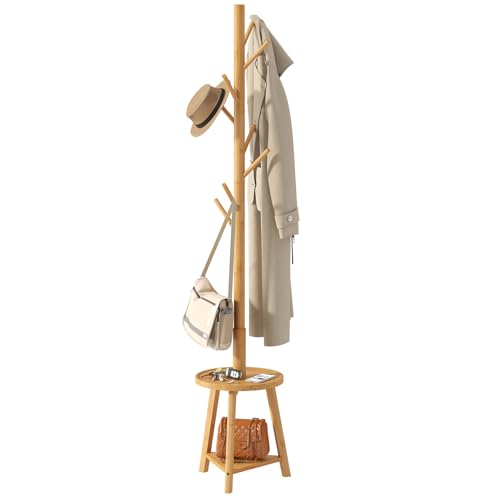
So this guide judges five wooden coat racks on balance first. For freestanding models, that means base or leg spread and the stated load per hook. For wall-mounted rails, it means whether the mounting holes can actually land on studs, because a rail screwed only into drywall anchors will not hold what the hook count promises. Wood species and hook material are stated plainly for every pick, including where a maker does not publish a load figure at all.
Disclosure: This article contains affiliate links. If you buy through these links, we may earn a commission at no extra cost to you.
How to Choose a Wooden Coat Rack That Stays Upright
Freestanding racks: footprint beats height
A freestanding coat tree is a lever waiting for a load. The taller the pole and the narrower the base, the less weight it takes on one side to tip it. Look at the footprint before the hook count. A tripod or three-leg base with a spread of 18 inches or more handles one-sided loading far better than a slim 13-inch square base, and a wide flat one-piece base resists rocking on uneven floors. Whatever you buy, hang heavy coats on opposite sides and work around the pole rather than filling one face first.
Read the load per hook, not the headline total
Makers love a big total capacity number, but the honest figure is the load per hook. A rack stating 11 lb per hook gives you something real to plan around: a heavy winter coat with a bag is well inside that. Where a listing gives only a single large total with no per-hook figure, treat it as a balanced-load best case, not a promise for one overloaded hook. And where a maker publishes no load figure at all, that silence is information too — assume light to medium duty until proven otherwise.
Wall rails: studs are the whole story
A wall-mounted rail removes the tipping problem entirely and holds far more than any freestanding tree — but only when its screws bite into studs. Standard stud spacing is 16 inches on center, so a rail around 17 inches long with end holes spaced to match can land both screws in wood. A shorter rail, say 15 inches, usually cannot reach two studs and will rely on one stud plus a drywall anchor, or anchors alone. Anchors are fine for hats and light jackets; they are not fine for a rail full of wet winter coats. Listings rarely say any of this out loud, so measure the hole spacing yourself and plan the mounting before you order.
Wood species and hook material
Rubberwood and pine are the workhorses here: rubberwood is dense and heavy for its size, which helps a freestanding base, while pine is lighter and better suited to wall rails. Bamboo is a fast-growing grass laminated into boards; it is stiff and light, which is good for shelves and less ideal where ballast matters. Hooks matter just as much. Solid wood pegs and hooks look seamless and will not rust, but metal double hooks on a wood rail carry more per hook and give you an upper and lower hanging point. Neither is automatically better — match the hook to the load.
The 5 Best Wooden Coat Racks
1. VASAGLE Coat Stand URCR005B01 — Best Freestanding Pick for Heavy Coats
VASAGLE builds this freestanding stand from solid rubberwood with a three-leg base, and it is the only freestanding pick here that publishes both a per-hook and a total load figure. Each of the 11 wood hooks is stated at 11 lb, with a 121 lb total static capacity. The tripod footprint spreads 20.6 by 17.8 inches, the widest stance in this guide, and the 7.9 lb unit weight gives it some useful ballast low down. A rounded top knob takes a hat.
Specs
- Type: Freestanding coat tree, three-leg base
- Material: Solid rubberwood, ink black finish
- Hooks: 11 wood hooks plus top knob
- Load: 11 lb per hook, 121 lb total (static, maker figures)
- Dimensions: 20.6 x 17.8 x 70 inches
- Unit weight: 7.9 lb
- Assembly: Required, accessory kit and instructions included
Pros
- Widest leg spread here, so one-sided loading is far less likely to tip it
- Honest per-hook load figure, not just a headline total
- Dense rubberwood adds low ballast and shrugs off daily knocks
- Eleven hooks plus a hat knob covers a full household
Cons
- Static load figures assume balanced hanging; pile everything on one side and physics still wins
- The 70-inch height may crowd low-ceiling entryways
- Ink black finish shows dust and scuffs more than natural wood
2. Pipishell Coat Rack PIFCR11B — Best Flat-Base Design with a Shelf
Instead of legs, the Pipishell stands on a single flat base measuring 15.6 by 12.5 inches, which spreads the load across the floor and cannot catch on a rug edge the way splayed legs can. Eight hooks sit along the 66.3-inch pole, a small shelf midway holds keys and sunglasses, and the pole can be assembled at two heights so children can reach the lower hooks. One honest gap: Pipishell does not publish a load capacity for this rack anywhere on its listing, so treat it as a coats-and-bags rack rather than a max-load test.
Specs
- Type: Freestanding, flat one-piece base
- Material: Solid wood, black finish
- Hooks: 8
- Load: Not published by the maker
- Dimensions: 66.3 x 15.6 x 12.5 inches
- Extras: 1 storage shelf, two assembly heights
- Assembly: Required, Allen key included, hooks lock in by hand
Pros
- Flat one-piece base sits steady on hard floors and low-pile rugs
- Shelf catches keys, mail, and sunglasses at the door
- Two height options suit households with children
- Quick, mostly tool-free assembly
Cons
- No published load figure, so heavy-duty use is a guess
- A flat base rocks on thick carpet or uneven stone floors
- Rectangular footprint needs a corner or wall run, not a tight round spot
3. BMOSU Bamboo Coat Rack Stand — Best for Extra Shelf Storage
BMOSU laminates bamboo into a 72-inch stand with eight hooks and two shelves worked into the frame, which makes it as much a small entryway organizer as a coat rack. The maker lists a 100 lb maximum weight recommendation, though with no per-hook breakdown, so read that as a balanced total. The trade-off is the footprint: at 13 by 13 inches it is the narrowest base in this guide, and bamboo is light, so this stand asks you to load it evenly and park the heaviest coats low or on opposite sides.
Specs
- Type: Freestanding with shelves
- Material: Bamboo (laminated board), natural finish
- Hooks: 8
- Load: 100 lb maximum recommended total (maker figure, no per-hook figure given)
- Dimensions: 13 x 13 x 72 inches
- Extras: 2 shelves
- Assembly: Required
Pros
- Two shelves add shoe, basket, or folded-knit storage at the door
- Bamboo is a fast-growing material with a warm, light finish
- Tallest pick here, with hooks spread over a long pole
- Shelves low in the frame add a little low-down weight
Cons
- Narrowest footprint in the guide; the most tip-prone if loaded one-sided
- Headline load figure has no per-hook figure behind it
- Bamboo laminate can split if screws are overtightened during assembly
4. Dseap Wall Mounted Coat Rack, 17.4 Inch — Best Wall Rail for Real Loads

This is the pick for households that hang serious weight. A burnt-finish wood rail carries five black metal double hooks, giving ten hanging points, and at 17.4 inches long the rail is sized so its mounting can land on studs spaced 16 inches apart — the detail most rails skip. Dseap lists a 33 lb weight limit for the rack. Into studs, that figure is believable for a row of winter coats; into drywall anchors alone, it would not be, and the listing’s own surface guidance includes stud mounting for a reason.
Specs
- Type: Wall-mounted rail
- Material: Wood rail, burnt wood finish; black metal double hooks
- Hooks: 5 double hooks (10 hanging points)
- Load: 33 lb weight limit (maker figure)
- Dimensions: 17.4 inches long
- Unit weight: 1.54 lb
- Mounting: Hardware included; stud mounting recommended for full loads
Pros
- Rail length matches standard 16-inch stud spacing
- Metal double hooks carry coats and bags on two levels
- Nothing on the floor to tip, kick, or trip over
- Compact length suits mudrooms and behind-door walls
Cons
- The 33 lb limit is the ceiling, not a starting point; spread heavy coats across hooks
- Requires drilling and a stud finder for a proper install
- Renters who cannot drill should look at the freestanding picks instead
5. Umbra Picket 5-Hook Wall Rail — Best for Light Loads and Small Spaces

The Picket hides five beveled pine pegs inside what looks like a slatted piece of wall art. Flip a peg down and it holds a jacket, a bag, or a scarf; flip it back up and the rail nearly disappears. Umbra states up to 5 lb per peg and 25 lb total, which makes this a light-duty rail — honest numbers for hats, light jackets, and everyday bags rather than a full set of winter coats. At just under 15 inches long it will not span two studs, so mount one end into a stud and use the included hardware and anchors sensibly at the other.
Specs
- Type: Wall-mounted rail with flip-down pegs
- Material: Beveled pine wood, natural finish
- Hooks: 5 retractable wood pegs
- Load: Up to 5 lb per peg, 25 lb total (maker figures)
- Dimensions: 14.88 x 6.63 x 1.63 inches
- Mounting: Hardware included
- Finish options: Natural, walnut, black, white (this ASIN is the natural finish)
Pros
- Pegs fold flat, so the rail doubles as wall decor in tight halls
- Solid pine throughout, no plastic parts
- Light, quick install for one person
- Several rails can be hung in a row to build a longer run
Cons
- Lightest load capacity here; not the rail for heavy winter coats
- Too short to land on two studs, so one fixing relies on an anchor
- Pegs hold one item each, unlike double hooks
Comparison Table
| Pick | Type | Wood | Hooks | Stated Load | Footprint or Length |
|---|---|---|---|---|---|
| VASAGLE URCR005B01 | Freestanding, tripod | Rubberwood | 11 wood hooks | 11 lb per hook, 121 lb total | 20.6 x 17.8 in base |
| Pipishell PIFCR11B | Freestanding, flat base | Solid wood | 8 wood hooks | Not published | 15.6 x 12.5 in base |
| BMOSU Bamboo Stand | Freestanding, shelves | Bamboo | 8 hooks | 100 lb total max | 13 x 13 in base |
| Dseap 17.4 Inch Rail | Wall-mounted | Wood rail, metal hooks | 5 double hooks | 33 lb total | 17.4 in long |
| Umbra Picket 5-Hook | Wall-mounted | Pine | 5 wood pegs | 5 lb per peg, 25 lb total | 14.88 in long |
Frequently Asked Questions
How do I stop a freestanding coat rack from tipping over?
Spread the load. Hang the heaviest coats on opposite sides of the pole, keep bags low, and never fill one face first. Placement helps too: a rack standing flat on a hard floor or low-pile rug is far steadier than one on thick carpet. If tipping is a constant worry, a wall rail removes the problem entirely.
Can a wall-mounted coat rail really hold more than a freestanding rack?
Yes, provided it is fixed into studs. A rail screwed into two studs transfers the load into the wall framing and will out-hold any freestanding tree. The same rail held only by drywall anchors can pull out under a fraction of that weight, which is why hole spacing and stud position matter more than hook count.
What if my wall rail is shorter than the stud spacing?
A rail under 16 inches usually cannot reach two studs. The usual fix is to land one fixing in a stud and use a proper toggle or anchor at the other end, then keep the heaviest items over the stud side. Alternatively, mount the rail to a longer wood board, and fix the board into two studs.
Are wood hooks or metal hooks better?
Wood hooks and pegs are kind to fabrics, will not rust in a damp mudroom, and keep the all-wood look a zero waste home aims for. Metal double hooks carry more per hook and offer two hanging levels, which suits heavy coats and bags. Match the hook to what you actually hang: light daily wear is fine on pegs, while a household of heavy winter coats points to metal hooks on a stud-mounted rail.
Which wood lasts longest in a busy entryway?
Dense hardwoods and rubberwood handle knocks, wet sleeves, and daily bumps well, and small dents blend into the grain. Pine is softer and will mark more easily, though on a wall rail it carries little structural stress. Bamboo laminate is stiff and light; keep it dry and avoid overtightening its fasteners, and it will serve well for years.
Conclusion
Buy stability first and hooks second. For a freestanding rack, the VASAGLE URCR005B01 pairs the widest leg spread here with the most honest load figures, while the Pipishell suits smaller households that want a shelf, and the BMOSU trades a narrow footprint for extra storage. If you can drill, the Dseap rail on studs is the strongest hanger in this guide, and the Umbra Picket keeps light daily clutter tidy in the smallest of halls. Measure your floor space or your stud spacing before ordering, and any of these five will still be standing come January.
More from Amazon
Programs that pair well with the guide above. Offers and eligibility are set by Amazon and may change.
Free shipping on eligible items, Prime Video and more. Eligible new members can start with a free trial.
Start a Prime free trialA Prime membership for ages 18-24 with a trial period. Eligibility is set by Amazon.
See Prime for Young AdultsAudiobooks and podcasts to listen to on the go. Eligible new members can start with a free trial.
Try Audible freeAd-free music streaming. Eligible new subscribers can start with a free trial.
Try Music Unlimited freeAs an Amazon Associate we earn from qualifying purchases.





Write Your Review
No reviews yet. Be the first to share your experience!