

Key takeaways
- Overlap: A lid that extends over the outer rim limits the path for steam and kitchen dust.
- Stable seating: A shallow recess keeps the lid from drifting when the counter is bumped.
- Easy one-hand removal: A knob, notch, or textured edge is more practical than a perfectly smooth disk.
- Dry interior: A lid should not trap condensation against the salt after cooking.
- Replaceability: Sets with a simple, non-hinged lid are often easier to live with if the lid is damaged.
The best salt cellar set with lid for most kitchens is a two-piece ceramic or stoneware set with a 3–5 ounce capacity, a snug lift-off lid, and a wide opening that lets you measure salt with your fingers or a teaspoon.
Wood, ceramic, glass, and stoneware each solve a different storage problem. Wood is warm and lightweight but needs careful cleaning; ceramic and stoneware provide the best balance of protection and everyday usability; glass makes moisture or residue easy to spot; and tightly fitted stoneware or ceramic lids are usually the strongest choice for humid kitchens.
Our top picks


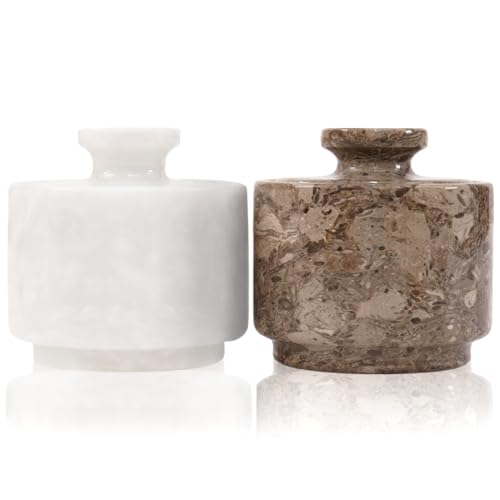
As an Amazon Associate we earn from qualifying purchases at no extra cost to you. Ratings are shown as listed on Amazon.
Quick comparison: which salt cellar material fits your kitchen?
| Material | Typical capacity | Approx. empty weight | Moisture resistance | Cleaning | Typical footprint | Best for |
|---|---|---|---|---|---|---|
| Wood | 3–6 oz | 3–8 oz | Moderate when sealed; low if unfinished | Wipe clean; do not soak | 3–4.5 in. diameter | Dry kitchens and low-weight storage |
| Ceramic | 3–8 oz | 10–20 oz | High with a well-fitted lid | Usually easy to hand-wash; some are dishwasher-safe | 3–4.5 in. diameter | Most everyday kitchens |
| Glass | 3–6 oz | 8–16 oz | High if the lid seals well | Easy to inspect and wash | 2.5–4 in. diameter | Visibility and precise portioning |
| Stoneware | 4–10 oz | 14–28 oz | Very high when glazed | Durable, but hand-washing protects lids and glaze | 3.5–5 in. diameter | Busy cooking areas and humid rooms |
These are practical ranges for countertop salt cellars rather than fixed specifications. Actual dimensions vary, particularly when a set includes a spoon, divided compartments, or a hinged lid.
Best by situation
| Your priority | Best choice | Why | Watch out for |
|---|---|---|---|
| Lowest likely cost | Small ceramic set | Commonly available in the roughly $10–$25 range and inexpensive to replace | Thin lids and narrow openings |
| Humidity or frequent stovetop use | Glazed stoneware with an overlapping lid | Heavy body stays steady and the glaze resists moisture and stains | Greater weight and counter space |
| Small counter | Glass or compact ceramic, 3–4 oz | Usually takes up about 7–12 square inches | Very small openings can be awkward with measuring spoons |
| Natural, plastic-free appearance | Finished wood | Lightweight and made from a renewable material | Salt and water can raise the grain or discolor the surface |
| Cooking several times daily | Stoneware or thick ceramic, 6–8 oz | Less frequent refilling and better resistance to knocks | A large cellar can encourage overfilling and stale storage |
Wood versus ceramic: the everyday decision
Wood salt cellars
Wood sets are pleasant to handle, relatively light, and less likely to chip a countertop. A lidded wooden cellar also works well when salt is kept away from steam, such as on a dry coffee or baking station. Look for a smooth interior, a stable base, and a lid that overlaps the rim instead of merely resting on a flat top.
The limitation is maintenance. Salt attracts moisture, and repeated exposure can roughen unfinished wood, loosen a glued joint, or leave a persistent salty film. Clean a wooden cellar with a barely damp cloth, dry it immediately, and occasionally apply a food-safe mineral oil if the manufacturer permits it. Do not leave it soaking or put it in a dishwasher.
Ceramic and stoneware salt cellars
Ceramic offers the best all-purpose compromise: it is nonporous when properly glazed, easy to wipe, and available in compact shapes. Stoneware is a heavier form of fired clay and generally feels more stable when one-handed cooking gets hectic. That weight is useful near a cooktop, where a light cellar may slide when opened.
Inspect the lid fit rather than assuming every ceramic lid protects salt equally. A loose cover blocks dust but does little against humid air. A better design has a recessed rim, an overlapping edge, or a small silicone gasket. The lid should lift without scraping hard against the body, and it should not wobble when placed back on the cellar.
When glass is the smarter pick
Glass is useful when you want to see the salt level, identify coarse crystals, or check whether condensation has formed inside. It is also easier to monitor for discoloration and residue. A broad glass bowl with a fitted lid can be especially practical for cooks who use kosher salt or flaky salt, because the contents remain visible while the open top stays accessible.
Glass has two drawbacks: it can break if dropped, and a smooth lid may slide more easily than a heavy ceramic one. Choose a thick-walled vessel with a silicone or cork grip if the cellar will sit beside the sink. Avoid storing it where a falling pan or utensil could strike it.
Capacity, lid fit, and countertop footprint
A 3-ounce cellar is enough for occasional cooks and usually holds several weeks of normal household use. A 5-ounce cellar is the most flexible size for daily cooking. Sizes above 8 ounces reduce refilling but increase the time salt spends exposed to air after opening, so they make more sense for a busy household than for someone who cooks only on weekends.
Here is a simple sizing calculation. One level teaspoon of fine salt weighs about 5–6 grams, or roughly 0.18–0.21 ounces. If a household uses two teaspoons per day, a 5-ounce cellar contains approximately:
5 ounces ÷ 0.2 ounce per teaspoon = about 25 teaspoons
That is around 12 days of supply at two teaspoons daily. Coarse and flaky salts occupy more volume per unit of weight, so the same labeled capacity may hold fewer practical spoonfuls. Refilling with a smaller amount also makes it easier to wash and fully dry the cellar before adding fresh salt.
For footprint, measure the available counter area and leave at least 1 inch of clearance around the cellar. A 4-inch-diameter round container uses about 12.6 square inches of surface area, calculated as 3.14 × 2 × 2. Rectangular sets can use less depth but may need more side-to-side room when the lid is opened.
What makes a lid useful?
- Overlap: A lid that extends over the outer rim limits the path for steam and kitchen dust.
- Stable seating: A shallow recess keeps the lid from drifting when the counter is bumped.
- Easy one-hand removal: A knob, notch, or textured edge is more practical than a perfectly smooth disk.
- Dry interior: A lid should not trap condensation against the salt after cooking.
- Replaceability: Sets with a simple, non-hinged lid are often easier to live with if the lid is damaged.
Hinged lids are convenient, but the hinge is usually the first moving component to loosen or collect salt. For durability, a removable lid with a broad rim is often the safer design.
Cleaning and ownership realities
Empty the cellar before washing it; do not simply top up old salt. Fine particles can cake at the bottom, while damp salt can transfer moisture to a new batch. For ceramic, glass, and glazed stoneware, wash with warm water and mild dish soap, rinse thoroughly, and dry completely with the lid separated from the body.
Even when a set is labeled dishwasher-safe, hand-washing is gentler on printed decoration, cork inserts, silicone seals, and delicate lids. Never return salt to a container that is still slightly damp. If salt has hardened, discard it rather than scraping aggressively against a glaze or wooden interior.
Common mistakes include placing the cellar directly above a steaming pot, using wet measuring spoons, and buying a large set because it appears better value. A smaller, frequently refreshed supply is often more useful than a full container of salt that has absorbed humidity and formed clumps.
Our buying verdict
Choose a 3–5 ounce ceramic set with a recessed or overlapping lid if you want the best balance of price, cleaning, capacity, and footprint. Select glazed stoneware when stability and humidity resistance matter more than weight. Choose glass when visibility is your priority, and wood when appearance and light weight outweigh the extra care required.
Before buying, confirm the exterior diameter, actual internal capacity, lid style, and cleaning instructions. Those details matter more to daily satisfaction than decorative finish or the number of pieces in the set.



Write Your Review
No reviews yet. Be the first to share your experience!