

Key takeaways
- Choose a direct-drive smart trainer if you want the quietest, most consistent experience and will ride indoors regularly. Choose a wheel-on model if your budget is closer to $300–$450, you need easy storage or you want to share the trainer between several compatible bicycles. Choose…
The best indoor bike trainers for most riders are a direct-drive smart trainer for realistic resistance and low noise, a wheel-on trainer for the lowest upfront cost, and a compact rollers setup for riders who value storage and bike feel over automated workouts.
Our top picks

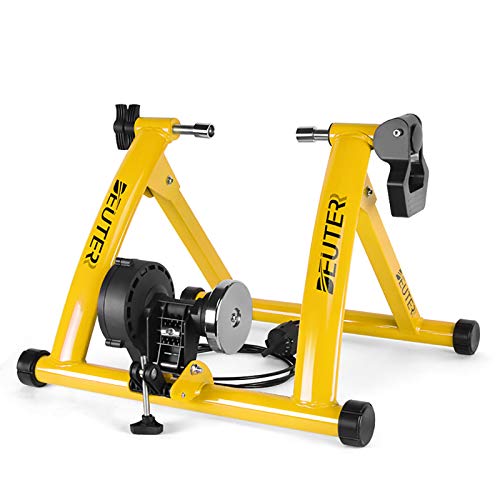
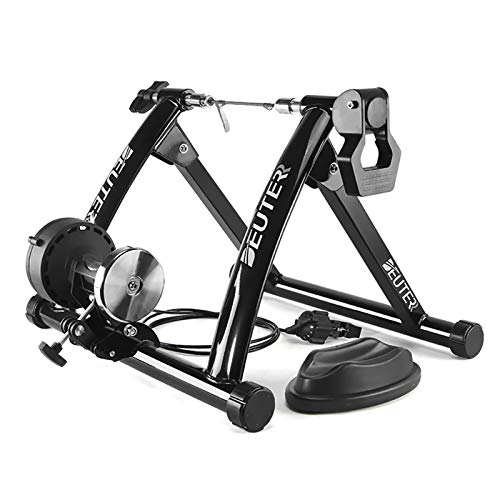

As an Amazon Associate we earn from qualifying purchases at no extra cost to you. Ratings are shown as listed on Amazon.
Quick picks by rider and room
| Rider situation | Best trainer type | Good examples | Typical price range | Why it fits |
|---|---|---|---|---|
| Frequent training in an apartment | Direct-drive smart trainer | Wahoo KICKR CORE, Tacx FLUX S | $450–$800 | Quiet drivetrain, accurate resistance, no rear-tire wear |
| Beginner on a limited budget | Wheel-on trainer | Wahoo KICKR SNAP, Saris M2 | $250–$450 | Uses the existing rear wheel and is quick to store |
| Serious virtual racing | Premium direct-drive smart trainer | Wahoo KICKR v6, Tacx NEO 2T, Elite Justo | $900–$1,500 | High resistance, accurate power data and responsive control |
| Very little storage space | Folding rollers or compact wheel-on trainer | Traditional rollers or a folding fluid trainer | $200–$500 | Folds or rolls away without leaving a cassette installed |
| Several bikes in the household | Direct-drive trainer with adapters | Wahoo KICKR CORE or Saris H3 | $500–$1,000 | Can accommodate common quick-release and thru-axle standards |
Trainer types: what you gain and give up
Direct-drive smart trainers
A direct-drive trainer removes the bicycle’s rear wheel and connects the chain to a cassette on the trainer. This is usually the best all-around choice for riders who train two or more times per week. There is no tire slipping against a roller, and resistance changes are controlled electronically by cycling apps.
Popular examples include the Wahoo KICKR CORE, Wahoo KICKR, Tacx FLUX S, Tacx NEO 2T, Saris H3 and Elite Justo. Depending on the model, expect roughly 1% to 3% stated power accuracy, maximum simulated gradients of about 10% to 25%, and trainer weights from approximately 17 to 23 kilograms. Heavier units tend to feel more planted but are less convenient to carry.
The trade-off is setup. You need a compatible cassette, the correct axle adapters and a power source. A cassette installation tool may also be required. If two bikes use different drivetrains, changing bikes can involve swapping cassettes or carefully matching speeds and freehub bodies.
Wheel-on smart and fluid trainers
Wheel-on trainers clamp the rear axle and press a resistance unit against the tire. They cost less and work with more bicycles out of the box, although a road-bike tire designed for indoor use is strongly preferable. Standard road tires can wear rapidly, shed rubber and become noisy.
The Wahoo KICKR SNAP and Saris M2 are recognizable examples. A wheel-on trainer typically takes 5 to 10 minutes to install, weighs about 7 to 12 kilograms and folds more easily than a direct-drive model. Smart versions can connect to training apps, but their power readings and resistance response are usually less precise. Tightening the roller inconsistently is a common source of inaccurate readings.
Rollers
Rollers support both wheels and require you to balance the bicycle while pedaling. They provide a natural, skill-building feel and can be stored in a narrow space. Basic rollers have no electronic resistance; smart rollers add app control but remain less common and often cost more than simple wheel-on trainers.
Rollers are excellent for warm-ups, cadence work and riders who want to keep the bike feeling active beneath them. They are less suitable for all-out standing climbs unless the design includes a stabilizing frame and the rider is comfortable with the movement.
Head-to-head comparison
| Feature | Direct-drive smart | Wheel-on smart | Basic rollers |
|---|---|---|---|
| Typical setup time | 10–20 minutes initially; 2–5 minutes afterward | 5–10 minutes | 2–5 minutes |
| Approximate unit weight | 17–23 kg | 7–12 kg | 7–12 kg |
| Noise at moderate effort | About 55–65 dB, mostly drivetrain noise | About 60–70 dB, including tire and roller noise | About 65–75 dB, depending on tire and roller design |
| Power accuracy commonly claimed | Approximately ±1% to ±3% | Approximately ±2% to ±5% | Usually not measured unless electronically equipped |
| Rear-tire wear | None from the trainer | Moderate to high | Normal road wear |
| App connectivity | Bluetooth and/or ANT+; often Wi-Fi on premium models | Bluetooth and/or ANT+ | None on basic models |
| Storage footprint | Roughly 60 × 25 × 45 cm when folded, model dependent | Roughly 65 × 45 × 40 cm when folded | Roughly 80–100 × 50 × 15 cm when folded |
Noise figures are practical ranges rather than guarantees: a carpeted floor, tire pressure, gear selection and building construction can change what another person hears. The bicycle’s chain, cassette and rear derailleur often create more high-pitched noise than the trainer itself.
Compatibility matters more than the brand name
Before buying, check four measurements: rear axle type, axle spacing, drivetrain speed and freehub body. Older bicycles commonly use a 130- or 135-millimeter quick-release axle. Many modern road bikes use a 142 × 12 mm thru-axle, while mountain bikes may use 148 × 12 mm Boost spacing. The trainer should include the needed adapters or support them as accessories.
A direct-drive trainer also needs a cassette that matches the bicycle’s gearing. An 11-speed Shimano-compatible bicycle generally needs an 11-speed cassette, not simply a cassette with the same largest cog. SRAM XD and XDR systems require different freehub bodies from standard Shimano HG systems. Campagnolo compatibility can also require a separate body and cassette.
Electronic shifting, disc brakes and through-axles do not automatically rule out indoor training, but clearance and adapter selection must be checked. If you want to use a carbon-frame bicycle, follow the frame maker’s indoor-training guidance and never force an adapter into place.
Smart-app connectivity and resistance accuracy
Most smart trainers communicate with apps such as Zwift, MyWhoosh, TrainerRoad and Rouvy through Bluetooth or ANT+. Bluetooth is convenient for phones, tablets and smart TVs; ANT+ can be useful with cycling computers and computers equipped with a USB receiver. Wi-Fi, found on some premium trainers, can improve connection stability and firmware updates but is not essential for basic workouts.
Look for “ERG mode” if you plan to follow structured intervals. ERG mode automatically adjusts resistance to hold a target wattage. A trainer with high maximum resistance is more useful for strong riders and short, steep virtual climbs, while accurate low-end control matters for easy endurance sessions and recovery days.
Do not compare claimed accuracy without considering calibration. Wheel-on trainers usually need a repeatable tire pressure and roller-tightening procedure. Direct-drive trainers may require a spindown or electronic calibration, although some models compensate automatically. Warm the trainer according to its instructions before judging power consistency.
Setup steps that prevent most problems
- Place a mat under the trainer. It protects flooring, reduces vibration and catches sweat, which is corrosive to metal components.
- Level the feet. A rocking trainer feels unstable and transfers more vibration into the floor.
- Install the correct axle adapters or cassette. Confirm that the chain sits straight and shifts across the cassette without grinding.
- Update firmware before a hard ride. Use the manufacturer’s utility app, then close unnecessary Bluetooth connections that could compete with the training app.
- Pair only the needed signals. In a virtual cycling app, select the trainer as power, cadence and controllable resistance when supported. Avoid pairing a separate power meter as the controllable device.
- Test for five easy minutes. Check for slipping, clicking, unusual movement and incorrect gearing before starting intervals.
Ownership costs and maintenance
A cheaper wheel-on trainer is not always cheaper over several years. Suppose a $325 wheel-on unit is used twice weekly for two years: 208 sessions puts the trainer cost at about $1.56 per use, before replacing an indoor tire. A $650 direct-drive trainer used four times weekly for the same period costs about $1.56 per use as well. Frequency of use can matter more than the purchase price.
The parts that wear first are usually the bicycle chain, cassette, rear tire on wheel-on trainers, freehub bearings and folding hinges or feet that are repeatedly mishandled. Wipe sweat from the frame, handlebars and trainer after every ride. Keep the drivetrain lubricated, but do not spray lubricant near the trainer’s resistance unit. Inspect axle adapters and mounting threads periodically, and store the unit dry rather than in a damp garage.
Bottom line
Choose a direct-drive smart trainer if you want the quietest, most consistent experience and will ride indoors regularly. Choose a wheel-on model if your budget is closer to $300–$450, you need easy storage or you want to share the trainer between several compatible bicycles. Choose rollers if bike handling, compact storage and a lively road feel matter more than automatic workout control. Whichever type you buy, verify axle and drivetrain compatibility first; that check prevents more frustrating returns than any feature comparison.




Write Your Review
No reviews yet. Be the first to share your experience!