

Key takeaways
- Find the best solar bug zappers for patios and gardens. Compare five sun-powered insect traps that cut cord clutter and keep summer evenings bite-free.
- Top Pick: PIC Solar Insect Killer Torch, Twin Pack
- Runner-up: coospider-repta Large Solar Bug Zapper
- Also consider: PhatroyYee Solar Bug Zapper
Warm evenings on the patio should be about good food and conversation, not swatting at mosquitoes and gnats. A solar bug zapper pushes back against flying insects without extension cords across the yard or citronella candles burning all night. These devices charge from sunlight, switch on as darkness falls, and use ultraviolet light to draw insects toward an electric grid, giving patios and gardens a quieter, chemical-free layer of defense.
Solar models also fit a lower-impact outdoor setup: they draw no power from the grid, need no disposable fuel, and many run a full evening on one charge. Still, coverage, battery capacity, weather sealing, and mounting options vary widely, and a unit that suits a small balcony may struggle in a large garden. This guide compares five solar bug zappers sold on Amazon and the spaces each one suits best.
As an Amazon Associate, we earn from qualifying purchases.
Quick Answer
For most patios and gardens, the PIC Solar Insect Killer Torch twin pack is the strongest all-around pick, thanks to its decorative flame glow, automatic dusk activation, and flexible mounting. Larger yards suit the big coospider-repta unit, while campers and small-space dwellers will appreciate the portable Bell+Howell Rogue. The PhatroyYee and jepwe lanterns offer similar cordless convenience with strong grids.
PIC Solar Insect Killer Torch, Twin Pack

The PIC Solar Insect Killer Torch looks like a tiki torch and works like a bug zapper, which makes it the easiest pick to live with on a patio. Each torch combines ultraviolet LEDs with a flickering LED flame effect, doubling as ambient lighting while it draws flying insects toward a 600-volt grid. The torches switch on automatically at dusk, with a manual on-off button for control when you want it.
Coverage is listed at up to half an acre per torch, and the twin pack lets you place one unit near the seating area and another near a garden path. Three height options come from the included stakes and poles, so the same torch can sit on a tabletop, stand along a walkway, or rise to full torch height beside a deck. Weatherproof construction means the torches can stay outside.
The 600-volt grid is gentler than the higher-voltage grids on some lantern-style zappers, suiting households that want effective control without an aggressive zap. Very large properties may need more than two torches for full coverage. For a typical patio or small garden, though, the combination of looks, automatic operation, and flexible placement is hard to beat.
coospider-repta Large Solar Bug Zapper
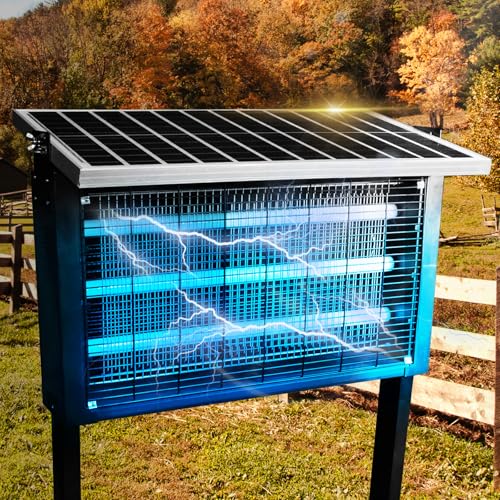
When the outdoor space is large, the coospider-repta Large Solar Bug Zapper is built for the job. This substantial unit pairs a 30-watt solar panel with a rechargeable battery, in coverage configurations reaching up to 8,000 square feet, making it a natural choice for big backyards, rural gardens, and properties where a small lantern would be lost in the open air.
The unit runs on solar power alone, with no cord or outlet required, so it can sit at the far end of a garden where insects gather near hedges, compost bins, or standing water. Its larger light source and bigger grid attract insects across a wider radius than compact models, which matters for large gatherings and tended vegetable beds.
The trade-off is bulk. This zapper is heavier and less portable than the lantern-style picks, so it suits a fixed spot better than a camping trip, and it needs direct sun for much of the day to charge the large battery through the night. Place it with the panel facing open sky and it should serve a large garden well all season.
PhatroyYee Solar Bug Zapper

The PhatroyYee Solar Bug Zapper is a compact lantern-style unit blending four functions into one device: solar bug zapper, cordless insect trap, camping light, and portable lantern. Its 4,500-volt grid is among the strongest in this guide, and an IPX5 water resistance rating means rain showers should not end an evening outdoors.
A 4,000 milliamp-hour rechargeable battery stores the solar charge, with USB charging as a backup when the sun has been scarce. A built-in light sensor switches the zapper on automatically at dusk, and the unit can hang from a hook, sit on a table, or travel to a campsite. The army green finish gives it a rugged look that suits gardens and camping gear alike.
This zapper suits people who want one device that moves between the patio, the garden shed, and the occasional camping trip. Its compact size means more modest coverage than the large coospider-repta unit, so it works best for a seating area or a small garden. For targeted protection around a table or a doorway, it is capable.
jepwe Solar Bug Zapper

The jepwe Solar Bug Zapper shares the lantern-style format of the PhatroyYee but adds a smart light sensor and a clear emphasis on flexible placement. Its 4,500-volt grid and 4,000 milliamp-hour battery match the strongest compact models, while dual solar and USB recharging keeps it working through cloudy stretches when solar alone would fall short.
Placement is where this unit earns its place. It can hang from a branch or hook, sit on a patio table, or stand on the ground near a garden bed, and its weather-resistant build handles gardens, patios, backyards, and camping sites. The listing also notes indoor use in kitchens and garages, which makes it useful during the off-season when the patio is closed up.
Like other compact lanterns, it covers a seating area rather than an entire property, so larger gardens may need two units or a bigger model. For households that want one cordless zapper that moves from patio to garage to campsite, the jepwe offers a practical mix of power, weather sealing, and dual charging.
Bell+Howell Rogue 2-in-1 Solar Bug Zapper

The Bell+Howell Rogue takes a different approach by combining a solar bug zapper with a camping lantern and flashlight. It charges from the sun during the day or through a USB-C cable when needed, and it can also plug in indoors, making it the most flexible power setup in this guide. Two operating modes and a built-in LED flashlight round out a device for people who move between indoor and outdoor spaces.
A protective outer shell around the high-voltage grid is designed with children and pets in mind, which matters for family patios where little hands and paws roam. Its compact size makes it easy to hang from a patio hook, carry to a picnic table, or pack for a camping trip. It also works as a lantern when insects are not the priority, earning its place in a gear bag even outside mosquito season.
The trade-off for portability is coverage. This is a personal-space zapper rather than a whole-garden solution, suiting a seating area, a tent entrance, or a small balcony best. For campers, renters, and anyone who wants one small device that does several jobs, the Rogue is a smart pick.
How to Choose
Start with the size of the space you want to protect. A small patio or balcony needs only a compact lantern-style zapper, while a large garden or a property near woods or water calls for a bigger unit or several smaller ones around the perimeter. Check the listed coverage for each model and be realistic about how far ultraviolet light reaches on a dark night.
Next, look at charging and battery capacity. A larger panel and bigger battery mean longer runtime after sunset, which matters for late gatherings. Dual charging, meaning solar plus USB, is valuable in regions with cloudy summers, and a light sensor that switches the unit on at dusk removes the need to remember to turn it on each evening.
Weather sealing matters for anything left outside. Look for an IPX water resistance rating or an explicit weatherproof claim, and check whether the unit is meant to stay out all season or come in during heavy rain. A zapper that hangs, stands on a stake, and sits on a table also adapts to more spaces than one with a single fixed position.
Finally, think about placement. Zappers work best set away from where people sit, ideally between the seating area and insect sources such as hedges, ponds, or compost heaps. A zapper right beside the table can draw insects toward the people it is meant to protect, so give it distance, keep it at head height or above, and let it intercept insects before they reach the party.
Who Should Skip
Solar bug zappers are not the right tool for every situation. If your outdoor space gets almost no direct sun, because of heavy tree cover or a north-facing balcony, a solar-only model will struggle to hold a charge, and a plug-in or USB-recharged model would serve you better.
People who want to protect pollinators should think carefully before installing a zapper. Ultraviolet traps do not distinguish between mosquitoes and beneficial insects, and moths, beetles, and other harmless night flyers can be caught as well. If your garden is a pollinator habitat, consider removing standing water, using fans, or planting mosquito-repelling herbs, and reserve a zapper for seating areas rather than flower beds.
Zappers are also a poor fit for indoor-only use, since they need sunlight to charge and work best in open air. And if biting insects are a serious health concern in your region, a zapper alone is not enough. Pair it with repellent and screens, and treat the zapper as one layer of defense rather than a complete solution.
FAQ
Do solar bug zappers work on cloudy days?
They can, but with limits. The battery stores charge from whatever sunlight reaches the panel, so a cloudy day still delivers some charge, though less than a sunny one. Models with USB backup keep working through long cloudy stretches, while solar-only models may run shorter after several overcast days.
Where should I place a solar bug zapper?
Place it away from where people gather, ideally between the seating area and insect sources such as hedges or ponds. Hang it at head height or above, keep the solar panel facing open sky, and avoid placing it right beside the dining table.
Are solar bug zappers safe around children and pets?
Most modern zappers have a protective outer grid that keeps fingers and paws away from the high-voltage inner grid. Still, treat any zapper as an electrical device, mount it out of easy reach of small children, explain to kids that it is not a toy, and check the housing for cracks or damage.
How long do solar bug zappers last?
With reasonable care, a good solar zapper should last several seasons. The panel itself is durable, but the rechargeable battery gradually loses capacity over time. Storing the unit indoors during winter, keeping the panel clean, and avoiding drops will extend its life, since replacement batteries are rarely offered.
Final Verdict
The PIC Solar Insect Killer Torch twin pack takes the top spot for most patios and gardens, combining attractive lighting, automatic operation, and flexible mounting in a package that covers a typical outdoor living space. For larger properties, the coospider-repta large unit offers reach that compact lanterns cannot match. Campers and small-space households will get the most from the portable Bell+Howell Rogue, while the PhatroyYee and jepwe lanterns deliver strong grids and dual charging for everyday patio use. Whichever model you choose, give it sun, give it distance from the table, and let it work through the evening.
More from Amazon
Programs that pair well with the guide above. Offers and eligibility are set by Amazon and may change.
Free shipping on eligible items, Prime Video and more. Eligible new members can start with a free trial.
Start a Prime free trialA Prime membership for ages 18-24 with a trial period. Eligibility is set by Amazon.
See Prime for Young AdultsAudiobooks and podcasts to listen to on the go. Eligible new members can start with a free trial.
Try Audible freeAd-free music streaming. Eligible new subscribers can start with a free trial.
Try Music Unlimited freeAs an Amazon Associate we earn from qualifying purchases.







Write Your Review
No reviews yet. Be the first to share your experience!