

Key takeaways
- Choose corded when the driveway is within roughly 75–100 feet of an outdoor outlet, snow is usually shallow, and the cleared area is compact.
- Choose cordless when you clear multiple surfaces, need to work around cars and landscaping, or cannot safely manage a cable.
- Choose a two-stage cordless model when storms regularly exceed 8 inches, snow is wet and heavy, or the street plow leaves dense ridges.
- Choose a smaller single-stage model when storage, lifting weight, and purchase price matter more than maximum capacity.
The best electric snow blowers are corded models for small, shallow driveways where low cost matters most, and cordless models for larger areas, deeper snow, stairs, cars, or frequent storms where mobility is worth paying for.
Our top picks

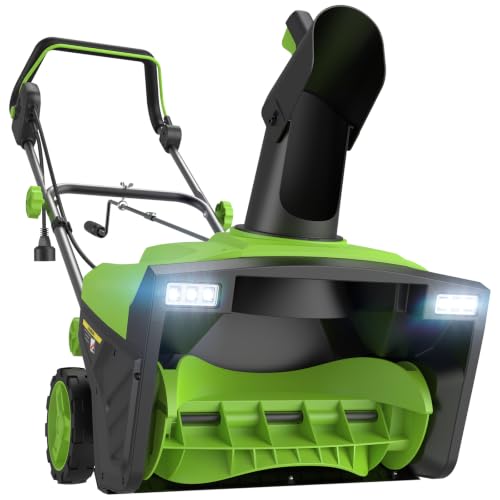
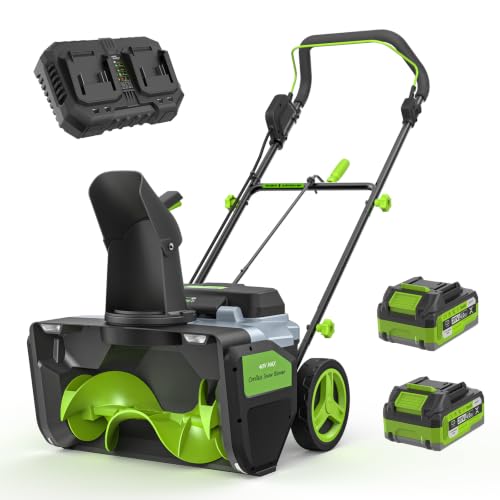

As an Amazon Associate we earn from qualifying purchases at no extra cost to you. Ratings are shown as listed on Amazon.
Quick picks by driveway and snowfall
| Situation | Best fit | Useful target specifications | Typical market range |
|---|---|---|---|
| Small, paved driveway or walkway; under 4 inches of snow | Corded single-stage electric blower | 15 amps, 18–22-inch clearing width, 20–30-foot throwing distance | $150–$300 |
| One- to two-car driveway; regular winter use | 40V or 60V cordless single-stage model | 18–21-inch width, 4–7.5 Ah battery, roughly 20–40 minutes of working runtime | $350–$700 |
| Large driveway, wet snow, or snow over 8 inches | 60V or 80V cordless two-stage blower | 20–24-inch width, metal or reinforced auger, two batteries or a high-capacity pack | $900–$1,700 |
| Very limited storage space | Compact corded or folding-handle cordless model | 18–20-inch width, under 50 pounds, folding or collapsible handle | $150–$600 |
Our best electric snow blower choices
Best for a small driveway: Snow Joe SJ627E
The Snow Joe SJ627E is a practical corded choice when the cleared area is close to an outdoor outlet. It uses a 15-amp motor and has a 22-inch clearing width, making it capable of handling a small driveway or a long sidewalk without battery charging. Its single-stage design is intended for relatively moderate snow rather than deep, compacted banks or heavy end-of-driveway piles.
Its main advantage is predictable power: there is no battery to warm indoors, recharge, or replace. The tradeoff is the extension cord. Use a properly rated outdoor cord, keep it behind you and away from the intake, and plan your route before starting. A corded blower is a poor choice for a large or irregular property where the cable will constantly catch on vehicles, shrubs, or steps.
Best cordless value: a 40V or 60V single-stage model
For a typical suburban driveway, a cordless single-stage blower in the 40V-to-60V class offers the best balance of convenience and cost. The Ryobi 40V HP Brushless 21-inch snow blower and Toro Power Clear e21 60V are examples of this category. Exact packages differ, so compare the included battery and charger rather than judging by the tool price alone.
These machines are usually light enough to maneuver without self-propelled drive and are easier to store than two-stage equipment. They work well on several inches of fresh snow and can often handle deeper snow if the operator moves slowly and makes overlapping passes. Their limitations become clear in wet snow, frozen piles, gravel, and unusually deep accumulation. A single-stage auger may leave a thin layer on uneven pavement, while a two-stage machine is better at moving dense snow farther from the driveway.
Best for deep snow and a large driveway: EGO Power+ SNT2112 or SNT2405
EGO’s Power+ SNT2112 is a 21-inch, 56V two-stage cordless blower designed for people who need more capacity than a lightweight single-stage machine provides. The SNT2405 increases the clearing width to 24 inches and uses two 56V batteries. These models are more suitable for long driveways, frequent storms, and plow-created piles at the street.
A two-stage design uses an auger to collect snow and an impeller to discharge it. That generally improves performance in deep or wet snow, but it also adds weight, width, cost, and storage demands. Before choosing a 24-inch machine, measure the narrowest gate, shed door, and walkway. A larger blower that cannot reach the backyard storage area is not a practical upgrade.
Best for an existing battery ecosystem: Greenworks 80V
Greenworks 80V snow blowers make the most sense for owners who already have compatible 80V outdoor equipment and batteries. Models in this range commonly offer approximately 20–24 inches of clearing width, brushless motors, LED lights, and two-stage configurations, depending on the specific version.
The financial calculation changes when the battery and charger are already owned. If not, the complete kit can approach the price of a small gas blower. Check the package contents carefully: some listings are tool-only, while others include one or two batteries. For a large driveway, one battery may not provide enough uninterrupted runtime, particularly in heavy snow or freezing temperatures.
Corded versus cordless: the decision that matters most
- Choose corded when the driveway is within roughly 75–100 feet of an outdoor outlet, snow is usually shallow, and the cleared area is compact.
- Choose cordless when you clear multiple surfaces, need to work around cars and landscaping, or cannot safely manage a cable.
- Choose a two-stage cordless model when storms regularly exceed 8 inches, snow is wet and heavy, or the street plow leaves dense ridges.
- Choose a smaller single-stage model when storage, lifting weight, and purchase price matter more than maximum capacity.
Voltage is not a direct guarantee of performance across brands. Auger design, motor control, battery size, intake height, and discharge system matter as well. Compare the complete machine and its intended snow conditions, not voltage alone.
How to calculate whether a cordless battery is large enough
Manufacturers often advertise runtime under favorable conditions. A useful planning estimate is to assume that a single-stage cordless blower will provide about 20–40 minutes of active clearing from a fully charged 4–7.5 Ah battery, while deep, wet snow, cold temperatures, and slower cutting can reduce that figure.
For example, suppose your driveway takes 18 minutes to clear and you need another 8 minutes for the walkway and front steps. That is 26 minutes of work. If the blower delivers an estimated 22 minutes in heavy snow, one battery is marginal. Choose a larger pack, buy a second compatible battery, or use a corded model if an outlet is convenient. Avoid planning around the last few minutes of battery capacity: reduced power near shutdown can leave the machine struggling with the heaviest section.
Clear in passes no wider than the intake and overlap each pass by an inch or two. Driving too quickly forces snow around the housing and increases battery consumption. Begin before snow reaches its maximum depth whenever possible.
Features worth paying for
- Brushless motor: generally improves efficiency and reduces motor wear compared with a brushed design.
- Adjustable chute and deflector: lets you keep snow away from doors, neighboring property, and parked vehicles.
- LED headlights: useful for early-morning clearing, though they do not replace reflective clothing or safe visibility.
- Rubber or reinforced auger paddles: quieter and more forgiving on paved surfaces than exposed metal, but they are wear items.
- Metal auger and scraper bar: useful for heavy snow and icy buildup, especially on larger two-stage machines.
- Folding handles: valuable in a shed or garage, but confirm that folding does not make the stored machine too tall or wide.
- Single-handed chute controls: convenient when the other hand must remain on the drive or handle controls.
Ownership realities: what wears out first
Auger paddles, scraper bars, skid shoes, shear pins, and chute components usually need attention before the electric motor. Abrasive pavement, gravel, salt, and hidden stones accelerate wear. Inspect the scraper bar and paddles after every major storm, and replace them when they no longer maintain effective contact with the pavement.
Never reach into a clogged chute or auger housing with your hand, even when the motor appears stopped. Disconnect the cord or remove the battery, wait for moving parts to stop, and use a clean-out tool or broom handle. A battery blower can restart if its controls are accidentally engaged during clearing.
After use, remove packed snow from the housing and let the machine dry in a protected area. Do not store a battery on the blower in an unheated shed during prolonged extreme cold. Keep batteries dry, avoid charging them when they are below freezing, and follow the manufacturer’s temperature guidance. Store the cord loosely rather than tightly coiled, and inspect its jacket for cuts before the next storm.
Bottom line
For a short paved driveway and modest snowfall, a 15-amp corded blower such as the Snow Joe SJ627E offers the lowest-cost route to dependable clearing. For most homeowners who want cable-free operation, a 40V or 60V single-stage model is the sensible middle ground. If your driveway is long, storms are deep, or plow berms are routine, move up to a two-stage 56V or 80V machine such as the EGO Power+ or Greenworks 80V lines. Match the blower to the snow you actually receive, the battery time you can cover, and the storage space you can spare—not simply the largest motor on the shelf.




Write Your Review
No reviews yet. Be the first to share your experience!