

Key takeaways
- Compare the best water filter pitchers for cutting bottled-water waste, with filter life, capacity, and certifications explained for low-waste homes.
A refillable filter pitcher is one of the simplest swaps for a household trying to leave single-use bottled water behind. One pitcher and a small stack of replacement filters can stand in for case after case of plastic bottles, and the pitcher lives in the fridge door or on the counter, ready whenever a glass, a kettle, or a water bottle needs filling. The trade is straightforward: instead of buying water in plastic, the household filters tap water at home and accepts a modest rhythm of refills and filter changes.
The five pitchers in this guide cover the main approaches on the market. Brita and PUR Plus are the familiar mainstream systems, built around carbon filtration, taste improvement, and widely available replacement filters. ZeroWater pushes filtration further with a five-stage design and a meter that shows dissolved solids. LifeStraw Home adds a membrane microfilter aimed at bacteria, parasites, and microplastics, with a glass option for households avoiding plastic. Clearly Filtered targets the longest contaminant list of the group, including fluoride and PFAS, for buyers who want the broadest reduction claims in a pitcher format. Each one cuts bottled-water waste; they differ in filter life, capacity, speed, and what the filter is certified or designed to reduce.
As an Amazon Associate, we earn from qualifying purchases.
Quick answer
For most households, the Brita Everyday Elite pitcher is the easiest bottled-water replacement, with long filter life and a familiar ten-cup size. Choose PUR Plus for certified lead reduction in a similar format, ZeroWater for the strongest dissolved-solids reduction, LifeStraw Home for bacteria and microplastic filtration, and Clearly Filtered for the broadest contaminant target list.
Brita Everyday Elite Water Filter Pitcher
The Brita Everyday pitcher with the Elite filter is the default starting point for households leaving bottled water behind. The ten-cup capacity suits a family fridge, the pour-through lid makes refilling simple, and the Elite filter is the long-life option in the Brita range, rated for a far longer service interval than the standard Brita filter. Fewer filter changes mean less filter waste over a year and fewer chances to forget a swap and drink unfiltered water by mistake.
Filtration focuses on the everyday complaints about tap water: chlorine taste and odor, plus reduction of lead, mercury, cadmium, and other metals listed on the filter performance data. The system uses the familiar Brita pitcher shape, so replacement filters are easy to find and the pitcher fits standard refrigerator doors. For a household whose main goal is better-tasting water without a bottle habit, this is the lowest-friction option in the guide. The limits are equally familiar: filtration is gravity-fed and not instant, the reservoir needs regular refilling during heavy use, and the pitcher body is plastic, which some low-waste households are specifically trying to avoid.
PUR Plus 11-Cup Water Filter Pitcher
The PUR Plus pitcher is the mainstream alternative built around lead reduction. Its Plus filter carries certification for lead reduction, which matters in homes with older plumbing where lead, rather than taste alone, is the concern driving the purchase. The eleven-cup size is slightly larger than the Brita above, and current versions add a filter-change light and a locking lid design that helps during pouring.
PUR rates its Plus filter as reducing a wider set of chemical and physical substances than a basic taste filter, including chlorine, mercury, and certain pesticides and industrial chemicals listed in its performance data. The filter life is shorter than the long-life Brita Elite filter, so a household should expect more frequent filter changes and should count that ongoing filter waste honestly when comparing systems. In return, the per-filter filtration claims are stronger on the contaminants many buyers worry about most. The pitcher is dishwasher safe in current versions, which simplifies cleaning, and the shape suits countertop storage as well as the fridge. Households comparing Brita and PUR are usually choosing between longer filter life on one side and certified lead reduction with broader reduction claims on the other.
ZeroWater 10-Cup Ready-Pour Pitcher
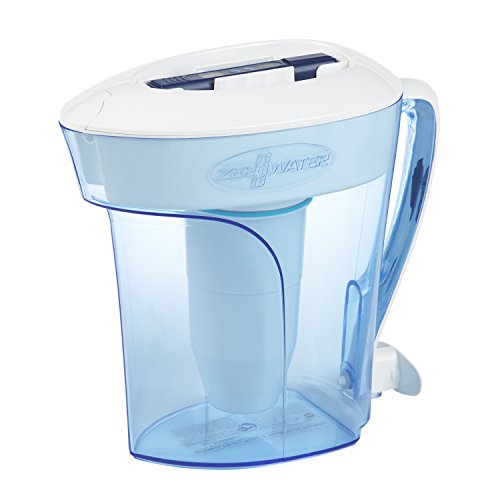
ZeroWater takes a different approach from carbon-only pitchers. Its five-stage filter uses ion exchange and other media to reduce total dissolved solids, and the pitcher ships with a meter that lets the household measure dissolved solids in the filtered water and in the tap water for comparison. When the meter reading climbs back up, the filter is due for replacement, which replaces guesswork and calendar reminders with a measurable signal.
The ten-cup Ready-Pour design allows pouring while water is still filtering, a practical detail for busy kitchens. The filtration target list includes lead, chromium, and PFOA and PFOS, and the system is certified to reduce those substances under its stated standards. The trade-offs are filter life and taste. Because the filter works harder on dissolved solids, it can exhaust faster in areas with very hard or mineral-heavy tap water, which raises both running effort and filter waste. Removing nearly all dissolved solids also produces a very flat, pure taste that some drinkers love and others find empty. For a household motivated by measurable reduction rather than taste alone, ZeroWater offers the clearest feedback loop of any pitcher here.
LifeStraw Home Water Filter Pitcher
LifeStraw Home is the pitcher built for households worried about what carbon filters do not address. Alongside an activated carbon and ion exchange filter for taste, metals, and chemicals including PFAS, it adds a membrane microfilter designed to remove bacteria, parasites, and microplastics. That two-part system is unique in this guide, and the membrane element lasts far longer than the carbon element, so the two parts run on different replacement schedules.
The ten-cup plastic version listed here keeps capacity in line with the other family-size pitchers, and a glass version exists for households that prefer to avoid a plastic pitcher body. Filtration is slower than with a simple carbon pitcher, because water passes through the membrane stage as well, so the routine works best when the pitcher is refilled after use rather than when a glass is already waiting. Running costs involve two filter types instead of one, which is worth understanding before buying. For households on well water, in older buildings, or simply wanting a microbial barrier that standard pitchers do not claim, LifeStraw Home fills a gap none of the other four pitchers attempt to fill.
Clearly Filtered No.1 Filtered Water Pitcher
Clearly Filtered builds its pitcher around the longest target list in this group, claiming reduction of more than three hundred and sixty contaminants, including fluoride, chlorine, PFAS, microplastics, lead, and arsenic. Fluoride reduction is the headline difference, since most mainstream pitcher filters leave fluoride in the water, and many buyers searching this category are specifically looking for a pitcher that addresses it without a full reverse osmosis installation.
The pitcher holds ten cups, includes one filter, and uses a removable lid design for refilling. Filter life sits in the same general range as other full-featured pitcher filters, and replacement filters are a specific proprietary format, so availability runs through the brand rather than through every supermarket shelf. Buyers should read the published test documentation for the specific contaminants they care about, because a long target list matters most when the individual substances a household is concerned about are actually on it. For a household whose priority list includes fluoride and PFAS alongside the usual taste and metals concerns, this is the pitcher designed around that brief, accepting a proprietary filter supply in exchange for the broadest stated coverage.
How to choose
Start with the water, not the pitcher. A household that simply dislikes chlorine taste needs a different filter from a household concerned about lead in older plumbing, fluoride, or microbial quality. Municipal water reports, published annually by utilities, show what is actually in local tap water and help match the filter to real concerns instead of generic worry. Certification language matters here: look for the specific standard and the specific substance, because a filter certified for taste and odor is making a narrower promise than one certified for lead reduction.
Next, weigh filter life against filter waste. Longer-life filters, such as the Brita Elite, reduce both the number of filters discarded each year and the chance of running an exhausted filter. Shorter-life, harder-working filters, such as the ZeroWater, give stronger or more measurable reduction but cycle through more cartridges. Capacity is the third factor: ten and eleven-cup pitchers suit families and frequent refilling of bottles for work or school, while heavy water drinkers may prefer to refill more often rather than store a larger dispenser. Finally, consider the pitcher material and the routine. Glass avoids a plastic body but adds weight and breakability, and every pitcher here needs fridge or counter space, regular washing, and filters changed on schedule to keep delivering what the label promises.
Who should skip
Households that want filtration for the whole home, rather than for drinking water only, should skip pitchers entirely and look at under-sink or whole-house systems. Anyone unwilling to track filter changes should also pause, because an exhausted pitcher filter can perform worse than no filter at all and gives a false sense of protection. Pitchers are also a poor fit where tap water has a known contamination problem that requires a certified treatment system matched to that specific issue; in that case, local water authority guidance comes first. Finally, very large households that constantly empty a ten-cup pitcher may find the refilling rhythm irritating enough to abandon, and a dispenser format or plumbed system will serve them better than a pitcher left empty in the fridge.
FAQ
Does a filter pitcher really replace bottled water?
For taste and everyday drinking, yes, for most households. A pitcher covers glasses of water, refillable bottles, kettles, and cooking water, which is where most bottled water is used at home. The saving in plastic is direct: every fill is a set of single-use bottles that never enter the house.
How often do pitcher filters need changing?
It depends on the system and on local water. Long-life filters run for several months, standard filters for a shorter period, and hard-working filters such as the ZeroWater are changed based on meter readings rather than dates. Following each maker schedule matters more than stretching a filter to save money.
Do these pitchers remove fluoride?
Most do not. Among the five here, Clearly Filtered is the one designed and marketed for fluoride reduction, while the mainstream Brita and PUR Plus filters leave fluoride in place. Buyers who care about fluoride should check the specific reduction claims for the exact model under consideration.
Is filtered pitcher water better than tap water?
It is different in specific, measurable ways: less chlorine taste, and reduction of the substances each filter is certified or designed to address. A pitcher does not sterilize water or fix a serious contamination problem, and municipal tap water in the United States is already regulated and tested before it reaches the pitcher.
Final verdict
Every pitcher in this guide can end a household bottled-water habit, so the choice comes down to priorities. Brita Everyday Elite is the easiest everyday default, PUR Plus is the pick for certified lead reduction, ZeroWater suits buyers who want measurable dissolved-solids reduction, LifeStraw Home adds the microbial barrier, and Clearly Filtered covers the broadest target list including fluoride. Match the filter to the local water report, commit to the filter-change schedule, and the pitcher will quietly do its job.
More from Amazon
Programs that pair well with the guide above. Offers and eligibility are set by Amazon and may change.
Free shipping on eligible items, Prime Video and more. Eligible new members can start with a free trial.
Start a Prime free trialA Prime membership for ages 18-24 with a trial period. Eligibility is set by Amazon.
See Prime for Young AdultsAudiobooks and podcasts to listen to on the go. Eligible new members can start with a free trial.
Try Audible freeAd-free music streaming. Eligible new subscribers can start with a free trial.
Try Music Unlimited freeAs an Amazon Associate we earn from qualifying purchases.







Write Your Review
No reviews yet. Be the first to share your experience!